 Uri dinozore iyihe? Umukino w'ibibazo
 Intambara ya dinozore
 Isiganwa rya dinozore
 Imikino mito ya dinozore
 Alubumu ya sitikeri
 Intonde za TOP za dinozore
 Ntungura!
Chinshakiangosaurus
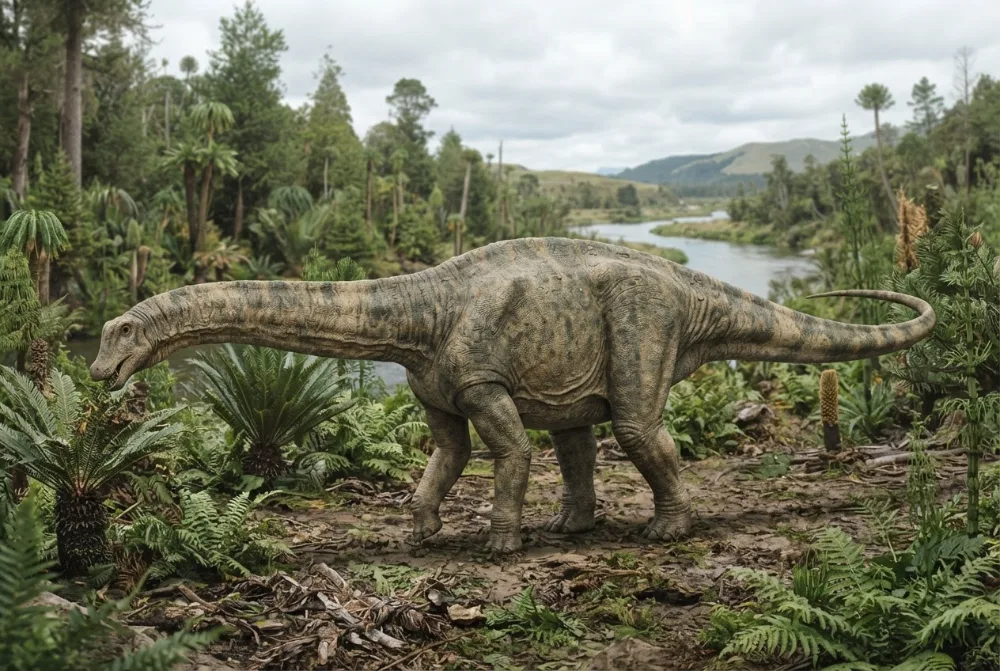
Chinshakiangosaurus was a huge, long-necked plant-eater that lived in China during the Early Jurassic. It is one of the earliest sauropods, the group that includes giants like Brachiosaurus and Diplodocus.1
Yabayeho ryari?
Yanganaga ite?
Yari ndende ite?
Ubutumburuke bwayo bwanganaga iki?
igereranya
 ndende nk'imodoka 3 ziparitse ku murongo🍌ndende nk'imineke 72 ikurikiranye🏃yashoboraga kwiruka metero 100 mu masegonda 20 (umuntu wihuta kurusha abandi akenera 9,6)
Chinshakiangosaurus yanganaga ite ugereranyije NAWE?
Ni imibare gusa ibarirwa muri mushakisha yawe. Nta kintu kibikwa cyangwa cyoherezwa ahandi.
Yihutaga ite?


Utuntu dushimishije
Chinshakiangosaurus is one of the few early sauropods with preserved skull bones, which helps scientists understand how sauropods evolved.1
Its lower jaw was curved into a U-shape, like later sauropods, but unlike the V-shaped jaws of earlier prosauropods.1
Scientists think Chinshakiangosaurus may have had fleshy cheeks, a feature that helped it hold food while chewing.12
The only known fossil includes a left lower jaw, neck and back vertebrae, shoulder blades, hip bones, and hind legs.1
The name was first used in 1975 but was not properly described until 1992, so for many years it was just a name without a description.1
Chinshakiangosaurus lived about 200 million years ago, during the Hettangian stage of the Early Jurassic.3
Ibibazo bibazwa cyane kuri Chinshakiangosaurus
?How big was Chinshakiangosaurus?
About 12 to 13 meters long. That is roughly the length of a large city bus.12
?What did Chinshakiangosaurus eat?
It was an herbivore (plant-eater). Its broad U-shaped snout and blunt teeth helped it eat large amounts of leaves and other plants.1
?Did Chinshakiangosaurus have feathers?
There is no evidence that Chinshakiangosaurus had feathers. Sauropods like this one are not known to have feathers.1
Ku bazobereye muri dinozore
- Izina rya siyansi
- Chinshakiangosaurus
- Yiswe na
- Yeh 19753
- Itsinda
- Izifite amajosi maremare
- Umuryango / ishami
- Sauropoda3
- Ishyirwa mu byiciro
- Sauropodomorpha > Sauropoda3
- Imyaka y'amabuye
- imyaka miliyoni 201 kugeza 200 (Hettangian)3
- Inzego z'amabuye
- Fengjiahe3
- Ibihugu
- Ubushinwa3
- Ibisigazwa byanditswe
- 1 muri The Paleobiology Database3
- Ivumburwa
- The fossils were found in 1970 by Zhao Xijin and his team in Yongren County, Yunnan, China. The name was first used by Yeh in 1975, but the official description was published by Dong Zhiming in 1992.1
- Biracyagibwaho impaka
- Scientists are not sure exactly how Chinshakiangosaurus is related to other early sauropods, because most of its skeleton has not been studied in detail yet.1
Aho amakuru yakuwe
- Chinshakiangosaurus (en.wikipedia.org)
- A re-evaluation of Chinshakiangosaurus chunghoensis Ye ... (ivpp.cas.cn)
- Chinshakiangosaurus in The Paleobiology Database (CC BY 4.0): imyaka, ahantu, inzego z'amabuye, ishyirwa mu byiciro.
Buri kintu kiri kuri uru rupapuro gifite nimero yerekana aho cyakuwe. Niba hari icyo twibeshye, tubabarire, turi abakunzi ba dinozore, ntituri ikinyamakuru cya siyansi. Tubwire kuri [email protected] tuzagikosora.
 Rex arashonje! Dino Wiki ni umushinga wa papa umwe yakoreye umuhungu we ukunda dinozore, ni ubuntu, nta matangazo kandi nta bigukurikirana. Abantu bakuru bashobora guha Rex akantu ko kurya kugira ngo Dino Wiki ikomeze kuboneka kuri interineti.Gaburira Rex
 Brachiosaurus
 Diplodocus
 Brontosaurus
 Argentinosaurus
 Camarasaurus
 Morosaurus
 Dilophosaurus
 Stenopterygius
 Dorygnathus
 Scutellosaurus
 Sinosaurus
 Temnodontosaurus