 Uri dinozore iyihe? Umukino w'ibibazo
 Intambara ya dinozore
 Isiganwa rya dinozore
 Imikino mito ya dinozore
 Alubumu ya sitikeri
 Intonde za TOP za dinozore
 Ntungura!
Yabayeho ryari?

Yanganaga ite?
Yari ndende ite?
Ubutumburuke bwayo bwanganaga iki?
Yari iremereye ite?

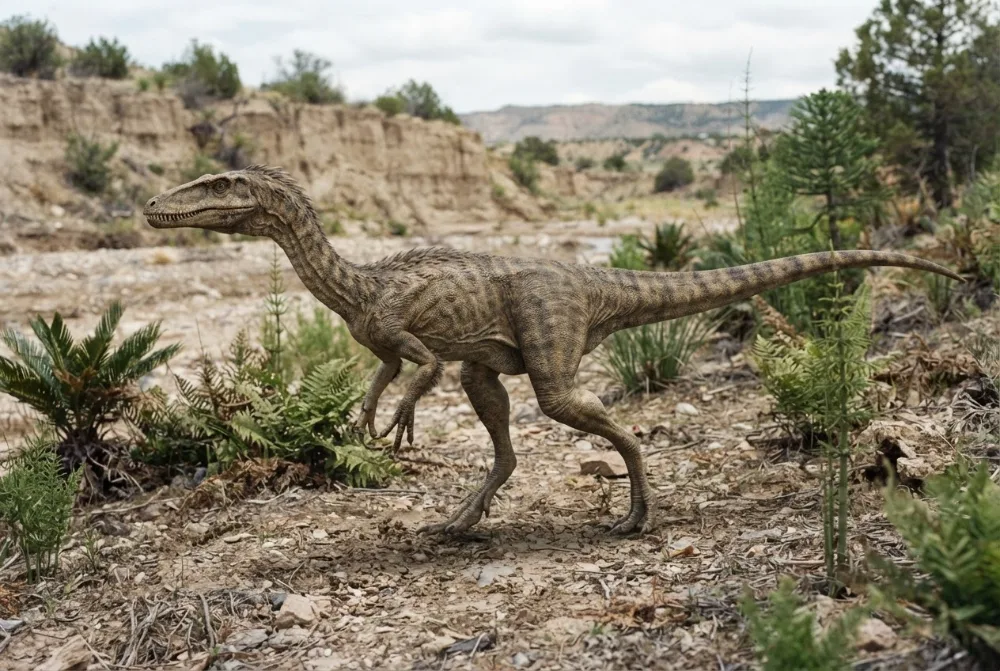
 ndende nk'imbwa 3 zikurikiranye🍌ndende nk'imineke 17 ikurikiranye🍉iremereye nk'imbuto 5 za watermelon🏃yashoboraga kwiruka metero 100 mu masegonda 8,4 (umuntu wihuta kurusha abandi akenera 9,6)
Coelophysis yanganaga ite ugereranyije NAWE?
Ni imibare gusa ibarirwa muri mushakisha yawe. Nta kintu kibikwa cyangwa cyoherezwa ahandi.
Yihutaga ite?


Utuntu dushimishije
Coelophysis is one of the earliest known dinosaur genera, living about 215 to 201 million years ago.1
A huge pile of hundreds of Coelophysis skeletons was found at Ghost Ranch in New Mexico in 1947.2
Coelophysis had about 26 teeth in its upper jaw and 27 in its lower jaw.1
Its arms were flexible but weak, so it probably hunted animals much smaller than itself.1
Coelophysis was very light, weighing only about as much as a big dog.2
Some scientists once thought Coelophysis was the same as another dinosaur called Rioarribasaurus, but now most agree they are different.1
Ibibazo bibazwa cyane kuri Coelophysis
?How big was Coelophysis?
Coelophysis was small, growing up to about 3 metres (9.8 feet) long. It weighed only about 18 to 23 kg (40 to 50 pounds).12
?What did Coelophysis eat?
Coelophysis was a carnivore, meaning it ate meat. It probably hunted small, fast animals like lizards and early mammal relatives.12
?When did Coelophysis live?
Coelophysis lived during the Late Triassic period, about 215 to 201 million years ago.1
?Where was Coelophysis found?
Coelophysis fossils have been found in the southwestern United States, especially in New Mexico. Similar animals have been found in South Africa and Zimbabwe.13
?How fast could Coelophysis run?
Maybe up to about 43 km/h (27 mph), faster than a fast human runner. This is an estimate from its size. It had long legs and a light body, made for running.13
?Why is Coelophysis called Coelophysis?
The name Coelophysis means 'hollow form', because its limb bones were hollow. This made its body light and helped it be a swift hunter.3
?Did Coelophysis have feathers?
Scientists don't know for sure if Coelophysis had feathers. No feathers have been found with its fossils, but some related dinosaurs may have had them.1
?Was Coelophysis bigger than a human?
Coelophysis was about 3 metres (9.8 feet) long, which is longer than a human is tall, but it was very light, weighing only about 18 to 23 kg (40 to 50 pounds).12
?Could Coelophysis swim?
There is no evidence that Coelophysis could swim. It was a land-dwelling dinosaur that ran on two legs.1
Gusenya ibinyoma
Ibivugwa: Coelophysis swallowed its young whole.
Ukuri: A fossil once thought to show a baby Coelophysis inside an adult is actually a different reptile or a mistake. There is no proof it ate its own young.1
Ku bazobereye muri dinozore
- Izina rya siyansi
- Coelophysis
- Yiswe na
- Cope 18894
- Itsinda
- Dinozore zirya inyama
- Umuryango / ishami
- Coelophysidae4
- Ishyirwa mu byiciro
- Theropoda > Coelophysoidea4
- Imyaka y'amabuye
- imyaka miliyoni 227 kugeza 193 (Norian / Sinemurian)4
- Inzego z'amabuye
- Chinle, Petrified Forest, Tecovas4
- Ibihugu
- Amerika4
- Ibisigazwa byanditswe
- 26 muri The Paleobiology Database4
- Izwi kandi ku izina rya
- Rioarribasaurus (amazina ya kera ubu abarwa nk'inyamaswa imwe)4
- Ivumburwa
- Edward Drinker Cope named Coelophysis in 1889, based on bones collected by David Baldwin in 1881 from New Mexico, USA.14
- Biracyagibwaho impaka
- Scientists still debate whether some fossils from other parts of the world belong to Coelophysis or to similar dinosaurs.1
Aho amakuru yakuwe
- Coelophysis (en.wikipedia.org)
- Coelophysis | Triassic, Carnivore, Reptile | Britannica (britannica.com)
- Coelophysis | Natural History Museum (nhm.ac.uk)
- Coelophysis in The Paleobiology Database (CC BY 4.0): imyaka, ahantu, inzego z'amabuye, ishyirwa mu byiciro.
Buri kintu kiri kuri uru rupapuro gifite nimero yerekana aho cyakuwe. Niba hari icyo twibeshye, tubabarire, turi abakunzi ba dinozore, ntituri ikinyamakuru cya siyansi. Tubwire kuri [email protected] tuzagikosora.
 Rex arashonje! Dino Wiki ni umushinga wa papa umwe yakoreye umuhungu we ukunda dinozore, ni ubuntu, nta matangazo kandi nta bigukurikirana. Abantu bakuru bashobora guha Rex akantu ko kurya kugira ngo Dino Wiki ikomeze kuboneka kuri interineti.Gaburira Rex
 Allosaurus
 Carnotaurus
 Dilophosaurus
 Giganotosaurus
 Compsognathus
 Paronychodon
 Nothosaurus
 Massospondylus
 Plateosaurus
 Simosaurus
 Thecodontosaurus
 Eudimorphodon