 Uri dinozore iyihe? Umukino w'ibibazo
 Intambara ya dinozore
 Isiganwa rya dinozore
 Imikino mito ya dinozore
 Alubumu ya sitikeri
 Intonde za TOP za dinozore
 Ntungura!
Coloborhynchus
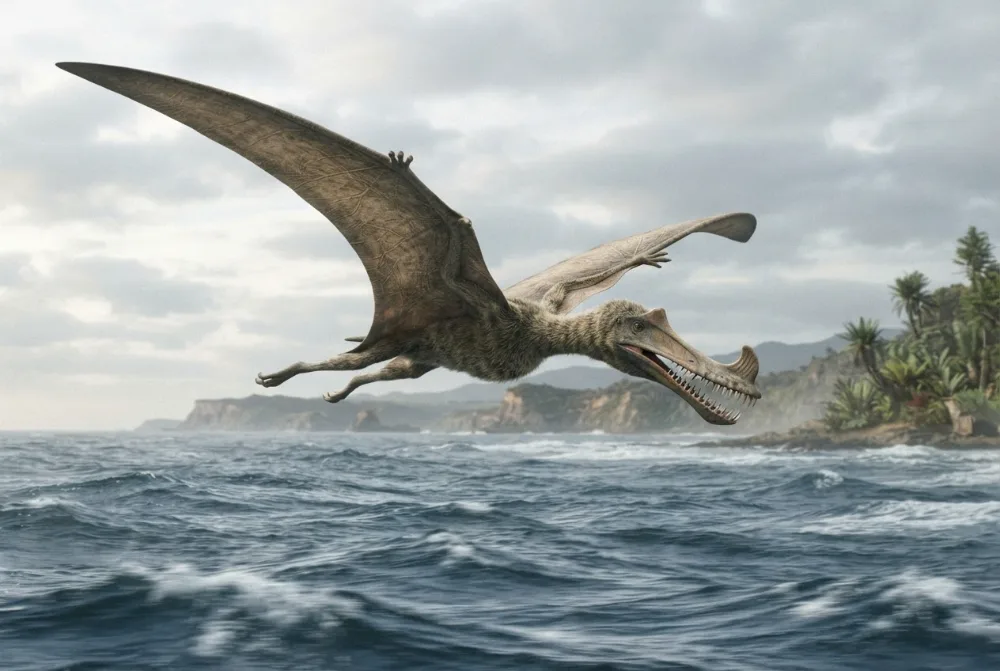
Coloborhynchus was a flying reptile with a long, toothed snout that lived near the sea. It soared over the waves and snatched fish with its sharp teeth. Some scientists think it was one of the biggest toothed pterosaurs ever!1
Yabayeho ryari?
Yanganaga ite?
Amababa yayo yari arambuye angana iki?
 amababa agari nk'amagare 4 akurikiranye⚽yashoboraga kuguruka ikambuka ikibuga cyose cy'umupira w'amaguru mu masegonda 4,8
Coloborhynchus yanganaga ite ugereranyije NAWE?
Ni imibare gusa ibarirwa muri mushakisha yawe. Nta kintu kibikwa cyangwa cyoherezwa ahandi.
Yihutaga ite?


Utuntu dushimishije
Coloborhynchus lived about 140 to 94 million years ago, during the Cretaceous Period.4
Its name means 'maimed beak' because the first fossil found was a damaged snout.1
The first Coloborhynchus fossil was a piece of the upper jaw with tooth sockets, found in England.12
Coloborhynchus belonged to a group called Anhangueridae, which were fish-eating pterosaurs with crests on their snouts.41
Some scientists now think only one species, Coloborhynchus clavirostris, truly belongs to this genus.2
Fossils of Coloborhynchus have been found in both England and Morocco, showing it lived in different parts of the world.41
Coloborhynchus had a flat, squared-off tip on its upper jaw, which helped it catch fish.2
Ibibazo bibazwa cyane kuri Coloborhynchus
?How big was Coloborhynchus?
It could have a wingspan of about 7 metres (23 feet), which is as long as a small boat. The largest toothed pterosaur specimen, Coloborhynchus capito, had a skull up to 75 centimetres long.13
?What did Coloborhynchus eat?
It ate fish, just like many other pterosaurs that lived near the sea. Its sharp teeth and long snout helped it catch them.1
?When did Coloborhynchus live?
It lived during the Early Cretaceous Period, about 140 to 94 million years ago.1
?Why is it called Coloborhynchus?
Its name means 'maimed beak' because the first fossil found was a damaged snout. The name was given by Richard Owen in 1874.1
Gusenya ibinyoma
Ibivugwa: Coloborhynchus was the largest flying animal ever.
Ukuri: It was once thought to be the largest toothed pterosaur, but a close relative called Tropeognathus is now believed to have had a bigger wingspan.1
Ku bazobereye muri dinozore
- Izina rya siyansi
- Coloborhynchus
- Yiswe na
- Owen 18744
- Itsinda
- Ibikururanda biguruka
- Umuryango / ishami
- Anhangueridae4
- Ishyirwa mu byiciro
- Pterosauria > Pterodactyloidea4
- Imyaka y'amabuye
- imyaka miliyoni 139 kugeza 94 (Berriasian / Cenomanian)4
- Inzego z'amabuye
- Wessex, Ifezouane4
- Ibihugu
- Maroke, Ubwongereza4
- Ibisigazwa byanditswe
- 5 muri The Paleobiology Database4
- Izwi kandi ku izina rya
- Amblydectes (amazina ya kera ubu abarwa nk'inyamaswa imwe)4
- Ivumburwa
- Richard Owen named Coloborhynchus in 1874 based on a partial snout from East Sussex, England. The fossil was damaged, so Owen called it 'maimed beak'.14
- Biracyagibwaho impaka
- Scientists are still debating which species belong to Coloborhynchus and which should be placed in other genera like Nicorhynchus or Uktenadactylus.2
Aho amakuru yakuwe
- Coloborhynchus (en.wikipedia.org)
- A taxonomic and phylogenetic review of the anhanguerid pterosaur group Coloborhynchinae and the new clade (ddd.uab.cat)
- The world’s largest toothed pterosaur, NHMUK R481, an incomplete rostrum of Coloborhynchus capito (Seeley, 1870) from the Cambridge Greensand of England (sciencedirect.com)
- Coloborhynchus in The Paleobiology Database (CC BY 4.0): imyaka, ahantu, inzego z'amabuye, ishyirwa mu byiciro.
Buri kintu kiri kuri uru rupapuro gifite nimero yerekana aho cyakuwe. Niba hari icyo twibeshye, tubabarire, turi abakunzi ba dinozore, ntituri ikinyamakuru cya siyansi. Tubwire kuri [email protected] tuzagikosora.
 Rex arashonje! Dino Wiki ni umushinga wa papa umwe yakoreye umuhungu we ukunda dinozore, ni ubuntu, nta matangazo kandi nta bigukurikirana. Abantu bakuru bashobora guha Rex akantu ko kurya kugira ngo Dino Wiki ikomeze kuboneka kuri interineti.Gaburira Rex
 Pteranodon
 Quetzalcoatlus
 Dorygnathus
 Rhamphorhynchus
 Anhanguera
 Pterodactylus
 Stegosaurus
 Iguanodon
 Archaeopteryx
 Giganotosaurus
 Microraptor
 Deinonychus