 Uri dinozore iyihe? Umukino w'ibibazo
 Intambara ya dinozore
 Isiganwa rya dinozore
 Imikino mito ya dinozore
 Alubumu ya sitikeri
 Intonde za TOP za dinozore
 Ntungura!
Ctenochasma
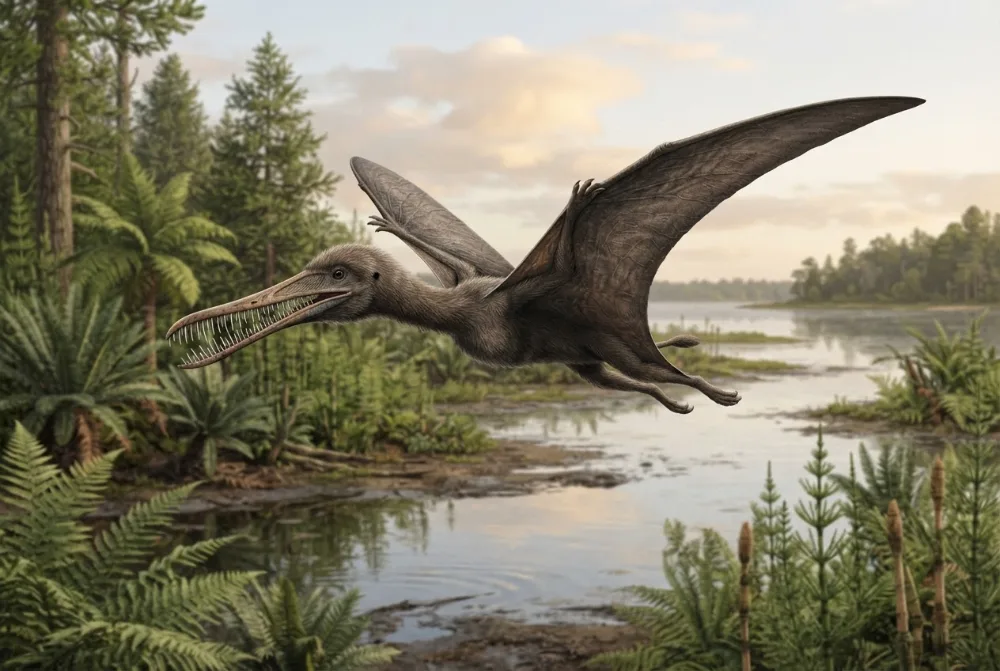
Ctenochasma was a flying reptile with a mouth full of hundreds of long, thin teeth that stuck out like a comb. It used its special beak to scoop up tiny animals from the water, like a spoonbill bird today.1
Yabayeho ryari?
Yanganaga ite?
Amababa yayo yari arambuye angana iki?
 ndende nk'injangwe 4 zo mu rugo zikurikiranye⚽yashoboraga kuguruka ikambuka ikibuga cyose cy'umupira w'amaguru mu masegonda 8
Ctenochasma yanganaga ite ugereranyije NAWE?
Ni imibare gusa ibarirwa muri mushakisha yawe. Nta kintu kibikwa cyangwa cyoherezwa ahandi.
Yihutaga ite?


Utuntu dushimishije
Ctenochasma had over 400 teeth in adults, all long, thin, and tightly packed together.1
Its teeth stuck outward from the jaws, forming a basket-like shape that helped catch small prey.1
Adult Ctenochasma had a bony crest on top of their skull, but young ones did not.1
Scientists think Ctenochasma was nocturnal, like some seabirds today, based on its eye bones.1
The smallest species, Ctenochasma elegans, had a wingspan of about 1.9 metres (6.2 feet) as an adult.1
Ctenochasma lived during the Late Jurassic period, around 150 to 145 million years ago.1
Ibibazo bibazwa cyane kuri Ctenochasma
?Was Ctenochasma a dinosaur?
No, Ctenochasma was a pterosaur, which is a flying reptile and not a dinosaur.1
?How big was Ctenochasma?
The smallest species, Ctenochasma elegans, had a maximum wingspan of about 1.9 metres (6.2 feet) as an adult.1
?What did Ctenochasma eat?
It used its comb-like teeth to strain small invertebrates from the water, similar to how a spoonbill bird feeds today.1
?Did Ctenochasma have a crest?
Yes, adult Ctenochasma had a bony crest along the skull, but young ones did not.1
Ku bazobereye muri dinozore
- Izina rya siyansi
- Ctenochasma
- Yiswe na
- Meyer 18512
- Itsinda
- Ibikururanda biguruka
- Umuryango / ishami
- Lophocratia2
- Ishyirwa mu byiciro
- Pterosauria > Pterodactyloidea2
- Imyaka y'amabuye
- imyaka miliyoni 149 kugeza 137 (Tithonian / Berriasian)2
- Inzego z'amabuye
- Solnhofen, Solnhofener Plattenkalk, Calcaires tâchetés2
- Ibihugu
- Ubudage, Ubufaransa2
- Ibisigazwa byanditswe
- 7 muri The Paleobiology Database2
- Ivumburwa
- German paleontologist Hermann von Meyer named Ctenochasma in 1851, based on a lower jaw full of teeth. He first thought it was a crocodilian, not a pterosaur.1
- Biracyagibwaho impaka
- Scientists debate whether all the different species of Ctenochasma are really just growth stages of one species, but a 2007 study showed three distinct species based on tooth number and shape.1
Aho amakuru yakuwe
- Ctenochasma (en.wikipedia.org)
- Ctenochasma in The Paleobiology Database (CC BY 4.0): imyaka, ahantu, inzego z'amabuye, ishyirwa mu byiciro.
Buri kintu kiri kuri uru rupapuro gifite nimero yerekana aho cyakuwe. Niba hari icyo twibeshye, tubabarire, turi abakunzi ba dinozore, ntituri ikinyamakuru cya siyansi. Tubwire kuri [email protected] tuzagikosora.
 Rex arashonje! Dino Wiki ni umushinga wa papa umwe yakoreye umuhungu we ukunda dinozore, ni ubuntu, nta matangazo kandi nta bigukurikirana. Abantu bakuru bashobora guha Rex akantu ko kurya kugira ngo Dino Wiki ikomeze kuboneka kuri interineti.Gaburira Rex
 Pteranodon
 Quetzalcoatlus
 Dorygnathus
 Rhamphorhynchus
 Anhanguera
 Pterodactylus
 Stegosaurus
 Iguanodon
 Archaeopteryx
 Giganotosaurus
 Microraptor
 Deinonychus