 Uri dinozore iyihe? Umukino w'ibibazo
 Intambara ya dinozore
 Isiganwa rya dinozore
 Imikino mito ya dinozore
 Alubumu ya sitikeri
 Intonde za TOP za dinozore
 Ntungura!
Giraffatitan
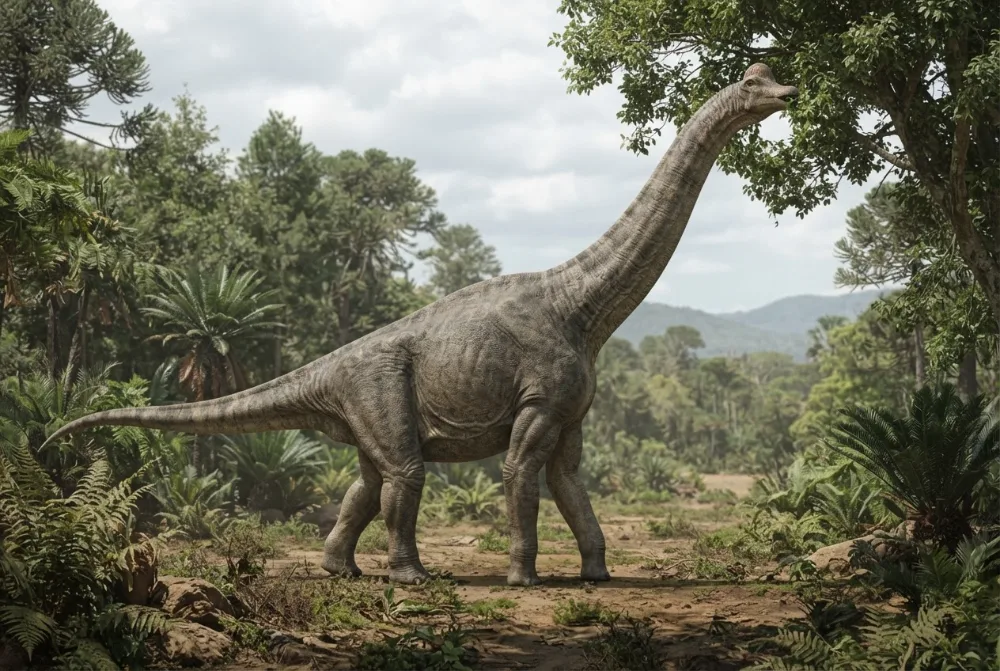
Giraffatitan was a giant, long-necked plant-eater that lived in what is now Tanzania. It had a giraffe-like shape with very long front legs and a tall skull. This dinosaur could reach high into the trees to munch on leaves that other dinosaurs couldn't reach.1
Yabayeho ryari?
Yanganaga ite?
Yari ndende ite?
Ubutumburuke bwayo bwanganaga iki?
Yari iremereye ite?

 ndende nk'imodoka 6 ziparitse ku murongo🍌ndende nk'imineke 140 ikurikiranye🍉iremereye nk'imbuto 9600 za watermelon🦒isumbye nka twiga 3 zihagaze hejuru y'izindi🎒iremereye nk'ibyumba 60 by'amashuri byuzuye abana🐻❄️iremereye nk'idubu 110 zo mu rubura🏢isumbye ku buryo yarunguruka mu idirishya ryo ku igorofa rya 6🏃yashoboraga kwiruka metero 100 mu masegonda 40 (umuntu wihuta kurusha abandi akenera 9,6)
Giraffatitan yanganaga ite ugereranyije NAWE?
Ni imibare gusa ibarirwa muri mushakisha yawe. Nta kintu kibikwa cyangwa cyoherezwa ahandi.
Yihutaga ite?


Utuntu dushimishije
Giraffatitan was first thought to be an African species of Brachiosaurus, but scientists now think it is a separate genus because of many differences in its bones.1
The name Giraffatitan means 'titanic giraffe' because its long neck and sloping body reminded scientists of a giraffe.1
Most size estimates come from a subadult skeleton called HMN SII, but a larger leg bone suggests some Giraffatitan grew even bigger, up to 26 metres long.1
Its nostrils were once thought to be on top of its head, like a snorkel, but modern studies show they were near the tip of the snout.1
Giraffatitan lived about 150 to 145 million years ago, during the Late Jurassic period, in a warm, seasonal climate with forests and coastal lagoons.1
It had a very long neck that could only move up and down a little, so it probably fed on treetop leaves without swinging its head sideways much.1
Ibibazo bibazwa cyane kuri Giraffatitan
?How big was Giraffatitan?
About 23 metres (75 feet) long and 12 metres (39 feet) tall. The largest individuals may have reached 26 metres (85 feet) and weighed up to 48 tonnes (53 tons).12
?What did Giraffatitan eat?
It was a plant-eater (herbivore) that ate leaves from the tops of trees. Its long neck and chisel-like teeth helped it reach and bite off foliage that other dinosaurs couldn't.12
?When did Giraffatitan live?
It lived during the Late Jurassic Period, about 154 to 142 million years ago.2
?Where was Giraffatitan found?
Its fossils were discovered in Tanzania, Africa, at a place called Tendaguru.12
?Was Giraffatitan bigger than T. rex?
Yes, much bigger. Giraffatitan was about 23 metres long and weighed up to 48 tonnes, while T. rex was only about 12 metres long and weighed around 8 tonnes.1
?Is Giraffatitan a dinosaur?
Yes, it is a dinosaur. It is a sauropod, a group of four-legged, long-necked plant-eating dinosaurs.12
?Why did Giraffatitan have a long neck?
Its long neck helped it reach high into trees to eat leaves that other dinosaurs could not reach. Its neck could only move up and down a little, so it probably fed on treetop leaves without swinging its head sideways much.1
?Could Giraffatitan swim?
No, scientists now think it was a fully land animal. Water pressure would have made it hard to breathe if it was submerged, and its feet were too narrow for swimming.1
Gusenya ibinyoma
Ibivugwa: Some people think Giraffatitan spent most of its time in water to support its heavy body.
Ukuri: Scientists now believe it was fully land-living, because water pressure would have made breathing difficult and its feet were not good for swimming.1
Ku bazobereye muri dinozore
- Izina rya siyansi
- Giraffatitan
- Yiswe na
- (Paul 1988)3
- Itsinda
- Izifite amajosi maremare
- Umuryango / ishami
- Brachiosauridae3
- Ishyirwa mu byiciro
- Sauropodomorpha > Sauropoda > Macronaria3
- Imyaka y'amabuye
- imyaka miliyoni 162 kugeza 143 (Oxfordian / Tithonian)3
- Inzego z'amabuye
- Tendaguru3
- Ibihugu
- Tanzaniya3
- Ibisigazwa byanditswe
- 42 muri The Paleobiology Database3
- Ivumburwa
- Giraffatitan was discovered in Tanzania by a German expedition led by Werner Janensch, who first named it Brachiosaurus brancai in 1914. It was later given its own genus name Giraffatitan by Gregory S. Paul in 1988.1
- Biracyagibwaho impaka
- Scientists still debate whether Giraffatitan should be a separate genus from Brachiosaurus or just a close relative.1
Aho amakuru yakuwe
- Giraffatitan (en.wikipedia.org)
- Giraffatitan | Natural History Museum (nhm.ac.uk)
- Giraffatitan in The Paleobiology Database (CC BY 4.0): imyaka, ahantu, inzego z'amabuye, ishyirwa mu byiciro.
Buri kintu kiri kuri uru rupapuro gifite nimero yerekana aho cyakuwe. Niba hari icyo twibeshye, tubabarire, turi abakunzi ba dinozore, ntituri ikinyamakuru cya siyansi. Tubwire kuri [email protected] tuzagikosora.
 Rex arashonje! Dino Wiki ni umushinga wa papa umwe yakoreye umuhungu we ukunda dinozore, ni ubuntu, nta matangazo kandi nta bigukurikirana. Abantu bakuru bashobora guha Rex akantu ko kurya kugira ngo Dino Wiki ikomeze kuboneka kuri interineti.Gaburira Rex
 Brachiosaurus
 Diplodocus
 Brontosaurus
 Argentinosaurus
 Camarasaurus
 Morosaurus
 Allosaurus
 Compsognathus
 Camptosaurus
 Nanosaurus
 Rhamphorhynchus
 Ceratosaurus