 Uri dinozore iyihe? Umukino w'ibibazo
 Intambara ya dinozore
 Isiganwa rya dinozore
 Imikino mito ya dinozore
 Alubumu ya sitikeri
 Intonde za TOP za dinozore
 Ntungura!
Hudiesaurus
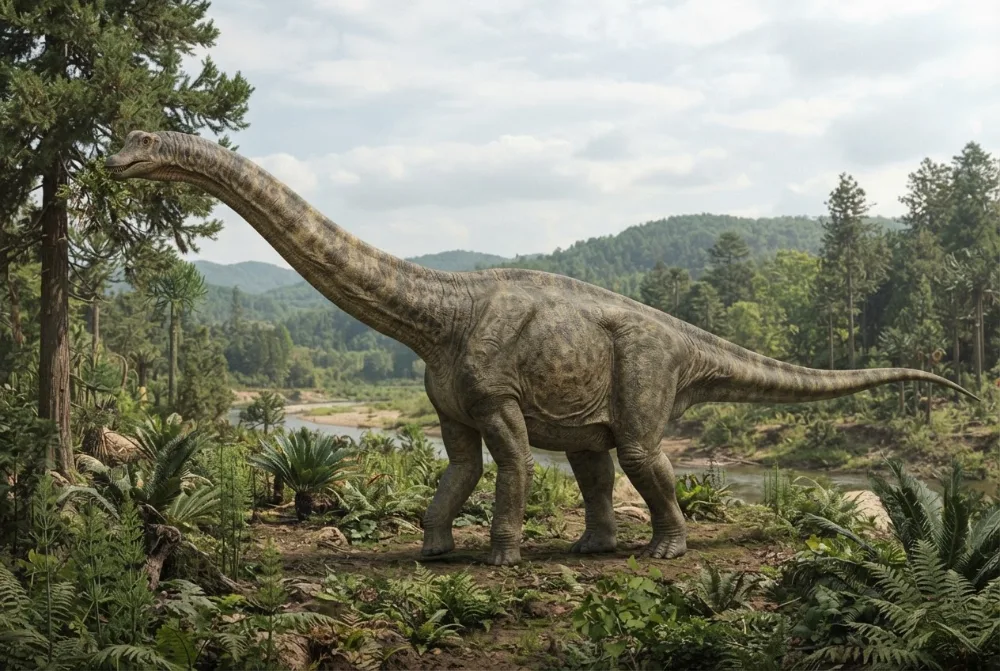
Hudiesaurus was a gigantic, long-necked plant-eater that stomped through Late Jurassic China. It was one of the biggest dinosaurs ever, with a neck so long it could probably reach high into the treetops. Its name comes from the butterfly-like split on its backbone spines.1
Yabayeho ryari?
Yanganaga ite?
Yari ndende ite?
Ubutumburuke bwayo bwanganaga iki?
Yari iremereye ite?

 ndende nk'imodoka 7 ziparitse ku murongo🍌ndende nk'imineke 180 ikurikiranye🍉iremereye nk'imbuto 11000 za watermelon🎒iremereye nk'ibyumba 69 by'amashuri byuzuye abana🐻❄️iremereye nk'idubu 120 zo mu rubura🏢isumbye ku buryo yarunguruka mu idirishya ryo ku igorofa rya 2🏃yashoboraga kwiruka metero 100 mu masegonda 40 (umuntu wihuta kurusha abandi akenera 9,6)
Hudiesaurus yanganaga ite ugereranyije NAWE?
Ni imibare gusa ibarirwa muri mushakisha yawe. Nta kintu kibikwa cyangwa cyoherezwa ahandi.
Yihutaga ite?


Utuntu dushimishije
Hudiesaurus might have been as long as three school buses parked end to end, reaching up to 32 metres (105 feet).1
Its backbone had a split spine at the top, which helped strong neck muscles attach. This gave it extra control over its long neck.1
The only definite fossil is a single backbone, but it was huge, measuring 55 centimetres (22 inches) long.1
Hudiesaurus lived about 154 to 143 million years ago, during the Late Jurassic period.1
Some bones that were once thought to be Hudiesaurus are now given to another dinosaur called Rhomaleopakhus.1
It had air-filled cavities in its backbone, which made its huge bones lighter, like a bird's bones.1
Ibibazo bibazwa cyane kuri Hudiesaurus
?How big was Hudiesaurus?
It was one of the largest dinosaurs, possibly reaching 32 metres in length and weighing 55 tonnes. Some estimates put it at 30.5 metres and 44 tonnes.1
?What did Hudiesaurus eat?
It was a plant-eater, eating leaves and other vegetation. As a sauropod with a long neck, it could reach high into trees or browse low plants.1
?When did Hudiesaurus live?
It lived during the Late Jurassic period, about 154 to 143 million years ago.1
Gusenya ibinyoma
Ibivugwa: Hudiesaurus is sometimes said to be a meat-eater because of its big teeth.
Ukuri: Actually, Hudiesaurus was a plant-eater. Its teeth were for stripping leaves, not for hunting.1
Ku bazobereye muri dinozore
- Izina rya siyansi
- Hudiesaurus
- Yiswe na
- Dong 19972
- Itsinda
- Izifite amajosi maremare
- Umuryango / ishami
- Mamenchisauridae2
- Ishyirwa mu byiciro
- Sauropodomorpha > Sauropoda2
- Imyaka y'amabuye
- imyaka miliyoni 152 kugeza 143 (Kimmeridgian / Tithonian)2
- Inzego z'amabuye
- Kalazha2
- Ibihugu
- Ubushinwa2
- Ibisigazwa byanditswe
- 1 muri The Paleobiology Database2
- Ivumburwa
- Hudiesaurus was named by Chinese paleontologist Dong Zhiming in 1997, after the Sino-Japanese Silk Road Expedition found its fossils in 1993 near Qiketai, China.1
- Biracyagibwaho impaka
- Scientists still debate whether the single backbone came from the neck or the back, which changes the size estimate.1
Aho amakuru yakuwe
- Hudiesaurus (en.wikipedia.org)
- Hudiesaurus in The Paleobiology Database (CC BY 4.0): imyaka, ahantu, inzego z'amabuye, ishyirwa mu byiciro.
Buri kintu kiri kuri uru rupapuro gifite nimero yerekana aho cyakuwe. Niba hari icyo twibeshye, tubabarire, turi abakunzi ba dinozore, ntituri ikinyamakuru cya siyansi. Tubwire kuri [email protected] tuzagikosora.
 Rex arashonje! Dino Wiki ni umushinga wa papa umwe yakoreye umuhungu we ukunda dinozore, ni ubuntu, nta matangazo kandi nta bigukurikirana. Abantu bakuru bashobora guha Rex akantu ko kurya kugira ngo Dino Wiki ikomeze kuboneka kuri interineti.Gaburira Rex
 Brachiosaurus
 Diplodocus
 Brontosaurus
 Argentinosaurus
 Camarasaurus
 Morosaurus
 Allosaurus
 Compsognathus
 Camptosaurus
 Nanosaurus
 Rhamphorhynchus
 Ceratosaurus