 Uri dinozore iyihe? Umukino w'ibibazo
 Intambara ya dinozore
 Isiganwa rya dinozore
 Imikino mito ya dinozore
 Alubumu ya sitikeri
 Intonde za TOP za dinozore
 Ntungura!
Yabayeho ryari?

Yanganaga ite?
Yari ndende ite?
Yari iremereye ite?
 ndende nk'injangwe 3 zo mu rugo zikurikiranye🍌ndende nk'imineke 8 ikurikiranye🍉iremereye nk'imbuto 4 za watermelon🏃yashoboraga kwiruka metero 100 mu masegonda 10 (umuntu wihuta kurusha abandi akenera 9,6)
Ignavusaurus yanganaga ite ugereranyije NAWE?
Ni imibare gusa ibarirwa muri mushakisha yawe. Nta kintu kibikwa cyangwa cyoherezwa ahandi.
Yihutaga ite?


Utuntu dushimishije
The name Ignavusaurus comes from the Latin word for 'coward' because it was found at a place called Ha Ralekoala, which means 'the place of the father of the coward'.1
The only known fossil of Ignavusaurus is a nearly complete skeleton of a baby that was less than one year old when it died.1
Its skull was broken into more than 120 pieces, but scientists were able to put it back together.1
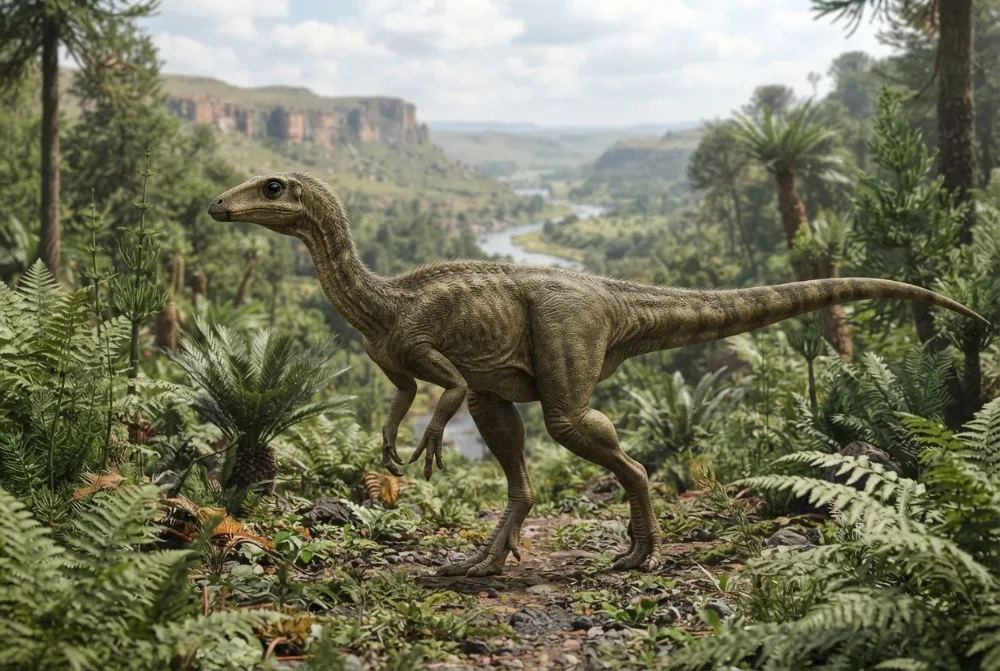
Ignavusaurus had a long, slender neck and a long tail, just like its relatives Massospondylus and Melanorosaurus.1
Some scientists think Ignavusaurus might actually be a baby Massospondylus, because the two look very similar.1
Ibibazo bibazwa cyane kuri Ignavusaurus
?How big was Ignavusaurus?
About 1.5 metres (4.9 ft) long and weighed about 22.5 kilograms (50 lb). That is roughly the size of a large dog.1
?What did Ignavusaurus eat?
It was a plant-eater, or herbivore. It had a long neck to reach leaves and other plants.1
?Is Ignavusaurus a dinosaur?
Yes, it is a dinosaur. It was a basal sauropodomorph, a type of long-necked, plant-eating dinosaur.1
?Could Ignavusaurus be a baby Massospondylus?
Some scientists think so. They say the only known fossil looks very similar to a young Massospondylus, so Ignavusaurus might be the same dinosaur.1
Ku bazobereye muri dinozore
- Izina rya siyansi
- Ignavusaurus
- Yiswe na
- Knoll 20102
- Itsinda
- Izifite amajosi maremare
- Umuryango / ishami
- Massospondylidae2
- Ishyirwa mu byiciro
- Sauropodomorpha2
- Imyaka y'amabuye
- imyaka miliyoni 201 kugeza 193 (Hettangian / Sinemurian)2
- Inzego z'amabuye
- Elliot2
- Ibihugu
- Lesotho2
- Ibisigazwa byanditswe
- 2 muri The Paleobiology Database2
- Ivumburwa
- The fossils were found in Lesotho and described in 2010 by Spanish paleontologist F. Knoll. The skeleton was brought to the National Museum of Natural History in Paris for study.1
- Biracyagibwaho impaka
- Scientists are not sure if Ignavusaurus is a separate species or just a young Massospondylus.1
Aho amakuru yakuwe
- Ignavusaurus (en.wikipedia.org)
- Ignavusaurus in The Paleobiology Database (CC BY 4.0): imyaka, ahantu, inzego z'amabuye, ishyirwa mu byiciro.
Buri kintu kiri kuri uru rupapuro gifite nimero yerekana aho cyakuwe. Niba hari icyo twibeshye, tubabarire, turi abakunzi ba dinozore, ntituri ikinyamakuru cya siyansi. Tubwire kuri [email protected] tuzagikosora.
 Rex arashonje! Dino Wiki ni umushinga wa papa umwe yakoreye umuhungu we ukunda dinozore, ni ubuntu, nta matangazo kandi nta bigukurikirana. Abantu bakuru bashobora guha Rex akantu ko kurya kugira ngo Dino Wiki ikomeze kuboneka kuri interineti.Gaburira Rex
 Brachiosaurus
 Diplodocus
 Brontosaurus
 Argentinosaurus
 Camarasaurus
 Morosaurus
 Dilophosaurus
 Stenopterygius
 Dorygnathus
 Scutellosaurus
 Sinosaurus
 Temnodontosaurus