 Uri dinozore iyihe? Umukino w'ibibazo
 Intambara ya dinozore
 Isiganwa rya dinozore
 Imikino mito ya dinozore
 Alubumu ya sitikeri
 Intonde za TOP za dinozore
 Ntungura!
Yabayeho ryari?

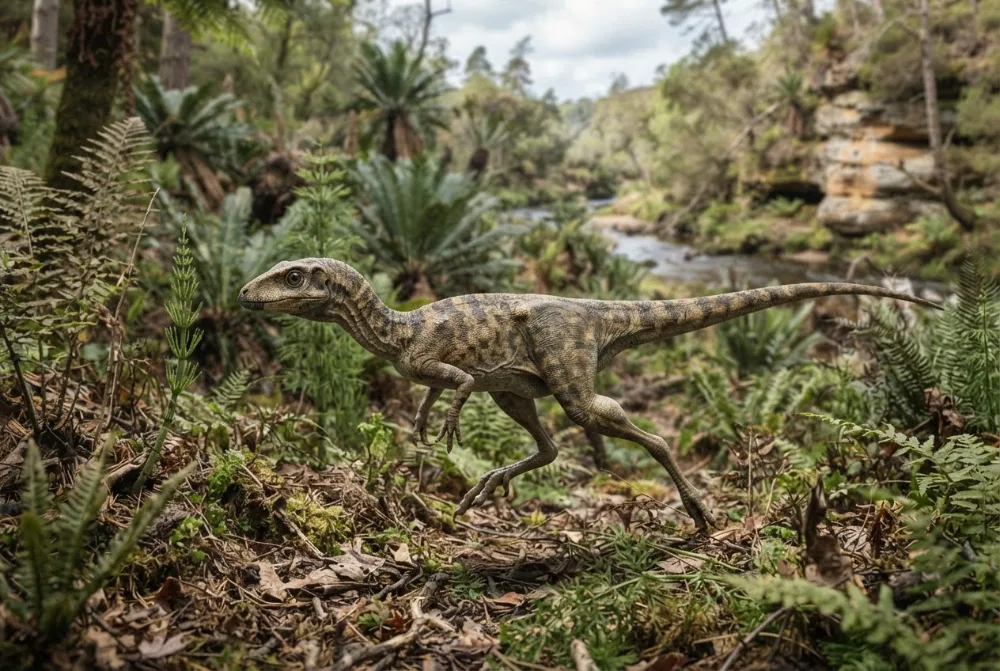
Yanganaga ite?
Yari ndende ite?
Ubutumburuke bwayo bwanganaga iki?
Yari iremereye ite?
 ndende nk'injangwe 2 zo mu rugo zikurikiranye🍌ndende nk'imineke 6 ikurikiranye🪶yoroheje kurusha injangwe yo mu rugo🍌iremereye nk'imineke 8🪑nto ku buryo yanyura munsi y'intebe🏃yashoboraga kwiruka metero 100 mu masegonda 24 (umuntu wihuta kurusha abandi akenera 9,6)
Saltopus yanganaga ite ugereranyije NAWE?
Ni imibare gusa ibarirwa muri mushakisha yawe. Nta kintu kibikwa cyangwa cyoherezwa ahandi.
Yihutaga ite?


Utuntu dushimishije
Saltopus had hollow bones, just like birds and many other dinosaurs, which made it light and fast.1
The only known fossil of Saltopus was discovered in 1867 by William Taylor, but it was not named until 1910 by Friedrich von Huene.1
Saltopus had five fingers on each hand, but the fourth and fifth fingers were smaller than the others.1
Scientists are not sure if Saltopus was a true dinosaur or a very close relative. Some think it might be the closest relative of all dinosaurs.1
The fossil of Saltopus is mostly impressions and natural casts in sandstone, with very little actual bone preserved.1
Saltopus lived between 237 and 205 million years ago, during the Carnian to Norian stages of the Late Triassic.3
Ibibazo bibazwa cyane kuri Saltopus
?How big was Saltopus?
About 80 to 100 centimetres (31 to 39 inches) long, about the size of a domestic cat. It may have weighed around 1 kilogram (2.2 pounds).1
?Was Saltopus a dinosaur?
Scientists are not sure. It is a dinosauriform, a close relative of dinosaurs, and some studies think it might be the closest relative of true dinosaurs, while others think it was an early archosaur.1
?What did Saltopus eat?
It was a carnivore, or meat-eater, and it may have eaten mostly insects and other small prey.2
?When did Saltopus live?
It lived during the Late Triassic period, about 237 to 205 million years ago.1
?Where was Saltopus found?
Its only fossil was found in Scotland, in the Lossiemouth Sandstone Formation.1
?Why is it called Saltopus?
The name means 'hopping foot', from Latin and Greek words, because it probably hopped or jumped around.1
Ku bazobereye muri dinozore
- Izina rya siyansi
- Saltopus
- Yiswe na
- Huene 19103
- Itsinda
- Dinozore za mbere
- Umuryango / ishami
- Saurischia3
- Imyaka y'amabuye
- imyaka miliyoni 237 kugeza 206 (Carnian / Norian)3
- Inzego z'amabuye
- Lossiemouth Sandstone3
- Ibihugu
- Ubwongereza3
- Ibisigazwa byanditswe
- 1 muri The Paleobiology Database3
- Ivumburwa
- The only fossil of Saltopus was found in 1867 by William Taylor in Scotland. It was first thought to be another animal, but in 1910 Friedrich von Huene named it Saltopus elginensis.1
- Biracyagibwaho impaka
- Scientists still debate whether Saltopus was a true dinosaur or a dinosauriform (a close relative). Some recent studies suggest it might be one of the earliest ornithischian dinosaurs.1
Aho amakuru yakuwe
- Saltopus (en.wikipedia.org)
- Saltopus Fact Sheet (enchantedlearning.com)
- Saltopus in The Paleobiology Database (CC BY 4.0): imyaka, ahantu, inzego z'amabuye, ishyirwa mu byiciro.
Buri kintu kiri kuri uru rupapuro gifite nimero yerekana aho cyakuwe. Niba hari icyo twibeshye, tubabarire, turi abakunzi ba dinozore, ntituri ikinyamakuru cya siyansi. Tubwire kuri [email protected] tuzagikosora.
 Rex arashonje! Dino Wiki ni umushinga wa papa umwe yakoreye umuhungu we ukunda dinozore, ni ubuntu, nta matangazo kandi nta bigukurikirana. Abantu bakuru bashobora guha Rex akantu ko kurya kugira ngo Dino Wiki ikomeze kuboneka kuri interineti.Gaburira Rex
 Herrerasaurus
 Tawa
Tawa Chindesaurus
 Nyasasaurus
 Staurikosaurus
 Alwalkeria
 Nothosaurus
 Massospondylus
 Plateosaurus
 Coelophysis
 Podokesaurus
 Simosaurus