 Uri dinozore iyihe? Umukino w'ibibazo
 Intambara ya dinozore
 Isiganwa rya dinozore
 Imikino mito ya dinozore
 Alubumu ya sitikeri
 Intonde za TOP za dinozore
 Ntungura!
Yabayeho ryari?

Yanganaga ite?
Yari ndende ite?
Ubutumburuke bwayo bwanganaga iki?
igereranya
Yari iremereye ite?
 ndende nk'imodoka 6 ziparitse ku murongo🍌ndende nk'imineke 140 ikurikiranye
 iremereye nk'inzovu 1,5🍉iremereye nk'imbuto 2000 za watermelon🎒iremereye nk'ibyumba 12 by'amashuri byuzuye abana🐻❄️iremereye nk'idubu 22 zo mu rubura🏢isumbye ku buryo yarunguruka mu idirishya ryo ku igorofa rya 2🏃yashoboraga kwiruka metero 100 mu masegonda 24 (umuntu wihuta kurusha abandi akenera 9,6)
Tornieria yanganaga ite ugereranyije NAWE?
Ni imibare gusa ibarirwa muri mushakisha yawe. Nta kintu kibikwa cyangwa cyoherezwa ahandi.
Yihutaga ite?


Utuntu dushimishije
Tornieria was first named Gigantosaurus, but that name was already taken by another dinosaur, so it was renamed in 1911.1
For many years scientists thought Tornieria was the same as the North American dinosaur Barosaurus, but now they think it is a separate genus.12
Tornieria had a short lower leg compared to its upper leg, which is different from many other diplodocids.1
Its fossils were found in the Tendaguru Beds of Tanzania, a famous site that also produced the giant dinosaur Giraffatitan.13
Tornieria lived during the Late Jurassic period, about 152 to 143 million years ago.3
One species of Tornieria, T. gracilis, was named for having more slender hind limbs.1
Ibibazo bibazwa cyane kuri Tornieria
?How big was Tornieria?
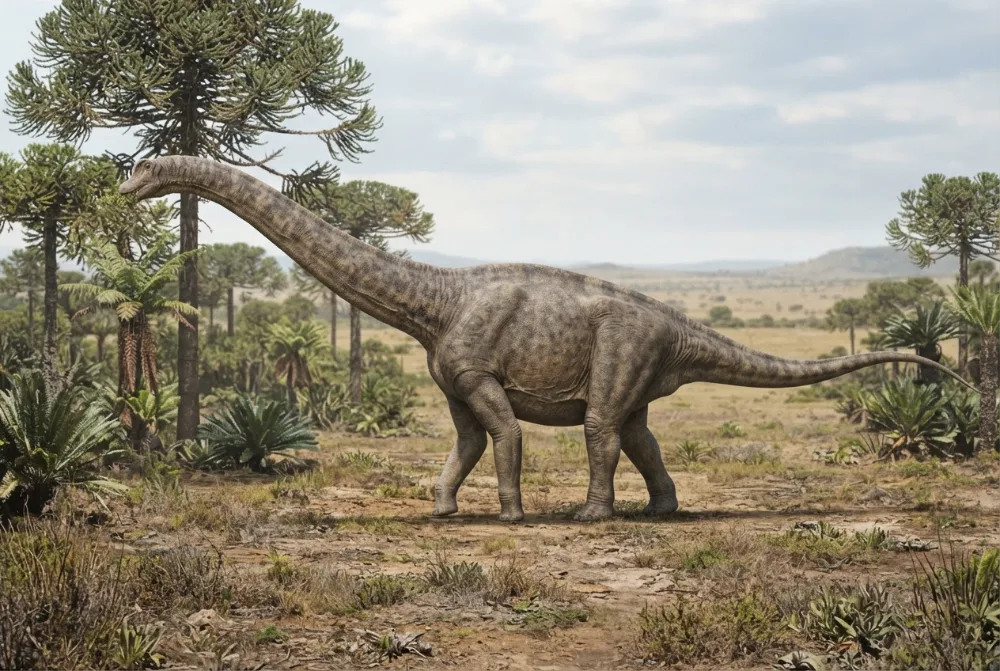
Tornieria was a large sauropod, about 25 metres long and weighed around 10 metric tons.1
?What did Tornieria eat?
Tornieria was a plant-eater, or herbivore. It ate plants like ferns and leaves.13
?Where did Tornieria live?
Tornieria lived in what is now Tanzania, in Africa. Its fossils were found in the Tendaguru Beds.1
Ku bazobereye muri dinozore
- Izina rya siyansi
- Tornieria
- Yiswe na
- Sternfeld 19113
- Itsinda
- Izifite amajosi maremare
- Umuryango / ishami
- Diplodocidae3
- Ishyirwa mu byiciro
- Sauropodomorpha > Sauropoda > Diplodocoidea3
- Imyaka y'amabuye
- imyaka miliyoni 152 kugeza 143 (Kimmeridgian / Tithonian)3
- Inzego z'amabuye
- Tendaguru3
- Ibihugu
- Tanzaniya3
- Ibisigazwa byanditswe
- 7 muri The Paleobiology Database3
- Ivumburwa
- German paleontologist Eberhard Fraas discovered two sauropod skeletons in Tanzania in 1907. He named them Gigantosaurus africanus and G. robustus in 1908. Because the name Gigantosaurus was already used, Richard Sternfeld renamed the genus Tornieria in 1911.1
- Biracyagibwaho impaka
- Scientists still debate whether Tornieria gracilis is a valid species or just a variant of T. africana.1
Aho amakuru yakuwe
- Tornieria (en.wikipedia.org)
- REVISION OF THE TENDAGURU SAUROPOD DINOSAUR TORNIERIA AFRICAN A (FRAAS) AND ITS RELEVANCE FOR SAUROPOD PALEOBIOGEOGRAPHY (bioone.org)
- Tornieria in The Paleobiology Database (CC BY 4.0): imyaka, ahantu, inzego z'amabuye, ishyirwa mu byiciro.
Buri kintu kiri kuri uru rupapuro gifite nimero yerekana aho cyakuwe. Niba hari icyo twibeshye, tubabarire, turi abakunzi ba dinozore, ntituri ikinyamakuru cya siyansi. Tubwire kuri [email protected] tuzagikosora.
 Rex arashonje! Dino Wiki ni umushinga wa papa umwe yakoreye umuhungu we ukunda dinozore, ni ubuntu, nta matangazo kandi nta bigukurikirana. Abantu bakuru bashobora guha Rex akantu ko kurya kugira ngo Dino Wiki ikomeze kuboneka kuri interineti.Gaburira Rex
 Brachiosaurus
 Diplodocus
 Brontosaurus
 Argentinosaurus
 Camarasaurus
 Morosaurus
 Allosaurus
 Compsognathus
 Camptosaurus
 Nanosaurus
 Rhamphorhynchus
 Ceratosaurus