 Uri dinozore iyihe? Umukino w'ibibazo
 Intambara ya dinozore
 Isiganwa rya dinozore
 Imikino mito ya dinozore
 Alubumu ya sitikeri
 Intonde za TOP za dinozore
 Ntungura!
Yabayeho ryari?

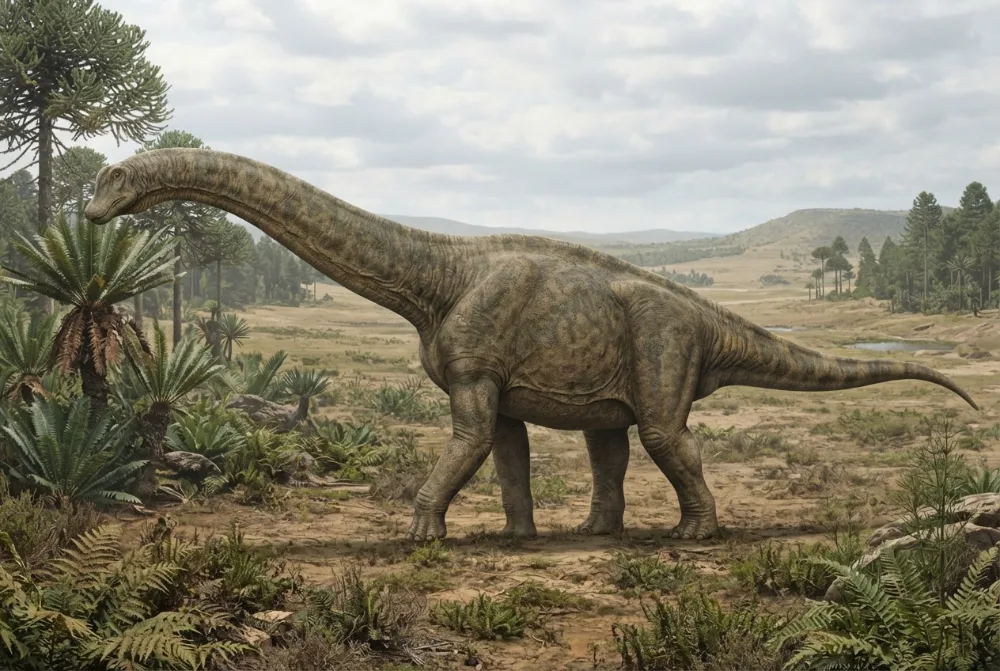
Yanganaga ite?
Yari ndende ite?
Yari iremereye ite?
 ndende nk'imodoka 22 ziparitse ku murongo🍌ndende nk'imineke 560 ikurikiranye
 iremereye nk'inzovu🍉iremereye nk'imbuto 1400 za watermelon🎒iremereye nk'ibyumba 9 by'amashuri byuzuye abana🐻❄️iremereye nk'idubu 16 zo mu rubura🏃yashoboraga kwiruka metero 100 mu masegonda 21 (umuntu wihuta kurusha abandi akenera 9,6)
Wamweracaudia yanganaga ite ugereranyije NAWE?
Ni imibare gusa ibarirwa muri mushakisha yawe. Nta kintu kibikwa cyangwa cyoherezwa ahandi.
Yihutaga ite?


Utuntu dushimishije
Wamweracaudia is known from a nearly complete series of thirty tail vertebrae, plus two chevrons and two neural spines.1
Its tail bones were procoelous, meaning they had a hollow at the front and a ball at the back, which made the tail flexible and strong.1
It was a close relative of Mamenchisaurus, a famous long-necked dinosaur from Asia, and scientists think it may be the first mamenchisaurid found outside Asia.1
The fossils were first dug up between 1909 and 1912 by German expeditions, but they were not given their own name until 2019.1
The name honors the Wamwera people who live near the find site, and the specific name keranjei honors Mohammadi Keranje, the foreman who led the excavation team.1
Wamweracaudia lived during the Late Jurassic, about 155 to 145 million years ago.1
Ibibazo bibazwa cyane kuri Wamweracaudia
?What did Wamweracaudia eat?
Wamweracaudia was a herbivore, meaning it ate plants. As a sauropod, it was a large quadrupedal herbivore.1
?When did Wamweracaudia live?
Wamweracaudia lived during the Late Jurassic, about 155 to 145 million years ago.1
?How big was Wamweracaudia?
Scientists don't know exactly, but it was a large sauropod. It is known from a nearly complete series of thirty tail vertebrae, which suggests a long tail.1
?Is Wamweracaudia related to Mamenchisaurus?
Yes, Wamweracaudia is a close relative of Mamenchisaurus. Scientists think it may be the first mamenchisaurid found outside Asia.1
Gusenya ibinyoma
Ibivugwa: Some people think Wamweracaudia was a titanosaur, a type of giant sauropod.
Ukuri: Scientists now think it was a mamenchisaurid, more closely related to Mamenchisaurus, because of its tail bone features.1
Ku bazobereye muri dinozore
- Izina rya siyansi
- Wamweracaudia
- Yiswe na
- Mannion et al. 20194
- Itsinda
- Izifite amajosi maremare
- Umuryango / ishami
- Mamenchisauridae4
- Ishyirwa mu byiciro
- Sauropodomorpha > Sauropoda4
- Imyaka y'amabuye
- imyaka miliyoni 149 kugeza 143 (Tithonian)4
- Inzego z'amabuye
- Tendaguru4
- Ibihugu
- Tanzaniya4
- Ibisigazwa byanditswe
- 2 muri The Paleobiology Database4
- Ivumburwa
- The tail was found during German expeditions to Tendaguru in Tanzania between 1909 and 1912, supervised by paleontologist Werner Janensch. It was named Wamweracaudia keranjei in 2019 by Philip Mannion and colleagues.1
- Biracyagibwaho impaka
- Scientists are still unsure about the exact size of Wamweracaudia because only tail bones have been found, and the PBDB gives a very broad length estimate.2
Aho amakuru yakuwe
- Wamweracaudia (en.wikipedia.org)
- PBDB Taxon (paleobiodb.org)
- Wamweracaudia keranjei | Dinosaur Database by DinoAnimals.com (dinoanimals.com)
- Wamweracaudia in The Paleobiology Database (CC BY 4.0): imyaka, ahantu, inzego z'amabuye, ishyirwa mu byiciro.
Buri kintu kiri kuri uru rupapuro gifite nimero yerekana aho cyakuwe. Niba hari icyo twibeshye, tubabarire, turi abakunzi ba dinozore, ntituri ikinyamakuru cya siyansi. Tubwire kuri [email protected] tuzagikosora.
 Rex arashonje! Dino Wiki ni umushinga wa papa umwe yakoreye umuhungu we ukunda dinozore, ni ubuntu, nta matangazo kandi nta bigukurikirana. Abantu bakuru bashobora guha Rex akantu ko kurya kugira ngo Dino Wiki ikomeze kuboneka kuri interineti.Gaburira Rex
 Brachiosaurus
 Diplodocus
 Brontosaurus
 Argentinosaurus
 Camarasaurus
 Morosaurus
 Allosaurus
 Compsognathus
 Camptosaurus
 Nanosaurus
 Rhamphorhynchus
 Ceratosaurus