 Uri dhino ripi? Kwizi
 Hondo yemadhino
 Mujaho wemadhino
 Mitambo midiki yemadhino
 Arubhamu yemasitika
 Rondedzero dzeTOP dzemadhino
 Ndishamise!
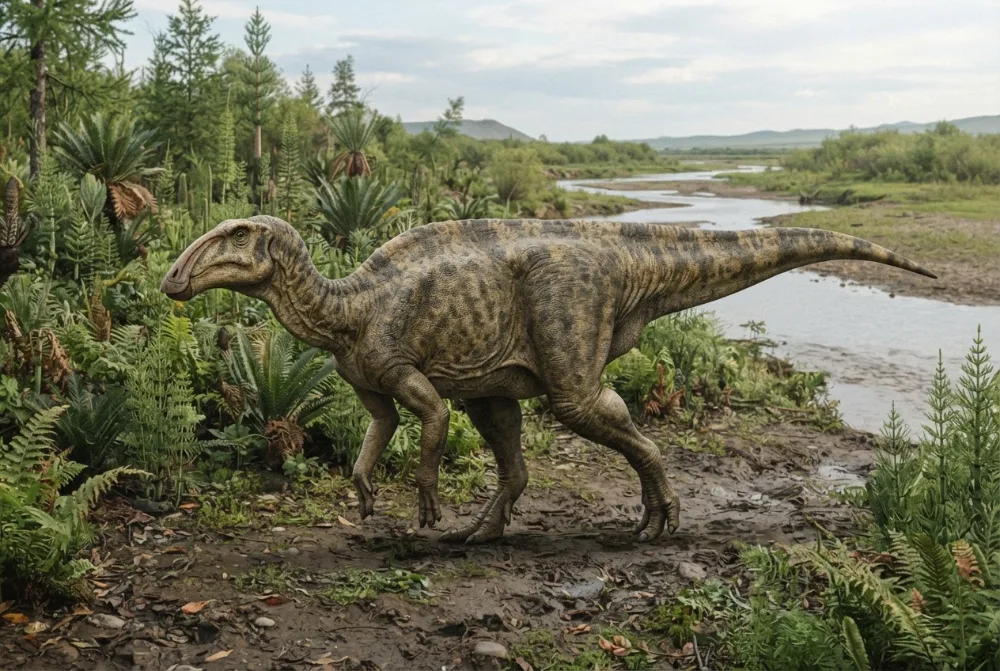
Altirhinus
Altirhinus was a big, plant-eating dinosaur that walked on two legs but could also drop to all fours to munch on low plants. It had a tall bump on its snout that gave it its name, and a wide mouth like a duck's bill for scooping up food.1
Rairarama rini?
Raiva hombe sei?
Raiva refu zvakadii?
Raiva rakakwirira zvakadii?
fungidziro
Rairema zvakadii?
 kureba seimbwa 8 kubva pamhino kusvika kumuswe🍌kureba semabhanana 44 akatevedzana🍉kurema semanwiwa 220🧸kurema sevana vekireshi 58🎒kurema sevana vechikoro 34🐻❄️kurema semabere echando 2.5🏃raigona kumhanya mamita 100 mumasekonzi 11 (munhu anomhanya kupfuura vose anoda 9.6)
Altirhinus raiva hombe sei kana richienzaniswa NEWE?
Masvomhu chete mubrowser yako. Hapana chinochengetwa kana kutumirwa kupi zvako.
Raimhanya zvakadii?


Zvinonakidza
Altirhinus had a thumb spike like a sharp nail, which it might have used for defense or to break open seeds.1
Its fifth finger could move a bit like a thumb, helping it grab food while eating.1
The tall arch on its snout was made by the nasal bones, and scientists think it might have been used for cooling, smelling, or showing off to other Altirhinus.1
Altirhinus lived about 125 to 100 million years ago, during the Early Cretaceous Period.1
Fossils of several Altirhinus of different ages were found together, including a nearly complete skull and a set of 34 tail bones.1
Altirhinus is a close relative of the duck-billed dinosaurs called hadrosaurids, but it lived a bit earlier.1
Mibvunzo inonyanya kubvunzwa nezve Altirhinus
?How big was Altirhinus?
About 6.5 to 8 metres long and weighed around 1.1 tonnes.1
?What did Altirhinus eat?
It was a plant-eater. It used its wide beak to crop plants and its cheek teeth to chew them, just like cows do today.1
?Why did Altirhinus have a bump on its nose?
Scientists aren't sure. It might have been used for cooling, smelling, making sounds, or showing off to other Altirhinus, like a peacock's tail.1
?When did Altirhinus live?
It lived during the Early Cretaceous Period, about 125 to 100 million years ago.1
Mubvisi wengano
Ngano: Altirhinus is the same as Iguanodon orientalis.
Chokwadi: Altirhinus was originally thought to be Iguanodon orientalis, but scientists later realized the old fossils were too broken to tell, and the new ones were a different dinosaur.1
Zvevanyanzvi vemadhino
- Zita resainzi
- Altirhinus
- Akaripa zita:
- Norman 19982
- Boka
- Vanodya miriwo vane miromo
- Mhuri / boka
- Neoiguanodontia2
- Kurongwa kwemhuka
- Ornithischia > Ornithopoda > Iguanodontia2
- Zera rematombo
- makore mamiriyoni 110 kusvika 100 (Albian)2
- Mapoka ematombo
- Khuren Dukh2
- Nyika
- Mongolia2
- Zvinyorwa zvemafosiri
- 1 mu The Paleobiology Database2
- Kuwanikwa
- Altirhinus was named by British paleontologist David B. Norman in 1998, based on fossils found in 1981 by a Soviet-Mongolian team led by Sergei Kurzanov.1
- Zvichiri kupokanwa
- Scientists are not sure what the tall arch on Altirhinus's snout was for. It might have helped with cooling, smelling, making sounds, or attracting mates.1
Kunobva chokwadi
- Altirhinus (en.wikipedia.org)
- Altirhinus in The Paleobiology Database (CC BY 4.0): zera, nzvimbo, mapoka ematombo, kurongwa kwemhuka.
Chokwadi chega chega papeji ino chine nhamba inoratidza kwachakabva. Kana takakanganisa chimwe chinhu, ruregerero, tiri vanoda madhino, kwete magazini yesainzi. Tiudze pa [email protected] tichazvigadzirisa.
 Rex ane nzara! Dino Wiki ipurojekiti yababa yemwanakomana wavo anoda madhino, mahara, pasina kushambadza uye pasina zvinokutevera. Vakuru vanogona kupa Rex chekudyadya kuti vabatsire kuchengeta saiti iri pamhepo.Fudza Rex
 Iguanodon
 Tenontosaurus
 Thescelosaurus
 Zalmoxes
 Camptosaurus
 Rhabdodon
 Stegosaurus
 Archaeopteryx
 Giganotosaurus
 Microraptor
 Deinonychus
 Baryonyx