 Uri dhino ripi? Kwizi
 Hondo yemadhino
 Mujaho wemadhino
 Mitambo midiki yemadhino
 Arubhamu yemasitika
 Rondedzero dzeTOP dzemadhino
 Ndishamise!
Rairarama rini?

Raiva hombe sei?
Raiva refu zvakadii?
Raiva rakakwirira zvakadii?
Rairema zvakadii?
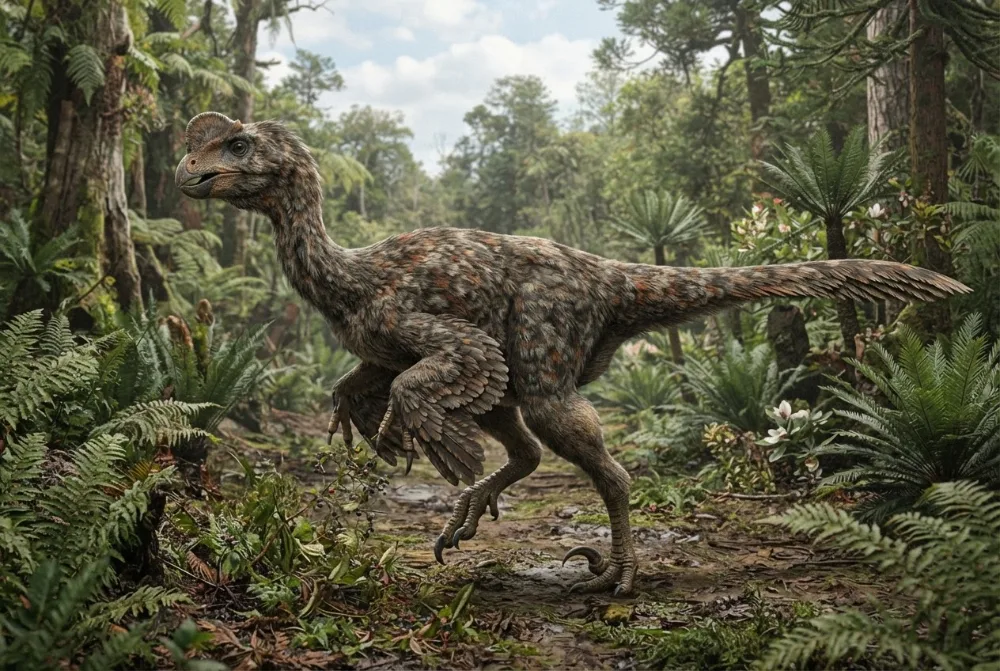
 kureba seimbwa 4 kubva pamhino kusvika kumuswe🍌kureba semabhanana 19 akatevedzana🍉kurema semanwiwa 20🧸kurema sevana vekireshi 5🎒kurema sevana vechikoro 3🏃raigona kumhanya mamita 100 mumasekonzi 7.5 (munhu anomhanya kupfuura vose anoda 9.6)
Caenagnathus raiva hombe sei kana richienzaniswa NEWE?
Masvomhu chete mubrowser yako. Hapana chinochengetwa kana kutumirwa kupi zvako.
Raimhanya zvakadii?


Zvinonakidza
Caenagnathus was first thought to be a bird because its jaw looked so bird-like.4
It was one of the largest caenagnathids, rivaling the size of Anzu wyliei.1
Its beak had three ridges on the tip, which may have helped it grip food.2
Caenagnathus lived alongside other caenagnathids like Citipes and Chirostenotes in the Dinosaur Park Formation.1
The type specimen is a lower jaw (mandible) found in Alberta, Canada.2
It was a ground-dwelling dinosaur that walked on two legs.4
Mibvunzo inonyanya kubvunzwa nezve Caenagnathus
?How big was Caenagnathus?
Caenagnathus was about 2.5 metres (8.2 feet) long and weighed around 85 to 100 kilograms (187 to 220 pounds). It was one of the largest caenagnathids, similar in size to its relative Anzu.3
?What did Caenagnathus eat?
Scientists think Caenagnathus ate both plants and meat, like a modern-day crow. Its toothless beak likely helped it grip a variety of foods.3
?Did Caenagnathus have feathers?
Yes, like all oviraptorosaurs, Caenagnathus would most likely have had a coat of feathers over its body.3
?Is Caenagnathus a dinosaur?
Yes, Caenagnathus is a dinosaur. It is a genus of caenagnathid oviraptorosaurian dinosaur from the Late Cretaceous.3
Mubvisi wengano
Ngano: Caenagnathus was a bird.
Chokwadi: Caenagnathus was a feathered dinosaur, not a bird. It belongs to the oviraptorosaur group.4
Zvevanyanzvi vemadhino
- Zita resainzi
- Caenagnathus
- Akaripa zita:
- Sternberg 19404
- Boka
- Madhino ane minhenga anoshamisa
- Mhuri / boka
- Caenagnathidae4
- Kurongwa kwemhuka
- Theropoda > Oviraptorosauria4
- Zera rematombo
- makore mamiriyoni 84 kusvika 66 (Campanian / Maastrichtian)4
- Mapoka ematombo
- Dinosaur Park, Hell Creek4
- Nyika
- Kanada, Amerika4
- Zvinyorwa zvemafosiri
- 8 mu The Paleobiology Database4
- Kuwanikwa
- Caenagnathus was named by R. M. Sternberg in 1940 based on a jaw fossil from the Dinosaur Park Formation in Alberta, Canada.4
- Zvichiri kupokanwa
- Scientists are still debating whether some fossils belong to Caenagnathus or to other similar caenagnathids.1
Kunobva chokwadi
- Caenagnathids of the Dinosaur Park Formation (Campanian) of Alberta, Canada: anatomy, osteohistology, taxonomy, and evolution | Vertebrate Anatomy Morphology Palaeontology (journals.library.ualberta.ca)
- PBDB Taxon (paleobiodb.org)
- Caenagnathus (en.wikipedia.org)
- Caenagnathus in The Paleobiology Database (CC BY 4.0): zera, nzvimbo, mapoka ematombo, kurongwa kwemhuka.
Chokwadi chega chega papeji ino chine nhamba inoratidza kwachakabva. Kana takakanganisa chimwe chinhu, ruregerero, tiri vanoda madhino, kwete magazini yesainzi. Tiudze pa [email protected] tichazvigadzirisa.
 Rex ane nzara! Dino Wiki ipurojekiti yababa yemwanakomana wavo anoda madhino, mahara, pasina kushambadza uye pasina zvinokutevera. Vakuru vanogona kupa Rex chekudyadya kuti vabatsire kuchengeta saiti iri pamhepo.Fudza Rex
 Therizinosaurus
 Oviraptor
 Chirostenotes
 Citipes
 Leptorhynchos
 Avimimus
 Tyrannosaurus
 Triceratops
 Velociraptor
 Spinosaurus
 Ankylosaurus
 Parasaurolophus