 Uri dhino ripi? Kwizi
 Hondo yemadhino
 Mujaho wemadhino
 Mitambo midiki yemadhino
 Arubhamu yemasitika
 Rondedzero dzeTOP dzemadhino
 Ndishamise!
Rairarama rini?

Raiva hombe sei?
Raiva refu zvakadii?
Raiva rakakwirira zvakadii?
fungidziro
Rairema zvakadii?
 kureba seimbwa 3 kubva pamhino kusvika kumuswe🍌kureba semabhanana 16 akatevedzana🍉kurema semanwiwa 22🧸kurema sevana vekireshi 6🎒kurema sevana vechikoro 3🏃raigona kumhanya mamita 100 mumasekonzi 7.5 (munhu anomhanya kupfuura vose anoda 9.6)
Citipati raiva hombe sei kana richienzaniswa NEWE?
Masvomhu chete mubrowser yako. Hapana chinochengetwa kana kutumirwa kupi zvako.
Raimhanya zvakadii?


Zvinonakidza
Citipati means 'funeral pyre lord' in Sanskrit, named after a skeleton-like spirit in Tibetan folklore.1
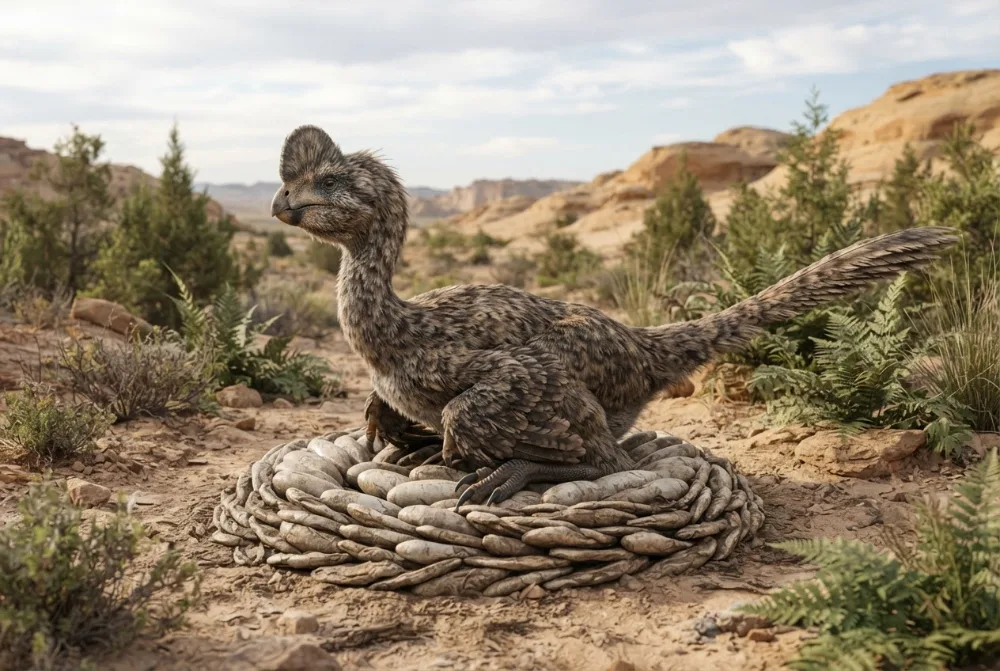
One famous Citipati fossil is nicknamed 'Big Mama' because it was found sitting on a nest of eggs.1
Citipati had a pygostyle, a fused tailbone that supported a fan of feathers, just like modern birds.1
Its arms and tail were covered in long feathers that probably helped shade and protect its eggs and babies.1
Citipati was one of the largest oviraptorids, about the size of an emu, and weighed as much as a large dog.1
Scientists think Citipati may have brought small dinosaurs to its nest to feed its hatchlings.1
Mibvunzo inonyanya kubvunzwa nezve Citipati
?How big was Citipati?
Citipati was about 2.5 to 2.9 metres long and weighed 75 to 110 kilograms. That is much larger than an emu.1
?What did Citipati eat?
Citipati was probably omnivorous, meaning it ate both plants and meat. Scientists think it may have brought small dinosaurs to its nest to feed its babies.12
?Did Citipati have feathers?
Yes, Citipati had long feathers on its arms and tail. These feathers probably helped protect its eggs and babies from sun, wind, and rain.1
?Why did Citipati sit on its eggs?
Citipati sat on its eggs to keep them warm and safe, just like birds do today. Its arms spread over the nest helped shade and protect the eggs.13
Mubvisi wengano
Ngano: Oviraptorids like Citipati were egg thieves.
Chokwadi: The name Oviraptor means 'egg thief', but fossils show Citipati was a caring parent that brooded its own eggs, not a robber.1
Zvevanyanzvi vemadhino
- Zita resainzi
- Citipati
- Akaripa zita:
- Clark et al. 20014
- Boka
- Madhino ane minhenga anoshamisa
- Mhuri / boka
- Oviraptoridae4
- Kurongwa kwemhuka
- Theropoda > Oviraptorosauria4
- Zera rematombo
- makore mamiriyoni 84 kusvika 72 (Campanian)4
- Mapoka ematombo
- Djadokhta4
- Nyika
- Mongolia4
- Zvinyorwa zvemafosiri
- 2 mu The Paleobiology Database4
- Kuwanikwa
- Citipati was named in 2001 by paleontologists James Clark, Mark Norell, and Rinchen Barsbold. The first fossils were found in the 1990s at Ukhaa Tolgod in Mongolia.12
- Zvichiri kupokanwa
- Scientists are not sure if Citipati was mostly a plant-eater or an omnivore that also ate meat.1
Kunobva chokwadi
- Citipati (en.wikipedia.org)
- Citipati | Natural History Museum (nhm.ac.uk)
- Citipati Osmolskae: Get to Know a Dino | AMNH (amnh.org)
- Citipati in The Paleobiology Database (CC BY 4.0): zera, nzvimbo, mapoka ematombo, kurongwa kwemhuka.
Chokwadi chega chega papeji ino chine nhamba inoratidza kwachakabva. Kana takakanganisa chimwe chinhu, ruregerero, tiri vanoda madhino, kwete magazini yesainzi. Tiudze pa [email protected] tichazvigadzirisa.
 Rex ane nzara! Dino Wiki ipurojekiti yababa yemwanakomana wavo anoda madhino, mahara, pasina kushambadza uye pasina zvinokutevera. Vakuru vanogona kupa Rex chekudyadya kuti vabatsire kuchengeta saiti iri pamhepo.Fudza Rex
 Therizinosaurus
 Oviraptor
 Chirostenotes
 Citipes
 Leptorhynchos
 Avimimus
 Tyrannosaurus
 Triceratops
 Velociraptor
 Spinosaurus
 Ankylosaurus
 Parasaurolophus