 Uri dhino ripi? Kwizi
 Hondo yemadhino
 Mujaho wemadhino
 Mitambo midiki yemadhino
 Arubhamu yemasitika
 Rondedzero dzeTOP dzemadhino
 Ndishamise!
Datai
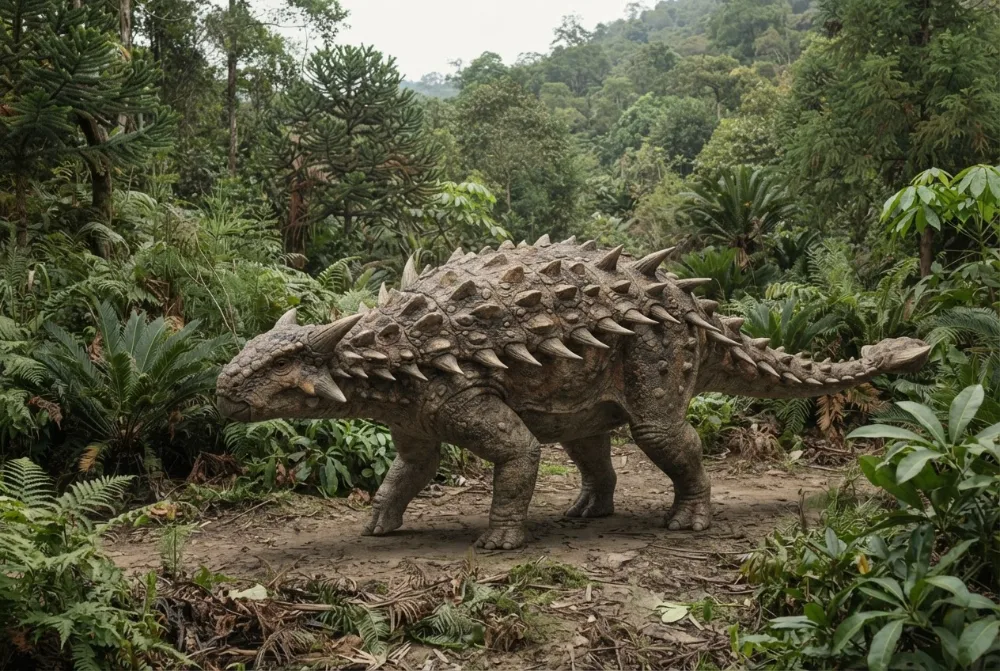
Datai was an armored dinosaur that walked on four legs and had bony plates and spikes on its body. It had a pair of horns on its cheeks, which made it look extra tough. It lived in what is now China, about 90 million years ago.12
Rairarama rini?
Raiva hombe sei?
Raiva refu zvakadii?
Raiva rakakwirira zvakadii?
fungidziro
 kureba seimbwa 4 kubva pamhino kusvika kumuswe🍌kureba semabhanana 22 akatevedzana🏃raigona kumhanya mamita 100 mumasekonzi 18 (munhu anomhanya kupfuura vose anoda 9.6)
Datai raiva hombe sei kana richienzaniswa NEWE?
Masvomhu chete mubrowser yako. Hapana chinochengetwa kana kutumirwa kupi zvako.
Raimhanya zvakadii?


Zvinonakidza
Datai had a pair of horns on its cheeks, which is unusual and helped scientists identify it as a new species.2
The two Datai fossils were found lying on top of each other, likely because they were buried quickly by wind-blown sand.2
The neck bones of one Datai had curved holes about 2 cm wide, probably made by small creatures like mollusks burrowing in the sediment after the dinosaur died.2
Datai's tail had ossified tendons, which suggests it may have had a tail club for defense.1
Scientists used Datai's features to help make the family tree of ankylosaurs more stable, because before, many relationships were uncertain.1
Datai lived during the Late Cretaceous, about 96 to 90 million years ago, which is a time when many armored dinosaurs roamed.1
Mibvunzo inonyanya kubvunzwa nezve Datai
?What did Datai eat?
Datai was a plant-eating dinosaur. It was a ground-dwelling herbivore, so it likely ate low-growing plants.3
?Did Datai have a tail club?
It likely did. Its tail bones were surrounded by ossified tendons, which suggests it may have had a tail club for defense.1
?How big was Datai?
Scientists don't know exactly, because the fossils are from young, not fully grown individuals. The known specimens were immature, so their adult size is uncertain.1
?When did Datai live?
Datai lived during the Late Cretaceous, about 96 to 90 million years ago, in what is now China.1
Mubvisi wengano
Ngano: Some people think all armored dinosaurs had tail clubs, but not all did.
Chokwadi: Datai likely had a tail club because of ossified tendons near its tail, but many other ankylosaurs did not have one.1
Zvevanyanzvi vemadhino
- Zita resainzi
- Datai
- Akaripa zita:
- Xing et al. 20243
- Boka
- Madhino ane nhovo
- Mhuri / boka
- Ankylosauridae3
- Kurongwa kwemhuka
- Ornithischia > Ankylosauria > Ankylosauridae > Thyreophora3
- Zera rematombo
- makore mamiriyoni 94 kusvika 86 (Turonian / Coniacian)3
- Mapoka ematombo
- Zhoutian3
- Nyika
- China3
- Zvinyorwa zvemafosiri
- 1 mu The Paleobiology Database3
- Kuwanikwa
- The fossils were found in 2016 in Jiangxi Province, China, and later acquired by the Yingliang Stone Natural History Museum. In 2024, a team led by Xing Lida named the new species Datai yingliangis.12
- Zvichiri kupokanwa
- Scientists are still debating exactly where Datai fits in the ankylosaur family tree. Depending on the analysis, it appears either as a basal ankylosaurine or as a close relative of Pinacosaurus.1
Kunobva chokwadi
- Datai (en.wikipedia.org)
- Fossils of new armored dinosaur species found in east China-Xinhua (english.news.cn)
- Datai in The Paleobiology Database (CC BY 4.0): zera, nzvimbo, mapoka ematombo, kurongwa kwemhuka.
Chokwadi chega chega papeji ino chine nhamba inoratidza kwachakabva. Kana takakanganisa chimwe chinhu, ruregerero, tiri vanoda madhino, kwete magazini yesainzi. Tiudze pa [email protected] tichazvigadzirisa.
 Rex ane nzara! Dino Wiki ipurojekiti yababa yemwanakomana wavo anoda madhino, mahara, pasina kushambadza uye pasina zvinokutevera. Vakuru vanogona kupa Rex chekudyadya kuti vabatsire kuchengeta saiti iri pamhepo.Fudza Rex
 Ankylosaurus
 Sauropelta
 Pinacosaurus
 Scutellosaurus
 Struthiosaurus
 Euoplocephalus
 Tyrannosaurus
 Triceratops
 Velociraptor
 Spinosaurus
 Parasaurolophus
 Pteranodon