 Uri dhino ripi? Kwizi
 Hondo yemadhino
 Mujaho wemadhino
 Mitambo midiki yemadhino
 Arubhamu yemasitika
 Rondedzero dzeTOP dzemadhino
 Ndishamise!
Helioceratops
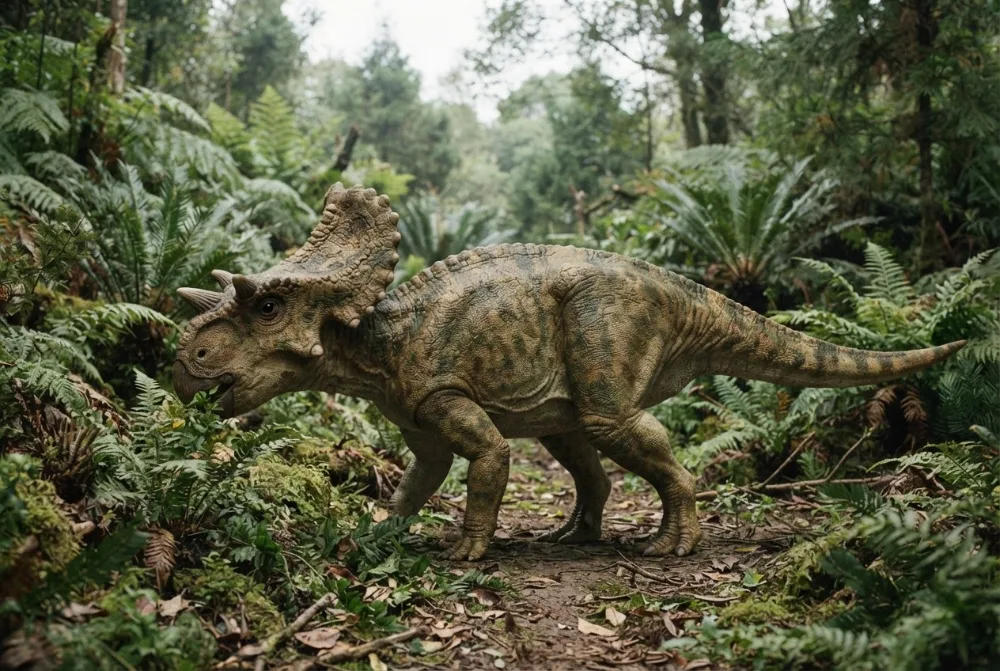
Helioceratops was a small, plant-eating dinosaur that lived about 100 million years ago in what is now China. It had a short lower jaw and walked on four legs. Its name means 'sun horned face' because scientists think horned dinosaurs like it first appeared in the East, where the sun rises.1
Rairarama rini?
Raiva hombe sei?
Raiva refu zvakadii?
Raiva rakakwirira zvakadii?
Rairema zvakadii?
 kureba sekatsi dzemumba 2.5 kubva pamhino kusvika kumuswe🍌kureba semabhanana 7 akatevedzana🍉kurema semanwiwa 4🏃raigona kumhanya mamita 100 mumasekonzi 11 (munhu anomhanya kupfuura vose anoda 9.6)
Helioceratops raiva hombe sei kana richienzaniswa NEWE?
Masvomhu chete mubrowser yako. Hapana chinochengetwa kana kutumirwa kupi zvako.
Raimhanya zvakadii?


Zvinonakidza
Helioceratops is known from only two jaw bones: a right lower jaw (the holotype) and a left upper jaw (the paratype). They were found close together and may belong to the same animal.1
Its lower jaw is very short and deep. The tooth row is only 60% longer than the height of the jawbone.1
The teeth of Helioceratops have an unusual pattern of ridges: up to nine ridges in front of the main ridge but only four behind it.1
Helioceratops lived during the Albian to Cenomanian stages, about 100 million years ago, at the boundary between the Early and Late Cretaceous.1
Scientists think Helioceratops is a close relative of Auroraceratops, which means 'dawn horned face'.1
Mibvunzo inonyanya kubvunzwa nezve Helioceratops
?How big was Helioceratops?
Helioceratops was a relatively small dinosaur. In 2010, Gregory S. Paul estimated it was about 1.3 metres (4.3 feet) long and weighed about 20 kilograms (44 pounds).1
?What did Helioceratops eat?
Helioceratops was a herbivore, meaning it ate plants. It lived on land and likely shared its habitat with another plant-eating dinosaur called Changchunsaurus.1
?When did Helioceratops live?
Helioceratops lived about 100 million years ago, during the Albian to Cenomanian stages, which is the boundary between the Early and Late Cretaceous. Its fossils were found in the Quantou Formation in China.14
?Why is it called Helioceratops?
The name means 'sun horned face' because scientists think horned dinosaurs first appeared in the East, where the sun rises. It also refers to its close relationship with Auroraceratops, the 'dawn horned face'.1
Zvevanyanzvi vemadhino
- Zita resainzi
- Helioceratops
- Akaripa zita:
- Jin et al. 20094
- Boka
- Madhino ane nyanga
- Mhuri / boka
- Leptoceratopsidae4
- Kurongwa kwemhuka
- Ornithischia > Ceratopsia4
- Zera rematombo
- makore mamiriyoni 121 kusvika 100 (Aptian / Albian)4
- Mapoka ematombo
- Quantou4
- Nyika
- China4
- Zvinyorwa zvemafosiri
- 1 mu The Paleobiology Database4
- Kuwanikwa
- Helioceratops was named in 2009 by Jin Liyong, Chen Jun, Zan Shuqin and Pascal Godefroit. The fossils were dug up in 2000 and 2002 at the Liufangzi site in Jilin Province, China.12
- Zvichiri kupokanwa
- Scientists are not sure whether Helioceratops had horns. No horn cores have been found, but it is a ceratopsian, so it may have had small horns on its face.1
Kunobva chokwadi
- Helioceratops (en.wikipedia.org)
- Newly Discovered Dinosaur Speicies Named 'Helioceratops' -- Beijing Review (bjreview.com)
- Helioceratops | The Sun-Horned Face of Cretaceous China (thedinosaurs.org)
- Helioceratops in The Paleobiology Database (CC BY 4.0): zera, nzvimbo, mapoka ematombo, kurongwa kwemhuka.
Chokwadi chega chega papeji ino chine nhamba inoratidza kwachakabva. Kana takakanganisa chimwe chinhu, ruregerero, tiri vanoda madhino, kwete magazini yesainzi. Tiudze pa [email protected] tichazvigadzirisa.
 Rex ane nzara! Dino Wiki ipurojekiti yababa yemwanakomana wavo anoda madhino, mahara, pasina kushambadza uye pasina zvinokutevera. Vakuru vanogona kupa Rex chekudyadya kuti vabatsire kuchengeta saiti iri pamhepo.Fudza Rex
 Triceratops
 Protoceratops
 Ojoceratops
 Tatankaceratops
 Psittacosaurus
 Centrosaurus
 Stegosaurus
 Iguanodon
 Archaeopteryx
 Giganotosaurus
 Microraptor
 Deinonychus