 Uri dhino ripi? Kwizi
 Hondo yemadhino
 Mujaho wemadhino
 Mitambo midiki yemadhino
 Arubhamu yemasitika
 Rondedzero dzeTOP dzemadhino
 Ndishamise!
Istiorachis
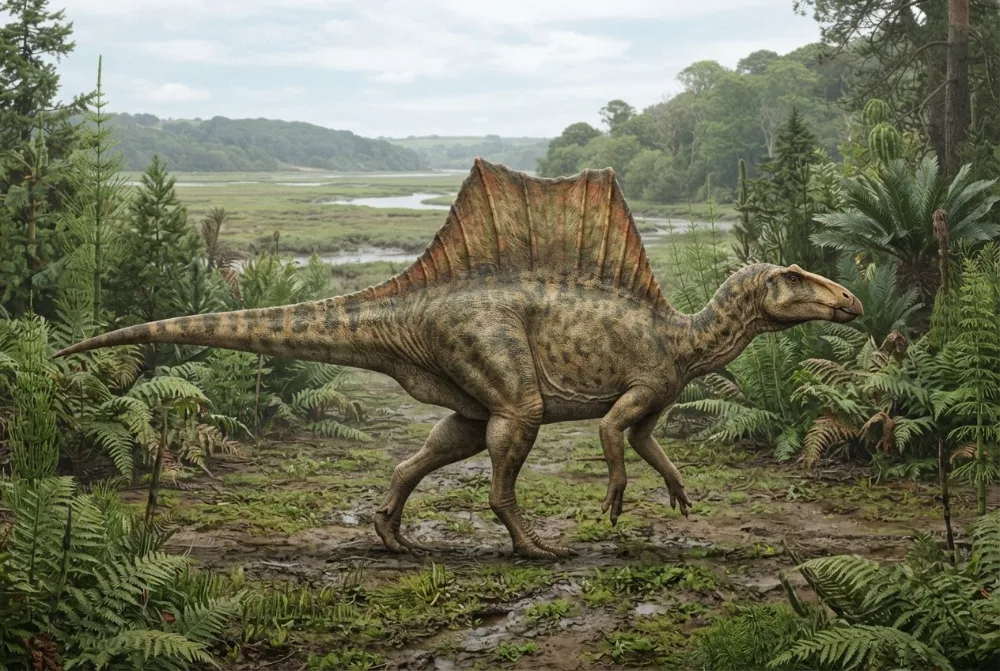
Istiorachis was a plant-eating dinosaur that lived on the Isle of Wight over 120 million years ago. It had a tall sail on its back made of long spines, which might have helped it show off to other dinosaurs. It was about the size of an American bison and weighed as much as a small car.2
Rairarama rini?
Raiva hombe sei?
Raiva rakakwirira zvakadii?
Rairema zvakadii?

Istiorachis raiva hombe sei kana richienzaniswa NEWE?
Masvomhu chete mubrowser yako. Hapana chinochengetwa kana kutumirwa kupi zvako.
Raimhanya zvakadii?


Zvinonakidza
Istiorachis had very long spines on its back and tail bones, making a sail-like structure that was probably used for showing off to mates or scaring predators.1
Its name honors Dame Ellen MacArthur, a famous sailor from the Isle of Wight who sailed solo around the world.1
The only known fossil of Istiorachis was found in a plant debris bed near Grange Chine on the Isle of Wight.1
Some of the skeleton was stolen by poachers before scientists could collect it.1
Istiorachis belonged to a group of dinosaurs called iguanodontians, which were common in the Early Cretaceous.2
The sail of Istiorachis was made of neural spines that were over four times taller than the main part of the backbone.1
Mibvunzo inonyanya kubvunzwa nezve Istiorachis
?How big was Istiorachis?
It was about the size of an American bison, stood around two metres tall, and weighed about one tonne (1,000 kilograms).2
?What did Istiorachis eat?
It was a plant-eating dinosaur, so it ate plants like ferns, cycads and conifers that grew in its warm, forested environment.3
Zvevanyanzvi vemadhino
- Zita resainzi
- Istiorachis
- Akaripa zita:
- Lockwood et al. 20254
- Boka
- Vanodya miriwo vane miromo
- Mhuri / boka
- Styracosterna4
- Kurongwa kwemhuka
- Ornithischia > Ornithopoda > Iguanodontia4
- Zera rematombo
- makore mamiriyoni 133 kusvika 121 (Hauterivian / Barremian)4
- Mapoka ematombo
- Wessex4
- Nyika
- United Kingdom4
- Zvinyorwa zvemafosiri
- 1 mu The Paleobiology Database4
- Kuwanikwa
- Istiorachis was named in 2025 by Jeremy Lockwood, David Martill, and Susannah Maidment. The fossil was dug up by Nicholas Chase from the Wessex Formation on the Isle of Wight.1
- Zvichiri kupokanwa
- Scientists are not sure exactly what the sail was used for. It might have helped with walking on four legs, or it might have been for showing off to other dinosaurs.1
Kunobva chokwadi
- The origins of neural spine elongation in iguanodontian dinosaurs and the osteology of a new sail-back styracosternan (Dinosauria, Ornithischia) from the Lower Cretaceous Wealden Group of England (onlinelibrary.wiley.com)
- New sail-backed dinosaur species unearthed on the Isle of Wight | Natural History Museum (nhm.ac.uk)
- Istiorachis (en.wikipedia.org)
- Istiorachis in The Paleobiology Database (CC BY 4.0): zera, nzvimbo, mapoka ematombo, kurongwa kwemhuka.
Chokwadi chega chega papeji ino chine nhamba inoratidza kwachakabva. Kana takakanganisa chimwe chinhu, ruregerero, tiri vanoda madhino, kwete magazini yesainzi. Tiudze pa [email protected] tichazvigadzirisa.
 Rex ane nzara! Dino Wiki ipurojekiti yababa yemwanakomana wavo anoda madhino, mahara, pasina kushambadza uye pasina zvinokutevera. Vakuru vanogona kupa Rex chekudyadya kuti vabatsire kuchengeta saiti iri pamhepo.Fudza Rex
 Iguanodon
 Tenontosaurus
 Thescelosaurus
 Zalmoxes
 Camptosaurus
 Rhabdodon
 Stegosaurus
 Archaeopteryx
 Giganotosaurus
 Microraptor
 Deinonychus
 Baryonyx