 Uri dhino ripi? Kwizi
 Hondo yemadhino
 Mujaho wemadhino
 Mitambo midiki yemadhino
 Arubhamu yemasitika
 Rondedzero dzeTOP dzemadhino
 Ndishamise!
Kinnareemimus
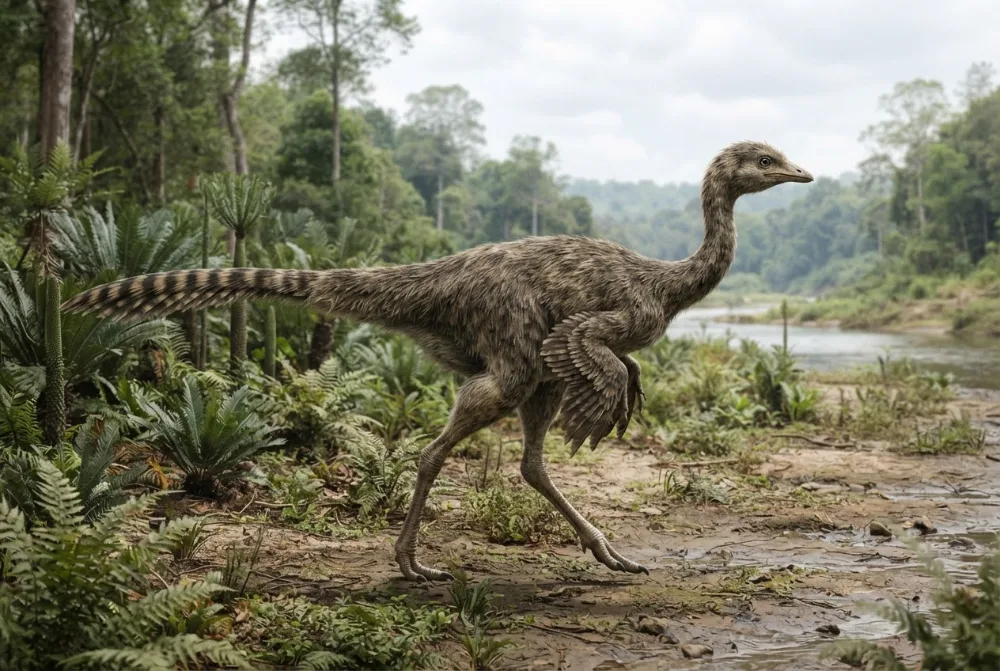
Kinnareemimus was a small, fast dinosaur that looked a bit like an ostrich. It lived in what is now Thailand during the Early Cretaceous period, about 125 million years ago. Scientists think it could run quickly on its long, bird-like legs.1
Rairarama rini?
Raiva hombe sei?
Raiva refu zvakadii?
Raiva rakakwirira zvakadii?
fungidziro
Rairema zvakadii?
 kureba sekatsi dzemumba 4 kubva pamhino kusvika kumuswe🍌kureba semabhanana 10 akatevedzana🍌kurema semabhanana 110🏃raigona kumhanya mamita 100 mumasekonzi 7.1 (munhu anomhanya kupfuura vose anoda 9.6)
Kinnareemimus raiva hombe sei kana richienzaniswa NEWE?
Masvomhu chete mubrowser yako. Hapana chinochengetwa kana kutumirwa kupi zvako.
Raimhanya zvakadii?


Zvinonakidza
The name Kinnareemimus comes from a Kinnaree, a magical creature from Thai stories that has a woman's head and a bird's legs.1
Only a single foot bone, a metatarsal, was chosen as the main specimen. Other bones from the same site were also assigned to this dinosaur.1
Its foot had a special shape called semi-arctometatarsalian, where the middle toe bone gets narrow in the middle and then widens at the bottom.1
Kinnareemimus lived alongside many other dinosaurs, including the huge sauropod Phuwiangosaurus and the meat-eating Siamotyrannus.1
The fossils were found in red clay and sandstone that were once a river floodplain with lakes.1
Scientists think Kinnareemimus might have been a good runner, but not as fast as later ostrich dinosaurs like Gallimimus.1
Mibvunzo inonyanya kubvunzwa nezve Kinnareemimus
?How big was Kinnareemimus?
About 1.8 metres (5.9 ft) long and possibly weighed around 13 kilograms (29 lb). Scientists are not sure because only a few foot bones have been found.1
?What did Kinnareemimus eat?
It was an ornithomimosaur, so it likely ate plants and small animals, like other ostrich dinosaurs. No direct evidence of its diet has been found.1
?Could Kinnareemimus run fast?
Probably yes, but not as fast as later ostrich dinosaurs like Gallimimus. Its leg bones suggest it was a good runner, though scientists are not certain.1
?Where was Kinnareemimus found?
In northeastern Thailand, in the Early Cretaceous Sao Khua Formation. The fossils were discovered at a site called Phu Wiang 5.1
Zvevanyanzvi vemadhino
- Zita resainzi
- Kinnareemimus
- Akaripa zita:
- Buffetaut et al. 20093
- Boka
- Madhino eostrich
- Mhuri / boka
- Ornithomimosauria3
- Kurongwa kwemhuka
- Theropoda > Ornithomimosauria3
- Zera rematombo
- makore mamiriyoni 126 kusvika 121 (Barremian)3
- Mapoka ematombo
- Sao Khua3
- Nyika
- Thailand3
- Zvinyorwa zvemafosiri
- 1 mu The Paleobiology Database3
- Kuwanikwa
- The first fossils were reported in 1997, but the dinosaur was officially named Kinnareemimus khonkaenensis in 2009 by Eric Buffetaut, Varavudh Suteethorn, and Haiyan Tong.1
- Zvichiri kupokanwa
- Because only a few bones are known, scientists are not sure exactly how big Kinnareemimus was or what its whole body looked like.1
Kunobva chokwadi
- Kinnareemimus (en.wikipedia.org)
- PBDB Taxon (paleobiodb.org)
- Kinnareemimus in The Paleobiology Database (CC BY 4.0): zera, nzvimbo, mapoka ematombo, kurongwa kwemhuka.
Chokwadi chega chega papeji ino chine nhamba inoratidza kwachakabva. Kana takakanganisa chimwe chinhu, ruregerero, tiri vanoda madhino, kwete magazini yesainzi. Tiudze pa [email protected] tichazvigadzirisa.
 Rex ane nzara! Dino Wiki ipurojekiti yababa yemwanakomana wavo anoda madhino, mahara, pasina kushambadza uye pasina zvinokutevera. Vakuru vanogona kupa Rex chekudyadya kuti vabatsire kuchengeta saiti iri pamhepo.Fudza Rex
 Gallimimus
 Ornithomimus
 Struthiomimus
 Deinocheirus
 Dromiceiomimus
 Archaeornithomimus
 Stegosaurus
 Iguanodon
 Archaeopteryx
 Giganotosaurus
 Microraptor
 Deinonychus