 Uri dhino ripi? Kwizi
 Hondo yemadhino
 Mujaho wemadhino
 Mitambo midiki yemadhino
 Arubhamu yemasitika
 Rondedzero dzeTOP dzemadhino
 Ndishamise!
Megapterygius
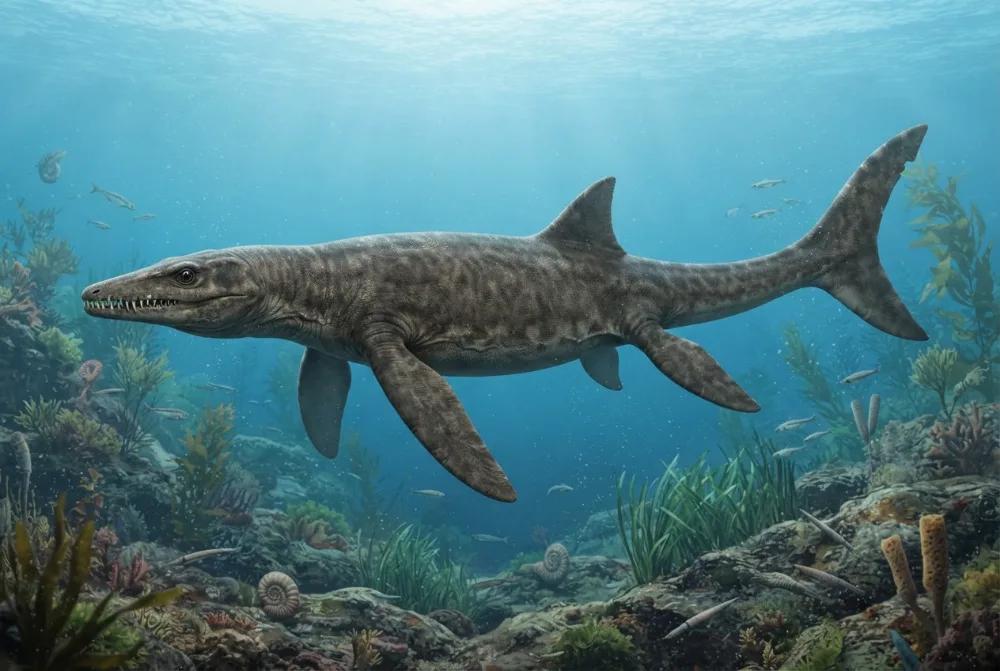
Megapterygius was a huge marine lizard that swam in the seas around Japan 72 million years ago. It had enormous flippers that were longer than its head, and scientists think it even had a dorsal fin like a shark!12
Rairarama rini?
Raiva hombe sei?
Raiva refu zvakadii?
Rairema zvakadii?
 kureba seimbwa 6 kubva pamhino kusvika kumuswe🍌kureba semabhanana 33 akatevedzana🍉kurema semanwiwa 90🧸kurema sevana vekireshi 24🎒kurema sevana vechikoro 14🏊raigona kushambira kureba kwedziva guru rekushambira (50 m) mumasekonzi 4.7
Megapterygius raiva hombe sei kana richienzaniswa NEWE?
Masvomhu chete mubrowser yako. Hapana chinochengetwa kana kutumirwa kupi zvako.
Raimhanya zvakadii?


Zvinonakidza
Megapterygius had rear flippers that were even longer than its front flippers, a feature only seen in one other mosasaur, Tylosaurus.1
Its flippers were longer than its skull, which is unique among mosasaurs with paddle-like limbs.1
The shape of its backbone suggests it had a dorsal fin, like a dolphin or shark, which would have helped it turn quickly in the water.12
Its skull was slightly wide around the eye sockets, giving it binocular vision that helped it hunt prey. This is only the second mosasaur known to have this ability.1
The fossil was found in 2006 by Akihiro Misaki, who was actually looking for ammonite fossils when he spotted a vertebra.12
More than 100 shark teeth were found around the Megapterygius skeleton, suggesting that sharks scavenged its body after it died.1
Megapterygius is the most complete mosasaur skeleton ever found in Japan or the northwestern Pacific.2
Mibvunzo inonyanya kubvunzwa nezve Megapterygius
?How big was Megapterygius?
Megapterygius was about 6 metres long, with a skull about 0.8 metres long. That is roughly the size of a large great white shark.12
?Did Megapterygius have a dorsal fin?
Scientists think it did. The shape of its backbone is like that of dolphins and porpoises, which have dorsal fins, and this would have helped it turn quickly in the water. It's the first mosasaur with evidence of a dorsal fin.12
?What did Megapterygius eat?
Scientists think it hunted large groups of small prey, like schools of fish. Its binocular vision and big flippers would have helped it catch them.1
Zvevanyanzvi vemadhino
- Zita resainzi
- Megapterygius
- Akaripa zita:
- Konishi et al. 20234
- Boka
- Mamosasauro
- Mhuri / boka
- Mosasauridae4
- Kurongwa kwemhuka
- Mosasauroidea4
- Zera rematombo
- makore mamiriyoni 84 kusvika 66 (Campanian / Maastrichtian)4
- Mapoka ematombo
- Toyajo4
- Nyika
- Japan4
- Zvinyorwa zvemafosiri
- 1 mu The Paleobiology Database4
- Kuwanikwa
- The fossil was discovered in 2006 by Akihiro Misaki in Wakayama Prefecture, Japan. It was named Megapterygius wakayamaensis by Takuya Konishi and colleagues in 2023.12
- Zvichiri kupokanwa
- Scientists are still debating how Megapterygius used its four large flippers and tail fin together for swimming, since no modern animal has a similar body shape.2
Kunobva chokwadi
- Megapterygius (en.wikipedia.org)
- UC paleontologist describes Wakayama 'blue dragon' that ruled prehistoric waters off Japan - University of Cincinnati: Founder of Co-op, Leader in Co-op | University of Cincinnati (uc.edu)
- Megapterygius | Dino Encyclopedia (dinosaurmuseum.jp)
- Megapterygius in The Paleobiology Database (CC BY 4.0): zera, nzvimbo, mapoka ematombo, kurongwa kwemhuka.
Chokwadi chega chega papeji ino chine nhamba inoratidza kwachakabva. Kana takakanganisa chimwe chinhu, ruregerero, tiri vanoda madhino, kwete magazini yesainzi. Tiudze pa [email protected] tichazvigadzirisa.
 Rex ane nzara! Dino Wiki ipurojekiti yababa yemwanakomana wavo anoda madhino, mahara, pasina kushambadza uye pasina zvinokutevera. Vakuru vanogona kupa Rex chekudyadya kuti vabatsire kuchengeta saiti iri pamhepo.Fudza Rex
 Mosasaurus
 Prognathodon
 Tylosaurus
 Platecarpus
 Clidastes
 Globidens
 Tyrannosaurus
 Triceratops
 Velociraptor
 Spinosaurus
 Ankylosaurus
 Parasaurolophus