 Uri dhino ripi? Kwizi
 Hondo yemadhino
 Mujaho wemadhino
 Mitambo midiki yemadhino
 Arubhamu yemasitika
 Rondedzero dzeTOP dzemadhino
 Ndishamise!
Nqwebasaurus
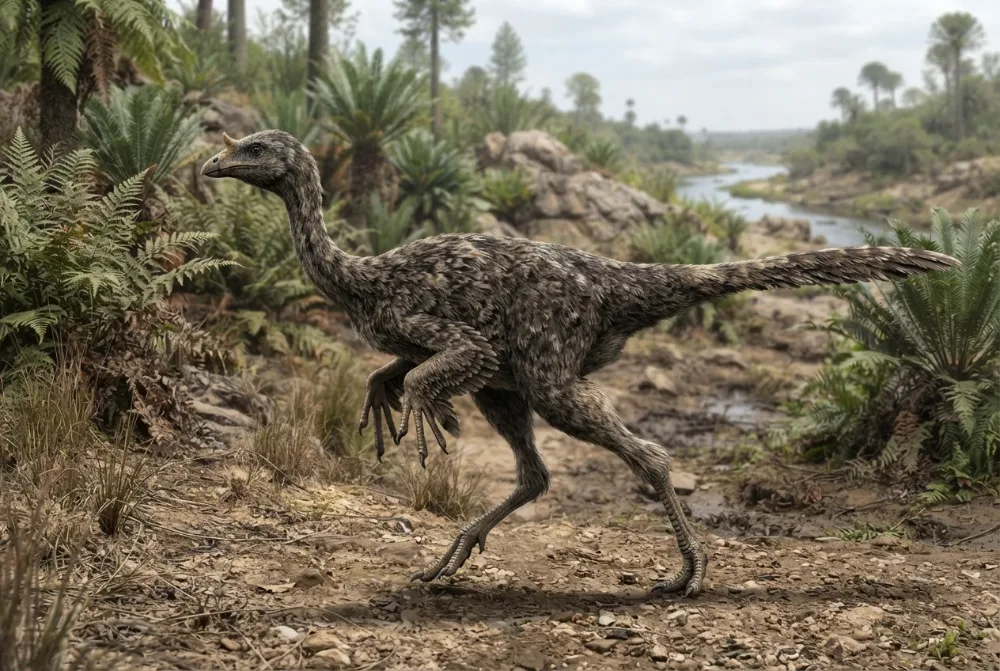
Nqwebasaurus was a small, fast-running dinosaur that lived in what is now South Africa. It had a long, three-fingered hand with a thumb that could partly grip things, and it swallowed stones to help grind up its food.12
Rairarama rini?
Raiva hombe sei?
Raiva refu zvakadii?
Raiva rakakwirira zvakadii?
Rairema zvakadii?
 kureba sekatsi dzemumba 2 kubva pamhino kusvika kumuswe🍌kureba semabhanana 6 akatevedzana🪶kureruka kupfuura katsi yemumba🍌kurema semabhanana 8🪑diki zvekugona kufamba pasi pechigaro🏃raigona kumhanya mamita 100 mumasekonzi 13 (munhu anomhanya kupfuura vose anoda 9.6)
Nqwebasaurus raiva hombe sei kana richienzaniswa NEWE?
Masvomhu chete mubrowser yako. Hapana chinochengetwa kana kutumirwa kupi zvako.
Raimhanya zvakadii?


Zvinonakidza
Nqwebasaurus is the oldest coelurosaur dinosaur ever found in Africa, pushing the record back about 50 million years.2
Its hands had three fingers, and the first finger (like a thumb) was partly opposable, meaning it could grasp things a little bit.1
The claws on its first and second fingers were curved, but the third claw was straight, which is unusual for a theropod dinosaur.1
Scientists found gastroliths (stomach stones) in its belly, which it used to help grind up tough plant food, just like some birds do today.2
Its species name, thwazi, means 'fast runner' in the Xhosa language.1
The only known fossil is a nearly complete skeleton nicknamed 'Kirky' because it was found in the Kirkwood Formation.1
Mibvunzo inonyanya kubvunzwa nezve Nqwebasaurus
?How big was Nqwebasaurus?
About 1 metre (3.3 feet) long and 1 kilogram (2.2 pounds) in weight, based on estimates by Gregory S. Paul. The only known fossil was a late juvenile about 0.9 metres (3 feet) long.1
?What did Nqwebasaurus eat?
It probably ate both plants and small animals. Scientists found gastroliths (stomach stones) in its belly, which it used to grind up tough plant food, and its teeth were reduced and not serrated.1
?How fast could Nqwebasaurus run?
Its species name thwazi means 'fast runner' in the Xhosa language, so it was built for speed. No exact speed is known from the fossils.1
?When did Nqwebasaurus live?
It lived during the Early Cretaceous period, about 140 million years ago.1
?Where was Nqwebasaurus found?
In South Africa, in the Kirkwood Formation. The only fossil was discovered in July 1996.1
?Is Nqwebasaurus a dinosaur?
Yes, it is a small theropod dinosaur, specifically a basal coelurosaur.1
Zvevanyanzvi vemadhino
- Zita resainzi
- Nqwebasaurus
- Akaripa zita:
- de Klerk et al. 20003
- Boka
- Madhino eostrich
- Mhuri / boka
- Ornithomimosauria3
- Kurongwa kwemhuka
- Theropoda > Ornithomimosauria3
- Zera rematombo
- makore mamiriyoni 143 kusvika 133 (Berriasian / Valanginian)3
- Mapoka ematombo
- Kirkwood3
- Nyika
- South Africa3
- Zvinyorwa zvemafosiri
- 1 mu The Paleobiology Database3
- Kuwanikwa
- Nqwebasaurus was discovered in July 1996 by William J. de Klerk and Callum Ross during a joint expedition in the Kirkwood Formation of South Africa. It was named and described in 2000.1
- Zvichiri kupokanwa
- Scientists are not sure exactly where Nqwebasaurus fits in the dinosaur family tree. Some studies say it is a basal ornithomimosaur, but others have placed it among coelurosaurs, compsognathids, or alvarezsaurids.1
Kunobva chokwadi
- Nqwebasaurus (en.wikipedia.org)
- A new coelurosaurian dinosaur from the Early Cretaceous of South Africa (tandfonline.com)
- Nqwebasaurus in The Paleobiology Database (CC BY 4.0): zera, nzvimbo, mapoka ematombo, kurongwa kwemhuka.
Chokwadi chega chega papeji ino chine nhamba inoratidza kwachakabva. Kana takakanganisa chimwe chinhu, ruregerero, tiri vanoda madhino, kwete magazini yesainzi. Tiudze pa [email protected] tichazvigadzirisa.
 Rex ane nzara! Dino Wiki ipurojekiti yababa yemwanakomana wavo anoda madhino, mahara, pasina kushambadza uye pasina zvinokutevera. Vakuru vanogona kupa Rex chekudyadya kuti vabatsire kuchengeta saiti iri pamhepo.Fudza Rex
 Gallimimus
 Ornithomimus
 Struthiomimus
 Deinocheirus
 Dromiceiomimus
 Archaeornithomimus
 Stegosaurus
 Iguanodon
 Archaeopteryx
 Giganotosaurus
 Microraptor
 Deinonychus