 Uri dhino ripi? Kwizi
 Hondo yemadhino
 Mujaho wemadhino
 Mitambo midiki yemadhino
 Arubhamu yemasitika
 Rondedzero dzeTOP dzemadhino
 Ndishamise!
Sacisaurus
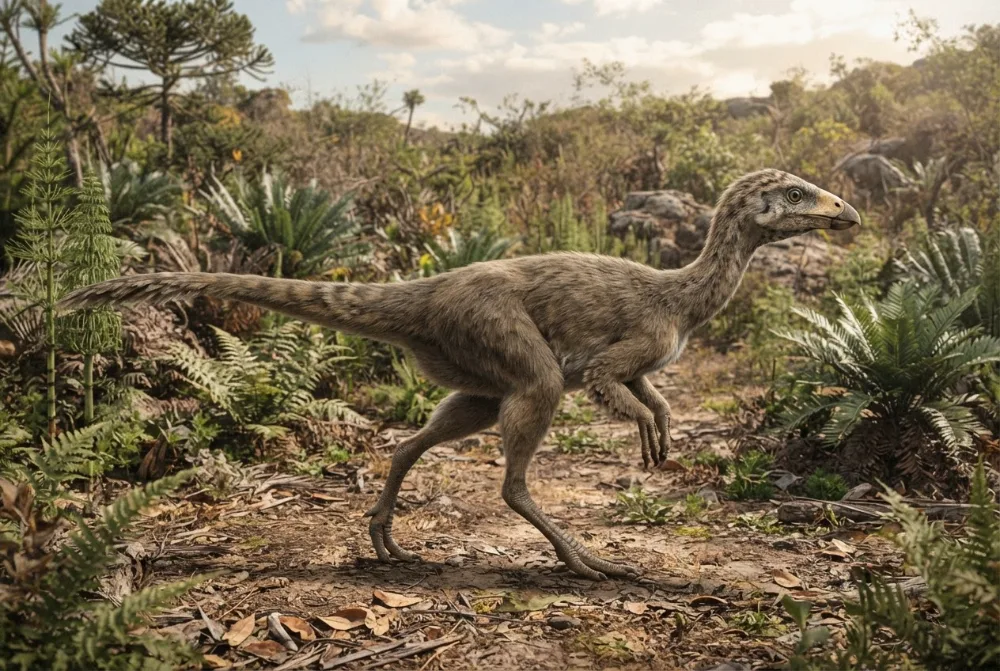
Sacisaurus was a small, fast plant-eater that lived in Brazil about 225 million years ago. It had a beak-like jaw and leaf-shaped teeth for munching on tough plants. This dinosaur got its name because scientists found 35 right thigh bones but only one left one, just like the one-legged Saci from Brazilian stories.1
Rairarama rini?
Raiva hombe sei?
Raiva refu zvakadii?
Raiva rakakwirira zvakadii?
 kureba sekatsi dzemumba 2 kubva pamhino kusvika kumuswe🍌kureba semabhanana 6 akatevedzana🪑diki zvekugona kufamba pasi pechigaro🏃raigona kumhanya mamita 100 mumasekonzi 13 (munhu anomhanya kupfuura vose anoda 9.6)
Sacisaurus raiva hombe sei kana richienzaniswa NEWE?
Masvomhu chete mubrowser yako. Hapana chinochengetwa kana kutumirwa kupi zvako.
Raimhanya zvakadii?


Zvinonakidza
Sacisaurus was a small dinosaur, only about 1.1 metres (3.6 feet) long and 35 centimetres (1.15 feet) tall at the hips.1
Its biggest teeth were just 3 millimetres (0.12 inches) long, perfect for nibbling plants.1
Sacisaurus had long, strong legs that made it a fast runner, able to dart away from predators.1
The tip of its lower jaw had a beak-like bone that looks like the predentary bone found in ornithischian dinosaurs.1
Scientists found 35 right thigh bones but only one left thigh bone, which is why they named it after the one-legged Saci.1
Sacisaurus lived during the Late Triassic period, about 225 million years ago, in what is now southern Brazil.1
Mibvunzo inonyanya kubvunzwa nezve Sacisaurus
?Is Sacisaurus a dinosaur?
Scientists are not sure. It is a silesaurid dinosauriform, which means it is a close relative of dinosaurs, but it is not classified as a dinosaur.13
?What did Sacisaurus eat?
Sacisaurus was an herbivore, meaning it ate plants. It had leaf-shaped teeth with large denticles and a beak-like jaw tip to help it chew tough plants.12
?How fast could Sacisaurus run?
Nobody knows the exact speed, but its long, strong legs and elongate hindlimbs suggest it was a fast runner with good cursorial ability.12
?Why is it called Sacisaurus?
It is named after Saci, a one-legged creature from Brazilian folklore, because scientists found 35 right thigh bones but only one left thigh bone among the fossils.1
Mubvisi wengano
Ngano: Some people think Sacisaurus was a true dinosaur.
Chokwadi: Most scientists now place Sacisaurus in Silesauridae, a group of dinosaur-like reptiles that are close relatives but not true dinosaurs. A few studies suggest it might be a very early ornithischian dinosaur, but this is debated.12
Zvevanyanzvi vemadhino
- Zita resainzi
- Sacisaurus
- Akaripa zita:
- Ferigolo and Langer 20073
- Boka
- Vanodya miriwo vane miromo
- Mhuri / boka
- Silesauridae3
- Kurongwa kwemhuka
- Ornithischia3
- Zera rematombo
- makore mamiriyoni 227 kusvika 206 (Norian)3
- Mapoka ematombo
- Caturrita3
- Nyika
- Brazil3
- Zvinyorwa zvemafosiri
- 1 mu The Paleobiology Database3
- Kuwanikwa
- Sacisaurus was discovered in 2001 near Agudo, Brazil, by a team led by paleontologist Jorge Ferigolo. The species was officially named in 2006 in the journal Historical Biology.1
- Zvichiri kupokanwa
- Scientists still debate whether Sacisaurus was a non-dinosaur dinosauromorph or one of the earliest ornithischian dinosaurs.12
Kunobva chokwadi
- Sacisaurus (en.wikipedia.org)
- Brazil): anatomy and affinities agudoensis (Caturrita Formation; Rio Grande do Sul, (paleolab.com.br)
- Sacisaurus in The Paleobiology Database (CC BY 4.0): zera, nzvimbo, mapoka ematombo, kurongwa kwemhuka.
Chokwadi chega chega papeji ino chine nhamba inoratidza kwachakabva. Kana takakanganisa chimwe chinhu, ruregerero, tiri vanoda madhino, kwete magazini yesainzi. Tiudze pa [email protected] tichazvigadzirisa.
 Rex ane nzara! Dino Wiki ipurojekiti yababa yemwanakomana wavo anoda madhino, mahara, pasina kushambadza uye pasina zvinokutevera. Vakuru vanogona kupa Rex chekudyadya kuti vabatsire kuchengeta saiti iri pamhepo.Fudza Rex
 Iguanodon
 Tenontosaurus
 Thescelosaurus
 Zalmoxes
 Camptosaurus
 Rhabdodon
 Nothosaurus
 Massospondylus
 Plateosaurus
 Coelophysis
 Podokesaurus
 Simosaurus