 Uri dhino ripi? Kwizi
 Hondo yemadhino
 Mujaho wemadhino
 Mitambo midiki yemadhino
 Arubhamu yemasitika
 Rondedzero dzeTOP dzemadhino
 Ndishamise!
Silesaurus
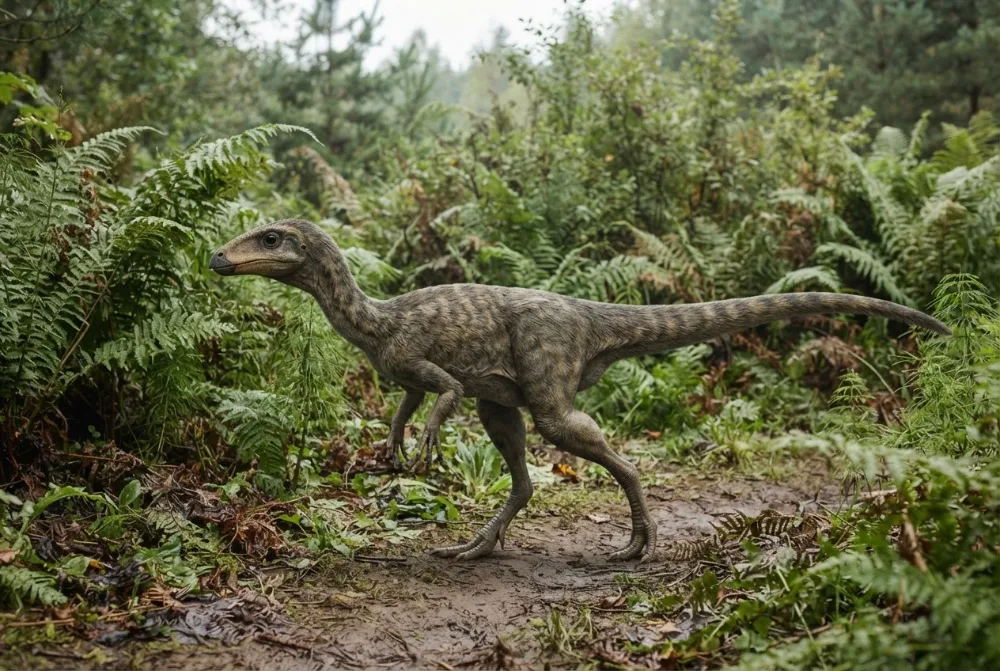
Silesaurus was a small, beaked plant-eater that lived about 230 million years ago in what is now Poland. It looked a bit like a dinosaur but was actually a close cousin, not a true dinosaur. Silesaurus had a horny beak on its lower jaw and weak front legs.12
Rairarama rini?
Raiva hombe sei?
Raiva refu zvakadii?
Raiva rakakwirira zvakadii?
Rairema zvakadii?

 kureba seimbwa 2.5 kubva pamhino kusvika kumuswe🍌kureba semabhanana 14 akatevedzana🍉kurema semanwiwa 5🏃raigona kumhanya mamita 100 mumasekonzi 9.2 (munhu anomhanya kupfuura vose anoda 9.6)
Silesaurus raiva hombe sei kana richienzaniswa NEWE?
Masvomhu chete mubrowser yako. Hapana chinochengetwa kana kutumirwa kupi zvako.
Raimhanya zvakadii?


Zvinonakidza
Silesaurus had a beak on its lower jaw, similar to later plant-eating dinosaurs like Lesothosaurus, but without the extra predentary bone.2
It had only 11 to 12 teeth in each dentary and maxilla, a low number compared to other early archosaurs.2
Its front limbs were long and slender, but weak, which scientists think is a special feature of this animal.1
Silesaurus had 25 presacral vertebrae, with 9 to 11 in the neck, and the last two back bones were fused to the hip bones.2
The first toe on its foot was reduced to a tiny metatarsal bone that probably did not have any toe bones.2
Silesaurus is the earliest known herbivore among the mesotarsal archosaurs, a group that includes dinosaurs and their relatives.2
Its fossils were found in a clay pit in Krasiejów, Poland, alongside remains of metoposaurs, phytosaurs, and aetosaurs.2
Mibvunzo inonyanya kubvunzwa nezve Silesaurus
?Was Silesaurus a dinosaur?
No, Silesaurus was not a dinosaur. It was a dinosauriform, a close cousin of dinosaurs.3
?How big was Silesaurus?
Silesaurus was about 2.3 metres long. It was lightly built and probably fast and agile.3
?What did Silesaurus eat?
Silesaurus probably ate both plants and insects. Scientists found beetle remains in fossil dung that may belong to Silesaurus, suggesting it pecked insects off the ground like modern birds.3
?Did Silesaurus have feathers?
Nobody knows for sure. The fossils do not preserve feathers, so scientists cannot tell if Silesaurus had them.3
?When did Silesaurus live?
Silesaurus lived about 230 million years ago during the Late Triassic period.3
?Where was Silesaurus found?
Silesaurus fossils were found in a clay pit in Krasiejów, Poland.3
Zvevanyanzvi vemadhino
- Zita resainzi
- Silesaurus
- Akaripa zita:
- Dzik 20034
- Boka
- Vanodya miriwo vane miromo
- Mhuri / boka
- Silesauridae4
- Kurongwa kwemhuka
- Ornithischia4
- Zera rematombo
- makore mamiriyoni 234 kusvika 227 (Carnian)4
- Mapoka ematombo
- Drawno Beds, Grabowa4
- Nyika
- Poland4
- Zvinyorwa zvemafosiri
- 3 mu The Paleobiology Database4
- Kuwanikwa
- Silesaurus was named by Polish paleontologist Jerzy Dzik in 2003. The fossils were found in a clay pit near Opole, Poland, in rocks from the Late Triassic period.14
- Zvichiri kupokanwa
- Scientists are not sure whether Silesaurus is an early member of the ornithischian dinosaur lineage, a common ancestor of both ornithischians and prosauropods, or a separate line that evolved plant-eating on its own.2
Kunobva chokwadi
- A beaked herbivorous archosaur with dinosaur affinities from the early Late Triassic of Poland: Journal of Vertebrate Paleontology: Vol 23, No 3 (tandfonline.com)
- A BEAKED HERBIVOROUS ARCHOSAUR WITH DINOSAUR AFFINITIES FROM THE EARLY LATE TRIASSIC OF POLAND (keuper.us.edu.pl)
- Silesaurus (en.wikipedia.org)
- Silesaurus in The Paleobiology Database (CC BY 4.0): zera, nzvimbo, mapoka ematombo, kurongwa kwemhuka.
Chokwadi chega chega papeji ino chine nhamba inoratidza kwachakabva. Kana takakanganisa chimwe chinhu, ruregerero, tiri vanoda madhino, kwete magazini yesainzi. Tiudze pa [email protected] tichazvigadzirisa.
 Rex ane nzara! Dino Wiki ipurojekiti yababa yemwanakomana wavo anoda madhino, mahara, pasina kushambadza uye pasina zvinokutevera. Vakuru vanogona kupa Rex chekudyadya kuti vabatsire kuchengeta saiti iri pamhepo.Fudza Rex
 Iguanodon
 Tenontosaurus
 Thescelosaurus
 Zalmoxes
 Camptosaurus
 Rhabdodon
 Nothosaurus
 Massospondylus
 Plateosaurus
 Coelophysis
 Podokesaurus
 Simosaurus