 Uri dhino ripi? Kwizi
 Hondo yemadhino
 Mujaho wemadhino
 Mitambo midiki yemadhino
 Arubhamu yemasitika
 Rondedzero dzeTOP dzemadhino
 Ndishamise!
Taniwhasaurus
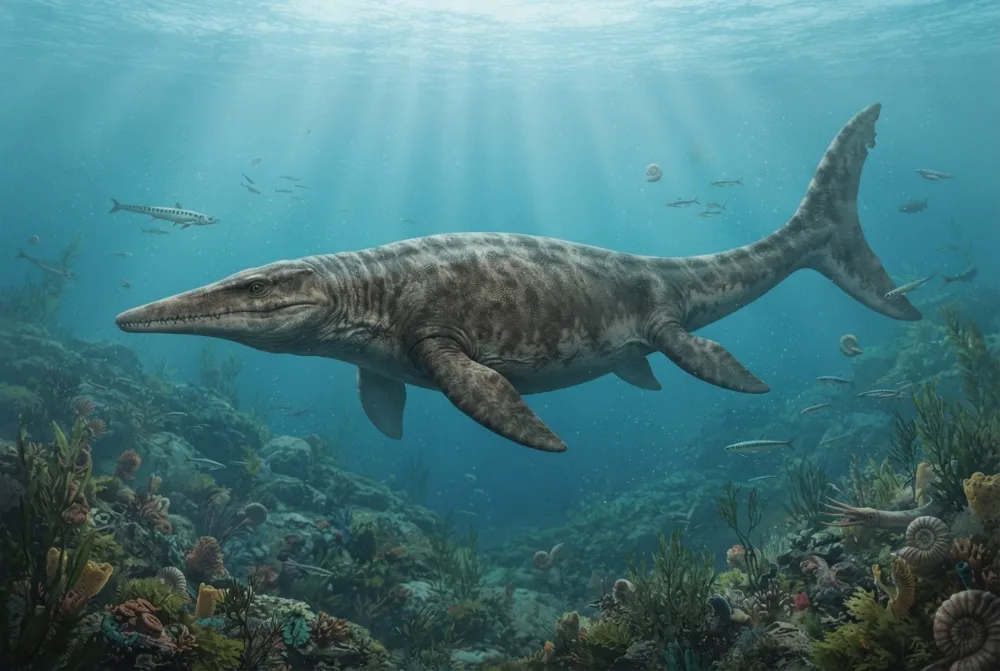
Taniwhasaurus was a fierce marine lizard that swam in the oceans during the time of dinosaurs. It had a long, toothless snout like a spear and used it to hunt fish and other sea creatures. This mosasaur lived near New Zealand, Antarctica, Japan, and South Africa.12
Rairarama rini?
Raiva hombe sei?
Raiva refu zvakadii?
 kureba seimbwa 7 kubva pamhino kusvika kumuswe🍌kureba semabhanana 37 akatevedzana🏊raigona kushambira kureba kwedziva guru rekushambira (50 m) mumasekonzi 4.9
Taniwhasaurus raiva hombe sei kana richienzaniswa NEWE?
Masvomhu chete mubrowser yako. Hapana chinochengetwa kana kutumirwa kupi zvako.
Raimhanya zvakadii?


Zvinonakidza
Taniwhasaurus belongs to a group called tylosaurines, which had a long, toothless tip on their upper jaw like a bony spear.1
The first fossils of Taniwhasaurus were found in the 1860s at Haumuri Bluff in New Zealand, and named by James Hector in 1874.1
One species, Taniwhasaurus antarcticus, was originally named Lakumasaurus after a sea spirit from the mythology of the Yahgan people of South America.1
A nearly complete skull of Taniwhasaurus antarcticus was discovered on James Ross Island in Antarctica in 2000, measuring 72 centimeters (28 inches) long.1
Taniwhasaurus lived between about 86 and 66 million years ago, during the Late Cretaceous period.2
The species Taniwhasaurus oweni was named in honor of the famous paleontologist Richard Owen, who first described marine reptiles from New Zealand.1
Taniwhasaurus fossils have been found in marine rocks that were once part of ancient seabeds, alongside ammonites, sharks, and other mosasaurs.1
Mibvunzo inonyanya kubvunzwa nezve Taniwhasaurus
?How big was Taniwhasaurus?
It was a medium-sized mosasaur, reaching about 6.7 metres (22 feet) long.1
?Could Taniwhasaurus swim?
Yes. Its powerful paddles and flexible spine helped it swim, and its tail gave the main push forward.1
?What did Taniwhasaurus eat?
It hunted fish and other sea creatures. It may have used an electro-sensitive snout to find prey.1
?Is Taniwhasaurus a dinosaur?
No, it is a mosasaur, which is a group of extinct marine lizards that lived alongside dinosaurs.1
?When did Taniwhasaurus go extinct?
It lived during the Late Cretaceous period and died out about 66 million years ago.1
Mubvisi wengano
Ngano: Some people think Taniwhasaurus was a dinosaur.
Chokwadi: Taniwhasaurus was a mosasaur, a type of marine lizard, not a dinosaur. Mosasaurs are reptiles that lived in the sea and are more closely related to modern snakes and monitor lizards.1
Zvevanyanzvi vemadhino
- Zita resainzi
- Taniwhasaurus
- Akaripa zita:
- Hector 18743
- Boka
- Mamosasauro
- Mhuri / boka
- Mosasauridae3
- Kurongwa kwemhuka
- Mosasauroidea3
- Zera rematombo
- makore mamiriyoni 86 kusvika 66 (Coniacian / Maastrichtian)3
- Mapoka ematombo
- Conway, Snow Hill Island, Conway Siltstone3
- Nyika
- New Zealand, Antakitika, Japan, South Africa3
- Zvinyorwa zvemafosiri
- 11 mu The Paleobiology Database3
- Kuwanikwa
- The first fossils of Taniwhasaurus were found in the 1860s at Haumuri Bluff, New Zealand. Scottish naturalist James Hector named the genus in 1874, calling it Taniwhasaurus oweni after the Māori taniwha and honoring Richard Owen.1
- Zvichiri kupokanwa
- Scientists are not sure if the species Taniwhasaurus mikasaensis from Japan is really a separate species, because its fossils are very incomplete.1
Kunobva chokwadi
- Taniwhasaurus (en.wikipedia.org)
- PBDB Taxon (paleobiodb.org)
- Taniwhasaurus in The Paleobiology Database (CC BY 4.0): zera, nzvimbo, mapoka ematombo, kurongwa kwemhuka.
Chokwadi chega chega papeji ino chine nhamba inoratidza kwachakabva. Kana takakanganisa chimwe chinhu, ruregerero, tiri vanoda madhino, kwete magazini yesainzi. Tiudze pa [email protected] tichazvigadzirisa.
 Rex ane nzara! Dino Wiki ipurojekiti yababa yemwanakomana wavo anoda madhino, mahara, pasina kushambadza uye pasina zvinokutevera. Vakuru vanogona kupa Rex chekudyadya kuti vabatsire kuchengeta saiti iri pamhepo.Fudza Rex
 Mosasaurus
 Prognathodon
 Tylosaurus
 Platecarpus
 Clidastes
 Globidens
 Tyrannosaurus
 Triceratops
 Velociraptor
 Spinosaurus
 Ankylosaurus
 Parasaurolophus