 Uri dhino ripi? Kwizi
 Hondo yemadhino
 Mujaho wemadhino
 Mitambo midiki yemadhino
 Arubhamu yemasitika
 Rondedzero dzeTOP dzemadhino
 Ndishamise!
Wuerhosaurus
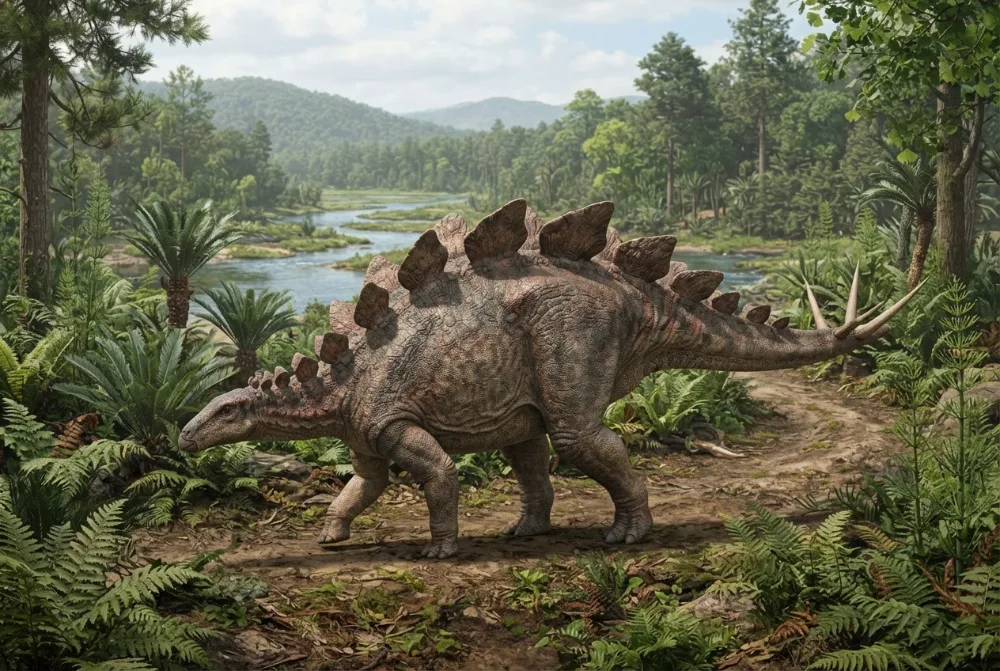
Wuerhosaurus was a plated dinosaur that munched on plants in ancient China. It had bony plates on its back and a spiky tail to protect itself. This stegosaur lived during the early Cretaceous period, about 137 to 100 million years ago.5
Rairarama rini?
Raiva hombe sei?
Raiva refu zvakadii?
Raiva rakakwirira zvakadii?
Rairema zvakadii?

 kureba seimbwa 7 kubva pamhino kusvika kumuswe🍌kureba semabhanana 39 akatevedzanakurema seimbwa 200🍉kurema semanwiwa 800🎒kurema semakirasi 5 akazara evana vechikoro🐻❄️kurema semabere echando 9🏃raigona kumhanya mamita 100 mumasekonzi 24 (munhu anomhanya kupfuura vose anoda 9.6)
Wuerhosaurus raiva hombe sei kana richienzaniswa NEWE?
Masvomhu chete mubrowser yako. Hapana chinochengetwa kana kutumirwa kupi zvako.
Raimhanya zvakadii?


Zvinonakidza
Wuerhosaurus was named by Chinese paleontologist Dong Zhiming in 1973.5
Its fossils were found in the Lianmuqin Formation in Xinjiang, China.2
Some scientists think Wuerhosaurus might actually be a species of Stegosaurus, called Stegosaurus homheni.1
The type specimen of Wuerhosaurus is a partial skeleton stored at the Institute of Vertebrate Paleontology and Paleoanthropology in Beijing.1
Wuerhosaurus lived alongside the meat-eating dinosaur Kelmayisaurus and the pterosaur Noripterus.2
Its back vertebrae had deep hollows above the spinal cord, which is different from other stegosaurs.1
Wuerhosaurus was a ground-dwelling herbivore that probably moved on all four legs.5
Mibvunzo inonyanya kubvunzwa nezve Wuerhosaurus
?How big was Wuerhosaurus?
Wuerhosaurus homheni was about 7 metres (23 feet) long and weighed 4 metric tons (4.4 short tons). A smaller species, W. ordosensis, was about 5 metres (16 feet) long and weighed 1.2 metric tons (1.3 short tons).3
?How many species of Wuerhosaurus are there?
There are two known species: Wuerhosaurus homheni and Wuerhosaurus ordosensis.3
?Is Wuerhosaurus the same as Stegosaurus?
Some scientists think Wuerhosaurus might actually be a species of Stegosaurus called Stegosaurus homheni, but other scientists disagree.3
Mubvisi wengano
Ngano: Many people think all stegosaurs lived in the Jurassic period.
Chokwadi: Wuerhosaurus lived in the early Cretaceous, much later than most stegosaurs.1
Zvevanyanzvi vemadhino
- Zita resainzi
- Wuerhosaurus
- Akaripa zita:
- Dong 19735
- Boka
- Madhino ane mahwendefa
- Mhuri / boka
- Stegosauridae5
- Kurongwa kwemhuka
- Ornithischia > Stegosauria > Thyreophora5
- Zera rematombo
- makore mamiriyoni 137 kusvika 100 (Valanginian / Albian)5
- Mapoka ematombo
- Lianmuqin, Ejinhoro5
- Nyika
- China5
- Zvinyorwa zvemafosiri
- 3 mu The Paleobiology Database5
- Kuwanikwa
- Wuerhosaurus was discovered in 1964 at a site called Wuerho in Xinjiang, China. Dong Zhiming named it in 1973 based on a partial skeleton.2
- Zvichiri kupokanwa
- Scientists debate whether Wuerhosaurus is a separate genus or just a species of Stegosaurus.1
Kunobva chokwadi
- PBDB Taxon (paleobiodb.org)
- PBDB Collection (paleobiodb.org)
- Wuerhosaurus (en.wikipedia.org)
- enchantedlearning.com (enchantedlearning.com)
- Wuerhosaurus in The Paleobiology Database (CC BY 4.0): zera, nzvimbo, mapoka ematombo, kurongwa kwemhuka.
Chokwadi chega chega papeji ino chine nhamba inoratidza kwachakabva. Kana takakanganisa chimwe chinhu, ruregerero, tiri vanoda madhino, kwete magazini yesainzi. Tiudze pa [email protected] tichazvigadzirisa.
 Rex ane nzara! Dino Wiki ipurojekiti yababa yemwanakomana wavo anoda madhino, mahara, pasina kushambadza uye pasina zvinokutevera. Vakuru vanogona kupa Rex chekudyadya kuti vabatsire kuchengeta saiti iri pamhepo.Fudza Rex
 Stegosaurus
 Diracodon
 Hypsirophus
 Dacentrurus
 Miragaia
 Kentrosaurus
 Iguanodon
 Archaeopteryx
 Giganotosaurus
 Microraptor
 Deinonychus
 Baryonyx