 Kwisi: O dinosaure efe?
 Ntwa ya didinosaure
 Peiso ya didinosaure
 Dipapadi tse nyane tsa didinosaure
 Albamo ya ditikara
 Manane a TOP a didinosaure
 Nkgethele!
E phetse neng?

E ne e le kgolo hakae?
E ne e le telele hakae?
E ne e phahame hakae?
E ne e le boima hakae?

 telele jwaloka dintja tse 8 ho tloha nkong ho isa mohatleng🍌telele jwaloka dibanana tse 42 di behilwe ka molaboima jwaloka dintja tse 100🍉boima jwaloka mahapu a 400🎒boima jwaloka ditlelase tse feletseng tse 2.5 tsa bana ba sekolo🐻❄️boima jwaloka dibere tse tshweu tse 4🏃e ne e ka matha dimitara tse 100 ka metsotswana e 12 (motho ya lebelo ka ho fetisisa o hloka 9,6)
Beibeilong e ne e le kgolo hakae ha e bapiswa le WENA?
Ke dipalo feela ho browser ya hao. Ha ho letho le bolokwang kapa le romelwang kae kapa kae.
E ne e le lebelo hakae?


Dintlha tse monate
Beibeilong laid the largest known dinosaur eggs, each over 40 centimeters long.1
The baby skeleton is only 23 centimeters long, but it was probably an embryo that had just hatched.1
Its name means 'baby dragon' in Chinese, because the fossil was nicknamed 'Baby Louie'.1
Beibeilong is the first caenagnathid dinosaur known from both eggs and bones together.1
The eggs were so big that the baby would have fit inside with room to spare, taking up only about two-thirds of the egg's volume.1
Dipotso tse botswang haholo ka Beibeilong
?Was Beibeilong a dinosaur?
Yes, Beibeilong was a type of dinosaur called a caenagnathid, which is part of the oviraptorosaur group. It lived in China during the Late Cretaceous period, about 96 to 88 million years ago.2
?How big was Beibeilong?
Beibeilong was a huge dinosaur, about 7.5 metres long and weighed around 1.5 to 2 metric tons. That is as big as some of the largest oviraptorosaurs.21
?What did Beibeilong eat?
Beibeilong had a toothless beak like a bird, so it probably ate plants and small animals. Scientists think it used its beak to bite and crush food.2
?Did Beibeilong have feathers?
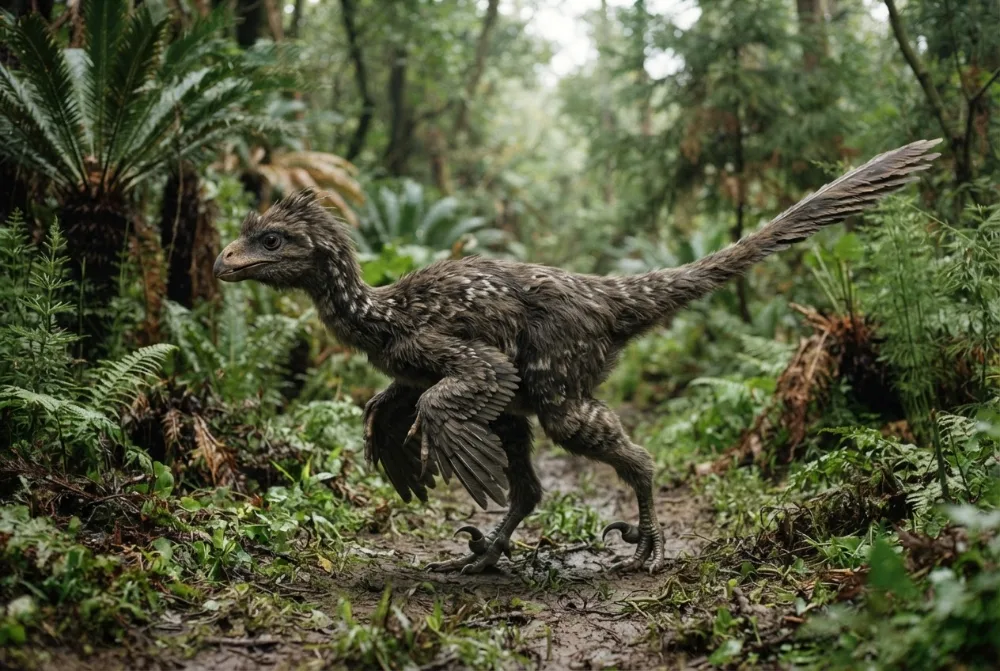
Yes, Beibeilong was a feathered dinosaur. It looked a bit like a giant bird, with feathers covering its body.4
Mosenyi wa ditshomo
Tshomo: Some people think Beibeilong was a bird because it had feathers and a beak.
Nnete: Beibeilong was a dinosaur, not a bird, even though it is closely related to birds.1
Bakeng sa ditsebi tsa didinosaure
- Lebitso la saense
- Beibeilong
- E rehilwe ke
- Pu et al. 20175
- Sehlopha
- Didinosaure tse makatsang tse nang le mafofa
- Lelapa / leloko
- Caenagnathidae5
- Tlhophiso
- Theropoda > Oviraptorosauria5
- Dilemo tsa mafika
- dilemo tse dimilione tse 100 ho isa ho 90 (Cenomanian / Turonian)5
- Dibopeho tsa mafika
- Gaogou5
- Dinaha
- Tjhaena5
- Direkoto tsa difosili
- 1 ho The Paleobiology Database5
- Ho sibollwa
- The fossil was found in China, but it was illegally taken out of the country. It was brought back, and scientists named it Beibeilong sinensis in 2017.1
- E sa ntse e phehwa kgang
- Scientists are still not sure exactly how big an adult Beibeilong was, because only a baby skeleton has been found.1
Moo dintlha di tswang teng
- Perinate and eggs of a giant caenagnathid dinosaur from the Late Cretaceous of central China | Nature Communications (nature.com)
- Beibeilong (en.wikipedia.org)
- Smuggled dino eggs gave birth to ‘baby dragons' (science.org)
- 'Baby Dragon' Dinosaur Found Inside Giant Egg | National Geographic (nationalgeographic.com)
- Beibeilong in The Paleobiology Database (CC BY 4.0): dilemo, dibaka, dibopeho tsa mafika, tlhophiso.
Ntlha e nngwe le e nngwe leqepheng lena e na le nomoro e supang mohlodi wa yona. Haeba re fositse ho hong, re kopa tshwarelo, re balatedi ba didinosaure, ha re koranta ya saense. Re bolelle ho [email protected] mme re tla e lokisa.
 Rex o lapile! Dino Wiki ke projeke ya ntate bakeng sa mora wa hae ya ratang didinosaure, ke mahala, ha ho dipapatso, ha ho disebedi. Batho ba baholo ba ka fepa Rex seneke ho thusa hore e dule e le inthaneteng.Fepa Rex
Tse ding tsa sehlopha se le seng: Didinosaure tse makatsang tse nang le mafofa
 TherizinosaurusDidinosaure tse makatsang tse nang le mafofa
 OviraptorDidinosaure tse makatsang tse nang le mafofa
 ChirostenotesDidinosaure tse makatsang tse nang le mafofa
 CitipesDidinosaure tse makatsang tse nang le mafofa
 LeptorhynchosDidinosaure tse makatsang tse nang le mafofa
 AvimimusDidinosaure tse makatsang tse nang le mafofa
 Tyrannosaurus
 Triceratops
 Velociraptor
 Spinosaurus
 Ankylosaurus
 Parasaurolophus