 Kwisi: O dinosaure efe?
 Ntwa ya didinosaure
 Peiso ya didinosaure
 Dipapadi tse nyane tsa didinosaure
 Albamo ya ditikara
 Manane a TOP a didinosaure
 Nkgethele!
E phetse neng?

E ne e le lebelo hakae?


Dintlha tse monate
Changmaornis is known from just a partial skeleton including foot bones, vertebrae, and part of the hip.1
Its third toe was the longest, which is different from its relative Gansus, where the fourth toe was longest.1
Changmaornis had blunt claws on its feet without strong flexor tubercles, suggesting it did not climb trees much.1
It lived alongside other early birds like Gansus, Yumenornis, and Jiuquanornis in the same ancient lake area.1
Scientists think Changmaornis may have been aquatic, like a modern loon or grebe, because its foot bones look similar.1
The name Changmaornis comes from Changma Town in China, where the fossil was dug up.1
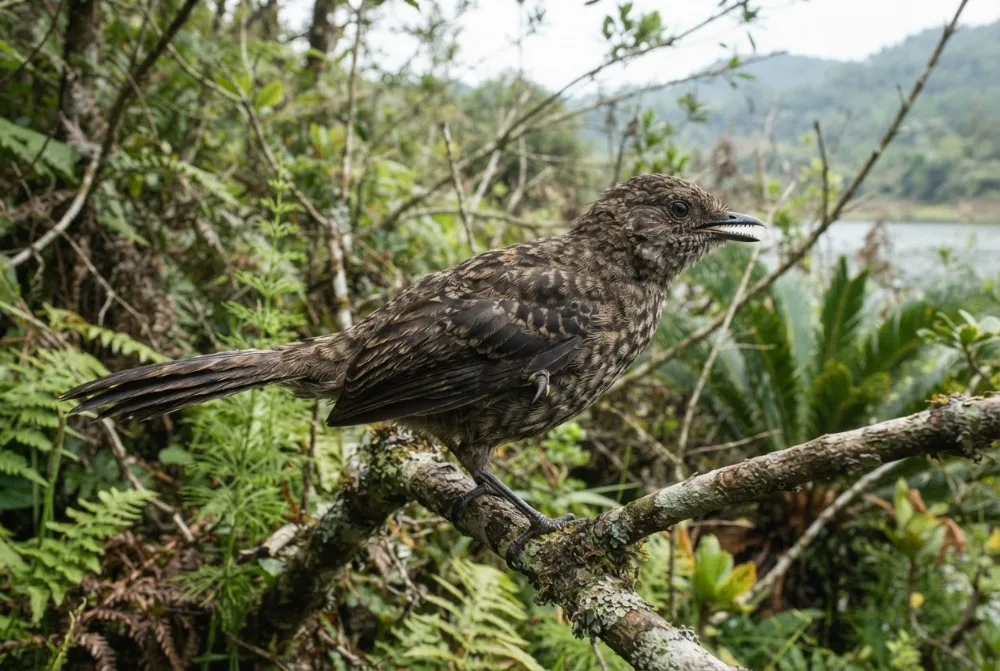
Bakeng sa ditsebi tsa didinosaure
- Lebitso la saense
- Changmaornis
- E rehilwe ke
- Wang et al. 20132
- Sehlopha
- Dinonyana tsa pele
- Lelapa / leloko
- Ornithuromorpha2
- Tlhophiso
- Theropoda > Avialae2
- Dilemo tsa mafika
- dilemo tse dimilione tse 121 ho isa ho 113 (Aptian)2
- Dibopeho tsa mafika
- Xiagou2
- Dinaha
- Tjhaena2
- Direkoto tsa difosili
- 1 ho The Paleobiology Database2
- Ho sibollwa
- Changmaornis was named in 2013 by Wang Y.-M. and colleagues based on a fossil found in the Xiagou Formation of Gansu, China. The species name houi honors Professor Lian-Hai Hou, who named the first Mesozoic bird from China.1
- E sa ntse e phehwa kgang
- Scientists are not sure whether Changmaornis lived mostly on land or in water, because its skeleton is incomplete.1
Moo dintlha di tswang teng
- Previously Unrecognized Ornithuromorph Bird Diversity in the Early Cretaceous Changma Basin, Gansu Province, Northwestern China | PLOS One (journals.plos.org)
- Changmaornis in The Paleobiology Database (CC BY 4.0): dilemo, dibaka, dibopeho tsa mafika, tlhophiso.
Ntlha e nngwe le e nngwe leqepheng lena e na le nomoro e supang mohlodi wa yona. Haeba re fositse ho hong, re kopa tshwarelo, re balatedi ba didinosaure, ha re koranta ya saense. Re bolelle ho [email protected] mme re tla e lokisa.
 Rex o lapile! Dino Wiki ke projeke ya ntate bakeng sa mora wa hae ya ratang didinosaure, ke mahala, ha ho dipapatso, ha ho disebedi. Batho ba baholo ba ka fepa Rex seneke ho thusa hore e dule e le inthaneteng.Fepa Rex
 Archaeopteryx
 Hesperornis
 Ichthyornis
 Baptornis
 Jurapteryx
 Gobipteryx
 Stegosaurus
 Iguanodon
 Giganotosaurus
 Microraptor
 Deinonychus
 Baryonyx