 Kwisi: O dinosaure efe?
 Ntwa ya didinosaure
 Peiso ya didinosaure
 Dipapadi tse nyane tsa didinosaure
 Albamo ya ditikara
 Manane a TOP a didinosaure
 Nkgethele!
Gracilornis
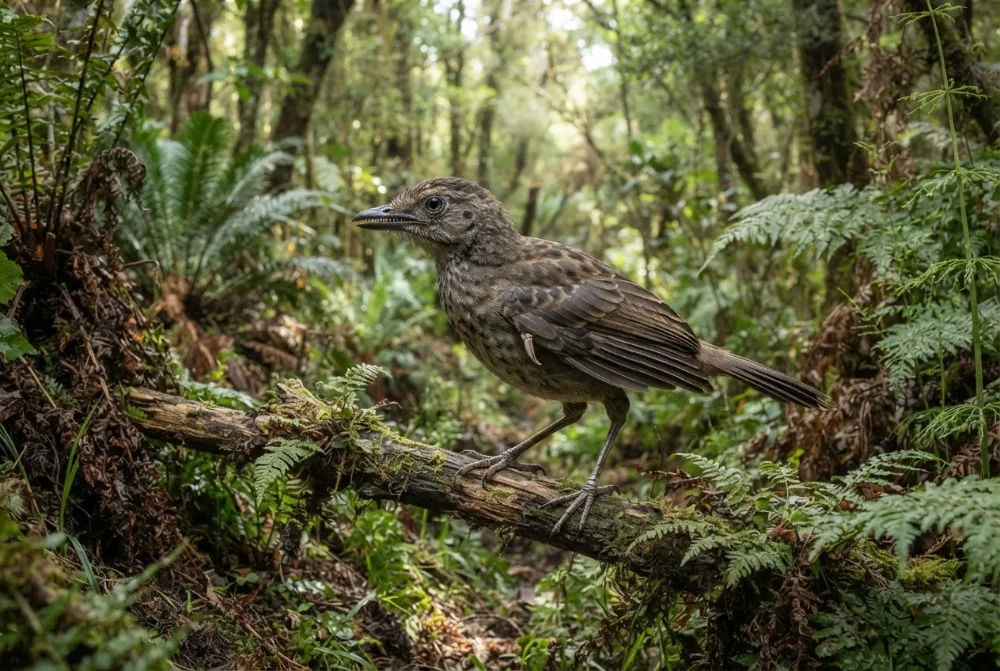
Gracilornis was a tiny, early bird that lived in China during the Age of Dinosaurs. It had a very slender skeleton and could fly, but it was not a dinosaur itself. It belonged to a group of ancient birds called enantiornithines.12
E phetse neng?
E ne e le kgolo hakae?
E ne e le telele hakae?
Gracilornis e ne e le kgolo hakae ha e bapiswa le WENA?
Ke dipalo feela ho browser ya hao. Ha ho letho le bolokwang kapa le romelwang kae kapa kae.
E ne e le lebelo hakae?


Dintlha tse monate
Gracilornis had a very small sternum, or breastbone, compared to its body length. The sternum was only about 11% of the trunk length.3
This bird lived around 110 million years ago, during the Early Cretaceous period.1
The name Gracilornis comes from Latin and Greek words meaning 'slender bird', because its skeleton was very thin and light.1
Gracilornis is known from a nearly complete skull and skeleton, which helps scientists understand what it looked like.1
It belonged to a group called Enantiornithes, which were the most common birds during the Cretaceous period.1
Bakeng sa ditsebi tsa didinosaure
- Lebitso la saense
- Gracilornis
- E rehilwe ke
- Li and Hou 20114
- Sehlopha
- Dinonyana tsa pele
- Lelapa / leloko
- Cathayornithidae4
- Tlhophiso
- Theropoda > Avialae4
- Dilemo tsa mafika
- dilemo tse dimilione tse 121 ho isa ho 113 (Aptian)4
- Dibopeho tsa mafika
- Jiufotang4
- Dinaha
- Tjhaena4
- Direkoto tsa difosili
- 1 ho The Paleobiology Database4
- Ho sibollwa
- Gracilornis was named by Li Li and Hou Shilin in 2011. They found the fossil in the Jiufotang Formation in Chaoyang, Liaoning, China.1
- E sa ntse e phehwa kgang
- Scientists are not sure exactly how Gracilornis flew, because its small sternum might mean it had weak flight muscles.3
Moo dintlha di tswang teng
- Gracilornis (en.wikipedia.org)
- PBDB Taxon (paleobiodb.org)
- Gracilornis, enantiornithine bird from China (reptilis.net)
- Gracilornis in The Paleobiology Database (CC BY 4.0): dilemo, dibaka, dibopeho tsa mafika, tlhophiso.
Ntlha e nngwe le e nngwe leqepheng lena e na le nomoro e supang mohlodi wa yona. Haeba re fositse ho hong, re kopa tshwarelo, re balatedi ba didinosaure, ha re koranta ya saense. Re bolelle ho [email protected] mme re tla e lokisa.
 Rex o lapile! Dino Wiki ke projeke ya ntate bakeng sa mora wa hae ya ratang didinosaure, ke mahala, ha ho dipapatso, ha ho disebedi. Batho ba baholo ba ka fepa Rex seneke ho thusa hore e dule e le inthaneteng.Fepa Rex
 Archaeopteryx
 Hesperornis
 Ichthyornis
 Baptornis
 Jurapteryx
 Gobipteryx
 Stegosaurus
 Iguanodon
 Giganotosaurus
 Microraptor
 Deinonychus
 Baryonyx