 Kwisi: O dinosaure efe?
 Ntwa ya didinosaure
 Peiso ya didinosaure
 Dipapadi tse nyane tsa didinosaure
 Albamo ya ditikara
 Manane a TOP a didinosaure
 Nkgethele!
E phetse neng?

E ne e le kgolo hakae?
E ne e le telele hakae?
E ne e phahame hakae?
kakanyo
E ne e le boima hakae?
 telele jwaloka dikoloi tse 2 tse pakilweng ka mola🍌telele jwaloka dibanana tse 50 di behilwe ka mola
 boima jwaloka dintja tse 120🍉boima jwaloka mahapu a 460🎒boima jwaloka ditlelase tse feletseng tse 3 tsa bana ba sekolo🐻❄️boima jwaloka dibere tse tshweu tse 5🏃e ne e ka matha dimitara tse 100 ka metsotswana e 15 (motho ya lebelo ka ho fetisisa o hloka 9,6)
Lufengosaurus e ne e le kgolo hakae ha e bapiswa le WENA?
Ke dipalo feela ho browser ya hao. Ha ho letho le bolokwang kapa le romelwang kae kapa kae.
E ne e le lebelo hakae?


Dintlha tse monate
Lufengosaurus was the first complete dinosaur skeleton ever mounted in China, and a postage stamp was made to celebrate it in 1958.1
In 2015, scientists found preserved collagen protein in a Lufengosaurus fossil, which was over 100 million years older than any previously known fossil protein.1
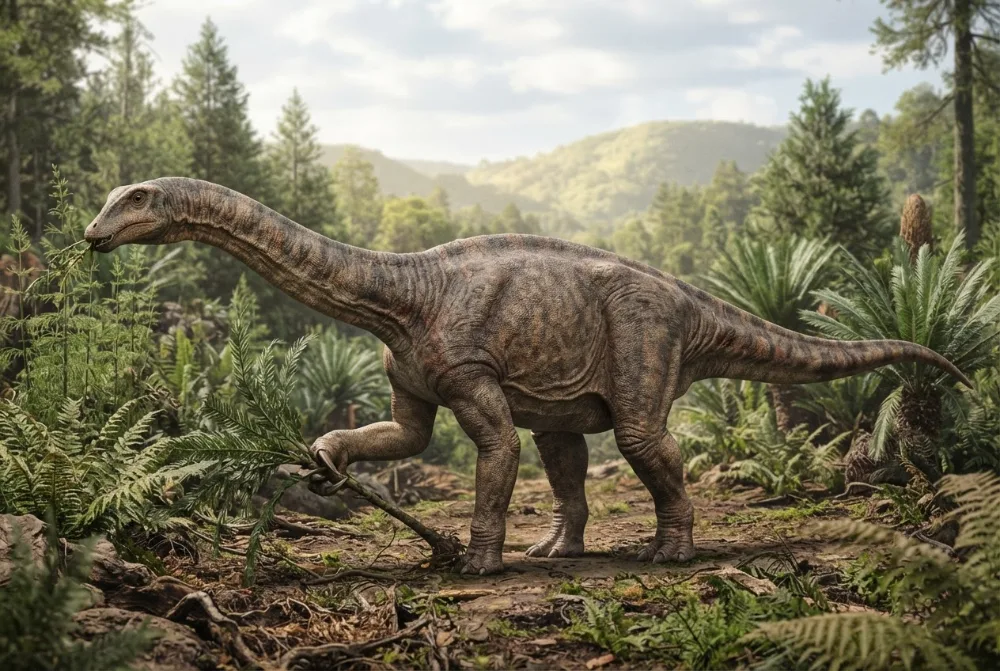
Lufengosaurus had a long neck and short arms, and it probably walked on two legs.1
Its skull was about 25 centimetres (10 inches) long, and it had bony bumps behind its nostrils and on its cheeks.1
Lufengosaurus lived during the Early Jurassic period, about 195 to 190 million years ago.1
Some scientists think Lufengosaurus may have taken care of its babies, because the leg bones of its embryos look like those of birds that need feeding.1
Dipotso tse botswang haholo ka Lufengosaurus
?How big was Lufengosaurus?
About 6 metres (20 ft) long, but larger specimens may have reached 9 metres (30 ft) and weighed up to 2.3 tonnes (2.5 short tons).1
?What did Lufengosaurus eat?
It was mostly a plant-eater, with serrated teeth good for eating leaves. Some scientists think it might have eaten meat sometimes too.1
?When did Lufengosaurus live?
It lived during the Early Jurassic period, about 195 to 190 million years ago.1
?Did Lufengosaurus have feathers?
The sources do not mention feathers, so we do not know for sure. It probably had scales like other early sauropodomorphs.1
Bakeng sa ditsebi tsa didinosaure
- Lebitso la saense
- Lufengosaurus
- E rehilwe ke
- Young 19402
- Sehlopha
- Melala e melelele
- Lelapa / leloko
- Massospondylidae2
- Tlhophiso
- Sauropodomorpha2
- Dilemo tsa mafika
- dilemo tse dimilione tse 201 ho isa ho 168 (Hettangian / Bajocian)2
- Dibopeho tsa mafika
- Lufeng, Ziliujing2
- Dinaha
- Tjhaena2
- Direkoto tsa difosili
- 28 ho The Paleobiology Database2
- Ho sibollwa
- Lufengosaurus was named by Chinese paleontologist C. C. Young in 1940, based on fossils found near Lufeng in Yunnan, China.1
- E sa ntse e phehwa kgang
- Scientists are not sure if Lufengosaurus was sometimes omnivorous, because it had sharp teeth and claws like meat-eaters, but also ate plants.1
Moo dintlha di tswang teng
- Lufengosaurus (en.wikipedia.org)
- Lufengosaurus in The Paleobiology Database (CC BY 4.0): dilemo, dibaka, dibopeho tsa mafika, tlhophiso.
Ntlha e nngwe le e nngwe leqepheng lena e na le nomoro e supang mohlodi wa yona. Haeba re fositse ho hong, re kopa tshwarelo, re balatedi ba didinosaure, ha re koranta ya saense. Re bolelle ho [email protected] mme re tla e lokisa.
 Rex o lapile! Dino Wiki ke projeke ya ntate bakeng sa mora wa hae ya ratang didinosaure, ke mahala, ha ho dipapatso, ha ho disebedi. Batho ba baholo ba ka fepa Rex seneke ho thusa hore e dule e le inthaneteng.Fepa Rex
 Brachiosaurus
 Diplodocus
 Brontosaurus
 Argentinosaurus
 Camarasaurus
 Morosaurus
 Dilophosaurus
 Stenopterygius
 Dorygnathus
 Scutellosaurus
 Sinosaurus
 Temnodontosaurus