 Kwisi: O dinosaure efe?
 Ntwa ya didinosaure
 Peiso ya didinosaure
 Dipapadi tse nyane tsa didinosaure
 Albamo ya ditikara
 Manane a TOP a didinosaure
 Nkgethele!
E phetse neng?

E ne e le kgolo hakae?
E ne e le telele hakae?
E ne e phahame hakae?
kakanyo
E ne e le boima hakae?

 telele jwaloka dintja tse 8 ho tloha nkong ho isa mohatleng🍌telele jwaloka dibanana tse 44 di behilwe ka molaboima jwaloka dintja tse 80🍉boima jwaloka mahapu a 320🧸boima jwaloka bana ba kereshe ba 84🎒boima jwaloka bana ba sekolo ba 50🐻❄️boima jwaloka dibere tse tshweu tse 4🏃e ne e ka matha dimitara tse 100 ka metsotswana e 12 (motho ya lebelo ka ho fetisisa o hloka 9,6)
Mussaurus e ne e le kgolo hakae ha e bapiswa le WENA?
Ke dipalo feela ho browser ya hao. Ha ho letho le bolokwang kapa le romelwang kae kapa kae.
E ne e le lebelo hakae?


Dintlha tse monate
As it grew, Mussaurus changed from walking on all fours to walking on two legs.1
Scientists found over 100 eggs and 80 skeletons of Mussaurus together, showing they lived in herds.1
This dinosaur lived about 193 million years ago, during the Early Jurassic period.2
Adult Mussaurus could reach 8 metres (26 ft) long and weigh up to 1.6 metric tons (1.8 short tons).1
Mussaurus is one of the earliest dinosaurs known to have complex social behavior, like living in groups.1
Dipotso tse botswang haholo ka Mussaurus
?What did Mussaurus eat?
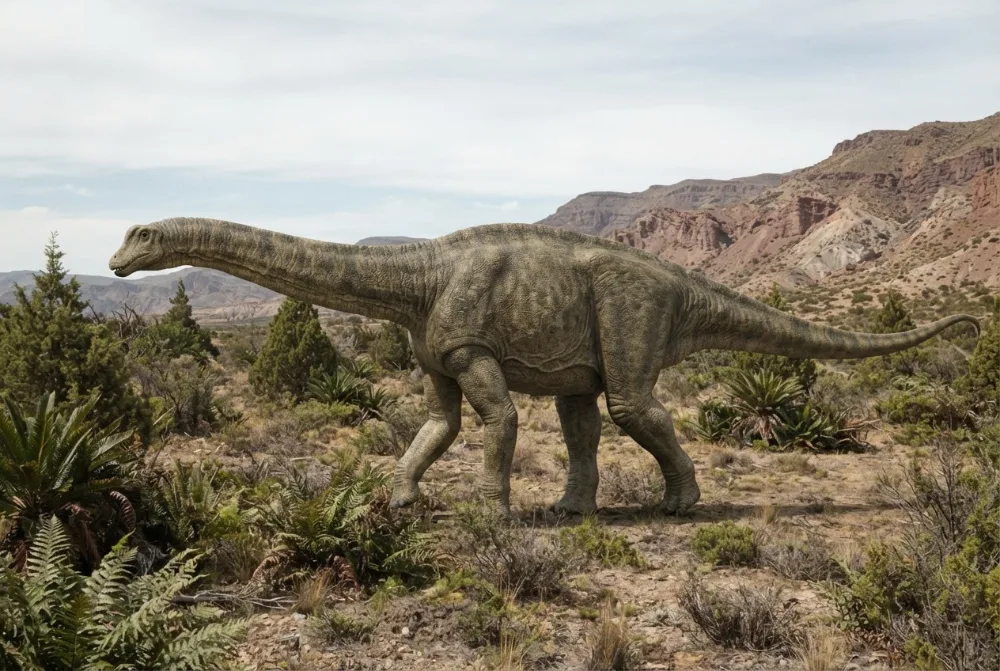
Mussaurus was an herbivore, meaning it ate plants. It had a long neck to reach leaves and ferns.1
?How big was a baby Mussaurus?
Baby Mussaurus were tiny, about 20 centimetres long and weighing as little as a chicken egg, around 53 to 77 grams.1
?Did Mussaurus live in herds?
Yes, Mussaurus is the earliest dinosaur known to have lived in herds. Scientists found over 100 eggs and 80 skeletons together, showing they lived in age-segregated groups.145
?How fast could Mussaurus run?
Nobody knows for sure, but since adults walked on two legs and were medium-sized, they could probably move at a moderate jogging speed.1
?When did Mussaurus live?
Mussaurus lived about 193 million years ago, during the Early Jurassic period.15
?Why is it called Mussaurus?
Mussaurus means 'mouse lizard' because the first fossils found were tiny babies, about the size of a mouse.1
Mosenyi wa ditshomo
Tshomo: Mussaurus was always a tiny dinosaur.
Nnete: Only the babies were tiny. Adults grew to be huge, up to 8 metres long.1
Bakeng sa ditsebi tsa didinosaure
- Lebitso la saense
- Mussaurus
- E rehilwe ke
- Bonaparte and Vince 19796
- Sehlopha
- Melala e melelele
- Lelapa / leloko
- Sauropodiformes6
- Tlhophiso
- Sauropodomorpha6
- Dilemo tsa mafika
- dilemo tse dimilione tse 200 ho isa ho 193 (Sinemurian)6
- Dibopeho tsa mafika
- Laguna Colorada6
- Dinaha
- Argentina6
- Direkoto tsa difosili
- 2 ho The Paleobiology Database6
- Ho sibollwa
- Mussaurus was named by Jose Bonaparte and Martin Vince in 1979. They found tiny skeletons and eggs in the Laguna Colorada Formation in Argentina.23
- E sa ntse e phehwa kgang
- Scientists are still debating whether Mussaurus is a direct ancestor of the giant sauropods.1
Moo dintlha di tswang teng
- Mussaurus (en.wikipedia.org)
- PBDB Taxon (paleobiodb.org)
- A M E G H I N I A N A (naturalhistory.si.edu)
- Earliest evidence of herd-living and age segregation amongst dinosaurs | Scientific Reports (nature.com)
- Fossil bonanza reveals earliest evidence of dinosaurs living in herds | National Geographic (nationalgeographic.com)
- Mussaurus in The Paleobiology Database (CC BY 4.0): dilemo, dibaka, dibopeho tsa mafika, tlhophiso.
Ntlha e nngwe le e nngwe leqepheng lena e na le nomoro e supang mohlodi wa yona. Haeba re fositse ho hong, re kopa tshwarelo, re balatedi ba didinosaure, ha re koranta ya saense. Re bolelle ho [email protected] mme re tla e lokisa.
 Rex o lapile! Dino Wiki ke projeke ya ntate bakeng sa mora wa hae ya ratang didinosaure, ke mahala, ha ho dipapatso, ha ho disebedi. Batho ba baholo ba ka fepa Rex seneke ho thusa hore e dule e le inthaneteng.Fepa Rex
 Brachiosaurus
 Diplodocus
 Brontosaurus
 Argentinosaurus
 Camarasaurus
 Morosaurus
 Dilophosaurus
 Stenopterygius
 Dorygnathus
 Scutellosaurus
 Sinosaurus
 Temnodontosaurus