 Kwisi: O dinosaure efe?
 Ntwa ya didinosaure
 Peiso ya didinosaure
 Dipapadi tse nyane tsa didinosaure
 Albamo ya ditikara
 Manane a TOP a didinosaure
 Nkgethele!
Xiangornis
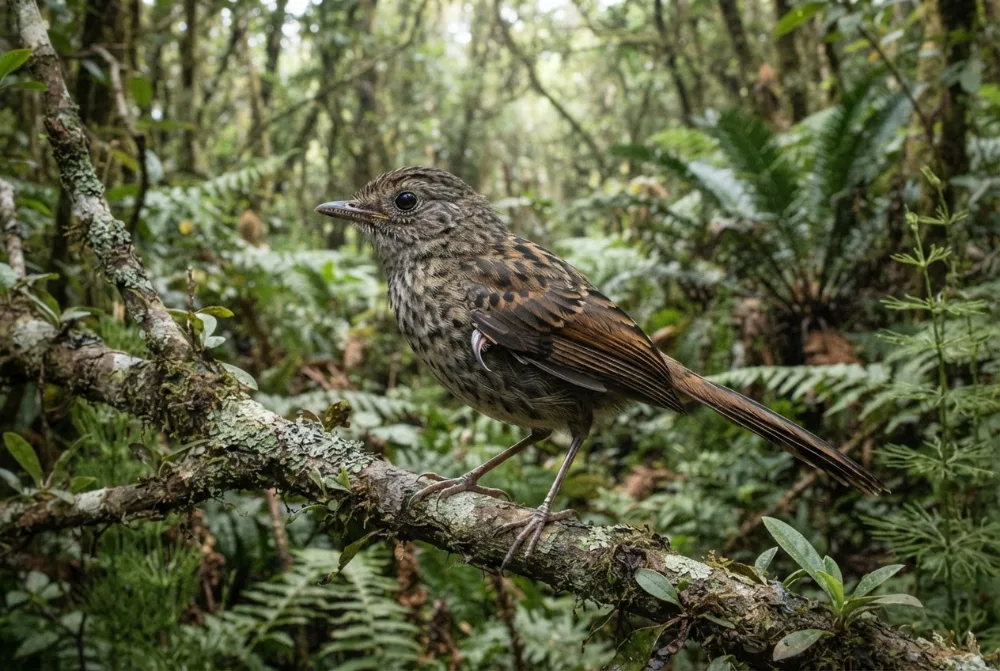
Xiangornis was an ancient bird that lived about 120 million years ago. It had a mix of features from two big groups of early birds, making it a mysterious and special creature. Its wing bones were already fused together like in modern birds, which helped it fly strongly.12
E phetse neng?
E ne e le lebelo hakae?


Dintlha tse monate
Xiangornis belongs to a group called Enantiornithes, which were the most common birds during the Cretaceous period.31
Its wing bones (carpometacarpus) were completely fused together, both near the body and far from it, just like in modern birds.12
Xiangornis had a large extensor process on its wing, a bony bump that helped attach muscles and ligaments for strong flight.12
This bird shows that some features thought to belong only to modern birds actually evolved earlier and separately in enantiornithines.12
Xiangornis lived during the Aptian age, about 121 to 113 million years ago, in what is now Liaoning, China.3
Bakeng sa ditsebi tsa didinosaure
- Lebitso la saense
- Xiangornis
- E rehilwe ke
- Hu et al. 20124
- Sehlopha
- Dinonyana tsa pele
- Lelapa / leloko
- Enantiornithes4
- Tlhophiso
- Theropoda > Avialae4
- Dilemo tsa mafika
- dilemo tse dimilione tse 121 ho isa ho 113 (Aptian)4
- Dibopeho tsa mafika
- Jiufotang4
- Dinaha
- Tjhaena4
- Direkoto tsa difosili
- 1 ho The Paleobiology Database4
- Ho sibollwa
- Xiangornis was named by Hu and colleagues in 2012 based on a partial skeleton found in the Jiufotang Formation of Liaoning, China. The fossil includes wing and shoulder bones.31
- E sa ntse e phehwa kgang
- Scientists are still debating whether Xiangornis is truly an enantiornithine or if it blurs the line between enantiornithines and ornithuromorphs (the group that includes modern birds).12
Moo dintlha di tswang teng
- A new enantiornithine bird from the Lower Cretaceous of Western Liaoning, China, and its implications for early avian evolution (tandfonline.com)
- A new enantiornithine bird from the Lower Cretaceous of Western Liaoning, China, and its implications for early avian evolution (ivpp.cas.cn)
- PBDB Taxon (paleobiodb.org)
- Xiangornis in The Paleobiology Database (CC BY 4.0): dilemo, dibaka, dibopeho tsa mafika, tlhophiso.
Ntlha e nngwe le e nngwe leqepheng lena e na le nomoro e supang mohlodi wa yona. Haeba re fositse ho hong, re kopa tshwarelo, re balatedi ba didinosaure, ha re koranta ya saense. Re bolelle ho [email protected] mme re tla e lokisa.
 Rex o lapile! Dino Wiki ke projeke ya ntate bakeng sa mora wa hae ya ratang didinosaure, ke mahala, ha ho dipapatso, ha ho disebedi. Batho ba baholo ba ka fepa Rex seneke ho thusa hore e dule e le inthaneteng.Fepa Rex
 Archaeopteryx
 Hesperornis
 Ichthyornis
 Baptornis
 Jurapteryx
 Gobipteryx
 Stegosaurus
 Iguanodon
 Giganotosaurus
 Microraptor
 Deinonychus
 Baryonyx