 Kwisi: O dinosaure efe?
 Ntwa ya didinosaure
 Peiso ya didinosaure
 Dipapadi tse nyane tsa didinosaure
 Albamo ya ditikara
 Manane a TOP a didinosaure
 Nkgethele!
Karete ya dinosaure No. 1940 ho tse 2 027
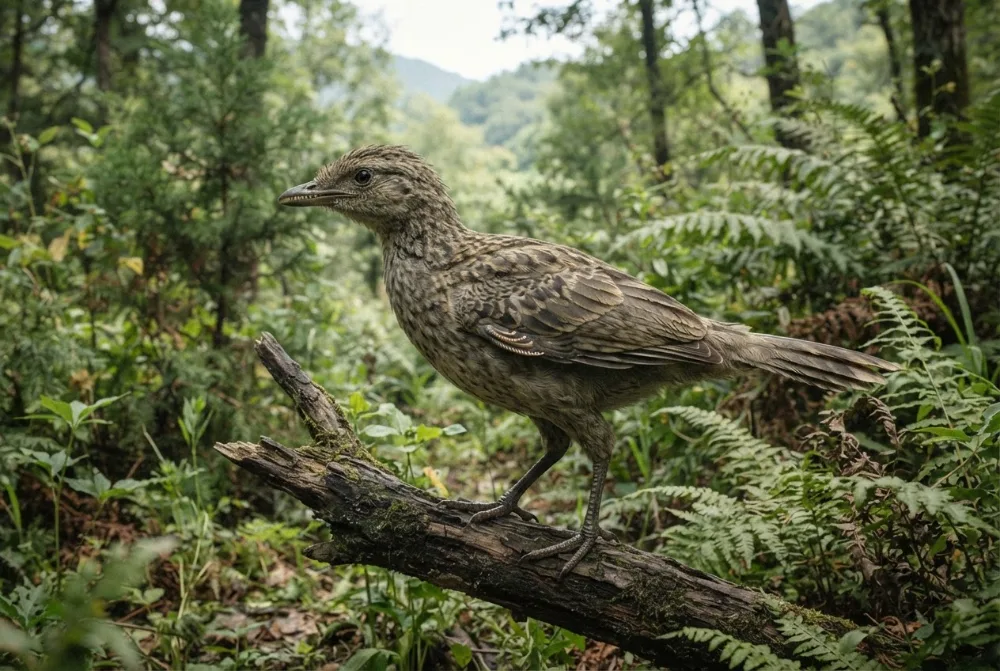
Xinghaiornis
Lebitso le bolela: “Xinghai bird, named after the Xinghai Museum in China”1
Xinghaiornis was a bird that lived about 125 million years ago. It had a long, toothless beak and probably poked in mud for food. It was a dinosaur, but a very bird-like one!21
E phetse
dilemo tse dimilione tse 126 ho isa ho 120 tse fetileng3
Kretase ya PeleE phetse neng?
Triasiki
Jurasiki
Kretase
Dilemo tse dimilione tse 252 tse fetileng20114566, asteroiti
E ne e le lebelo hakae?
Motho ya tsamayang ka maoto e ka bang 5 km/h (3 mph)
Ngwana a palame baesekele e ka bang 12 km/h (7 mph)

Xinghaiornis e ka bang 27 km/h (17 mph)
Pere e mathang ka matla e ka bang 65 km/h (40 mph)

Lengau e ka bang 100 km/h (62 mph)

dintho tse monate
Dintlha tse monate
1
Xinghaiornis had a long, toothless beak, which is unusual for early birds.2
2
Its feet had a raised first toe, which may have helped it walk on soft mud.2
3
Scientists think it was a mud-prober, meaning it stuck its beak into mud to find food.2
5
Xinghaiornis is known from a single fossil found at Sihetun, Shangyuan Town in China.3
Bakeng sa ditsebi tsa didinosaure
- Lebitso la saense
- Xinghaiornis
- E rehilwe ke
- Wang et al. 20133
- Sehlopha
- Dinonyana tsa pele
- Lelapa / leloko
- Ornithothoraces3
- Tlhophiso
- Theropoda > Avialae3
- Dilemo tsa mafika
- dilemo tse dimilione tse 126 ho isa ho 120 (Barremian / Aptian)3
- Dibopeho tsa mafika
- Yixian3
- Dinaha
- Tjhaena3
- Direkoto tsa difosili
- 1 ho The Paleobiology Database3
- Ho sibollwa
- Xinghaiornis was named by Xuri Wang and colleagues in 2013. The fossil was prepared by Maureen Walsh at the Dalian Museum of Prehistory in China.1
- E sa ntse e phehwa kgang
- Scientists are still debating exactly how Xinghaiornis is related to other early birds, because it shows a mix of features.2
Moo dintlha di tswang teng
- Xinghaiornis (en.wikipedia.org)
- Xinghaiornis lini (Aves: Ornithothoraces) from the Early Cretaceous of Liaoning: An Example of Evolutionary Mosaic in Early Birds (geojournals.cn)
- Xinghaiornis in The Paleobiology Database (CC BY 4.0): dilemo, dibaka, dibopeho tsa mafika, tlhophiso.
Ntlha e nngwe le e nngwe leqepheng lena e na le nomoro e supang mohlodi wa yona. Haeba re fositse ho hong, re kopa tshwarelo, re balatedi ba didinosaure, ha re koranta ya saense. Re bolelle ho [email protected] mme re tla e lokisa.
 Rex o lapile! Dino Wiki ke projeke ya ntate bakeng sa mora wa hae ya ratang didinosaure, ke mahala, ha ho dipapatso, ha ho disebedi. Batho ba baholo ba ka fepa Rex seneke ho thusa hore e dule e le inthaneteng.Fepa Rex
 Archaeopteryx
 Hesperornis
 Ichthyornis
 Baptornis
 Jurapteryx
 Gobipteryx
 Stegosaurus
 Iguanodon
 Giganotosaurus
 Microraptor
 Deinonychus
 Baryonyx