 O dino efe? Kwisi
 Ntwa ya didino
 Peiso ya didino
 Metshamekwana ya didino
 Alebamo ya disetikara
 Manane a TOP a didino
 Ngakgamatsa!
Sinornithomimus
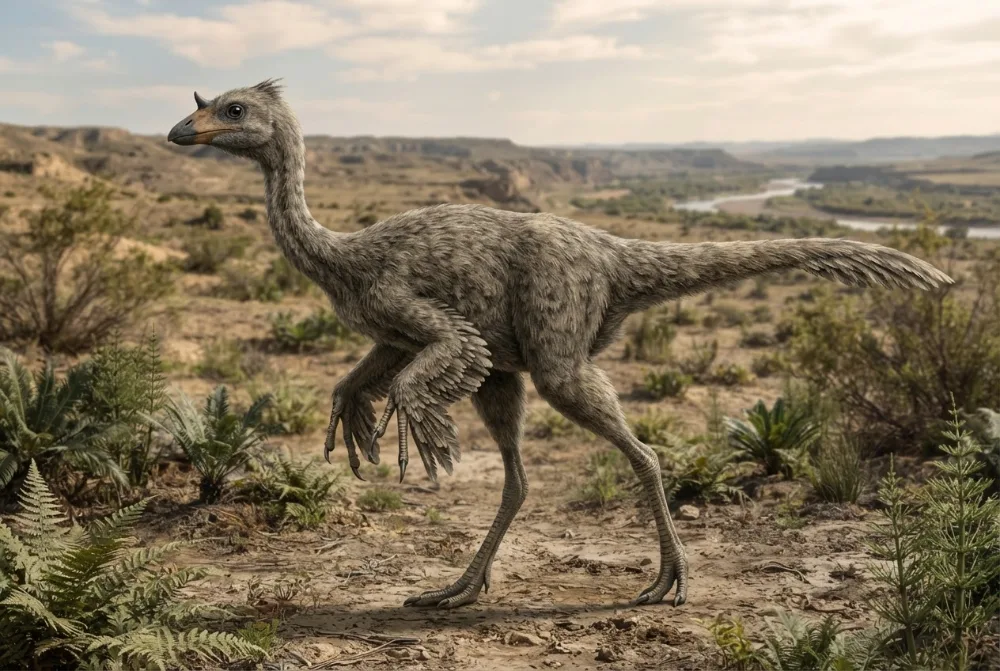
Sinornithomimus was a small, fast dinosaur that looked a bit like an ostrich. It lived in what is now China during the Late Cretaceous Period, about 92 to 90 million years ago. Scientists found many skeletons together, showing that these dinosaurs probably lived in herds.12
E tshetse leng?
E ne e le kgolo go le kae?
E ne e le telele go le kae?
E ne e le kwa godimo go le kae?
kakanyo
E ne e le bokete go le kae?
 telele jaaka dintšwa di le 2.5 go tswa kwa nkong go ya kwa mogatleng🍌telele jaaka dibanana di le 14 di latelana🍉bokete jaaka magapu a le 18🧸bokete jaaka bana ba kreše ba le 5🎒bokete jaaka bana ba sekolo ba le 3🏃e ne e ka taboga dimetara di le 100 mo metsotswaneng e le 5.5 (motho yo o bonako go gaisa o tlhoka 9,6)
Sinornithomimus e ne e le kgolo go le kae fa e bapisiwa le WENA?
Ke dipalo fela mo sebatling sa gago. Ga go sepe se se bolokwang kgotsa se se romelwang gope.
E ne e le bonako go le kae?


Dintlha tse di monate
At least fourteen skeletons of Sinornithomimus were found together in one spot, and most of them were young dinosaurs. This suggests they lived in groups, maybe to protect each other from predators.21
Sinornithomimus had gastroliths, or stomach stones, that helped it grind up tough plants. This is rare among bird-like dinosaurs and shows it was a plant-eater.1
The first fossils of Sinornithomimus were discovered in 1997 by Chinese paleontologist Dong Zhiming during the Mongol Highland International Dinosaur Project.1
Sinornithomimus was about 2.5 meters (8.2 feet) long and weighed around 91 kilograms (201 pounds). That is about as heavy as a large adult human.1
Adult Sinornithomimus had longer lower legs compared to their upper legs than juveniles did. This means they could run faster as they grew up.21
A second herd of thirteen young Sinornithomimus was found in 2001. They probably died together after getting stuck in the mud of a drying waterhole.1
Dipotso tse di botswang thata ka ga Sinornithomimus
?What did Sinornithomimus eat?
It ate plants. Scientists found gastroliths (stomach stones) in its fossils that helped grind up tough plant food.1
?How fast could Sinornithomimus run?
Nobody knows exactly, but it was a fast runner. Adults had longer lower legs than juveniles, which made them even faster.1
Ya baitseanape ba didino
- Leina la saense
- Sinornithomimus
- Leina le neilwe ke
- Kobayashi and Lü 20035
- Setlhopha
- Didino tsa mpshe
- Lelapa / clade
- Ornithomimidae5
- Thulaganyo
- Theropoda > Ornithomimosauria5
- Bogolo jwa matlapa
- 94 go ya go 90 dimilione tsa dingwaga (Turonian)5
- Dibopego tsa matlapa
- Ulansuhai5
- Dinaga
- Tšhaena5
- Direkoto tsa difosili
- 1 mo The Paleobiology Database5
- Go fitlhelwa
- Sinornithomimus was named and described by Yoshitsugu Kobayashi and Lü Junchang in 2003. The name means 'Chinese bird mimic' and honors Dong Zhiming, who found the first fossils in 1997.12
- Go sa ntse go ganetsanwa
- Scientists are not sure whether the herds of Sinornithomimus were family groups with adults protecting young, or if the young lived separately from adults while the adults were busy nesting.1
Kwa dintlha di tswang teng
- Sinornithomimus (en.wikipedia.org)
- A new ornithomimid dinosaur with gregarious habits from the Late Cretaceous of China - Acta Palaeontologica Polonica (app.pan.pl)
- PBDB Taxon (paleobiodb.org)
- Young dinosaurs roamed together, died together | University of Chicago News (news.uchicago.edu)
- Sinornithomimus in The Paleobiology Database (CC BY 4.0): dingwaga, mafelo, dibopego tsa matlapa, thulaganyo.
Ntlha nngwe le nngwe mo tsebeng eno e na le nomoro e e supang motswedi wa yona. Fa re dirile phoso, maitshwarelo, re barati ba didino, ga re lokwalodikgang lwa saense. Re bolelele kwa [email protected] mme re tla e baakanya.
 Rex o tshwerwe ke tlala! Dino Wiki ke porojeke ya rre e a e diretseng morwawe yo o ratang didino, ke mahala, ga e na dipapatso e bile ga e na dilatedi. Batho ba bagolo ba ka fepa Rex senyamo go thusa gore e nne mo inthaneteng.Fepa Rex
 Gallimimus
 Ornithomimus
 Struthiomimus
 Deinocheirus
 Dromiceiomimus
 Archaeornithomimus
 Tyrannosaurus
 Triceratops
 Velociraptor
 Spinosaurus
 Ankylosaurus
 Parasaurolophus