 Ban dino nga? Kiis
 Xeexu dino
 Rawante dino
 Fo yu ndaw yu dino
 Albomu sitikeer
 Limu TOP yu dino
 Bett ma!
Anabisetia
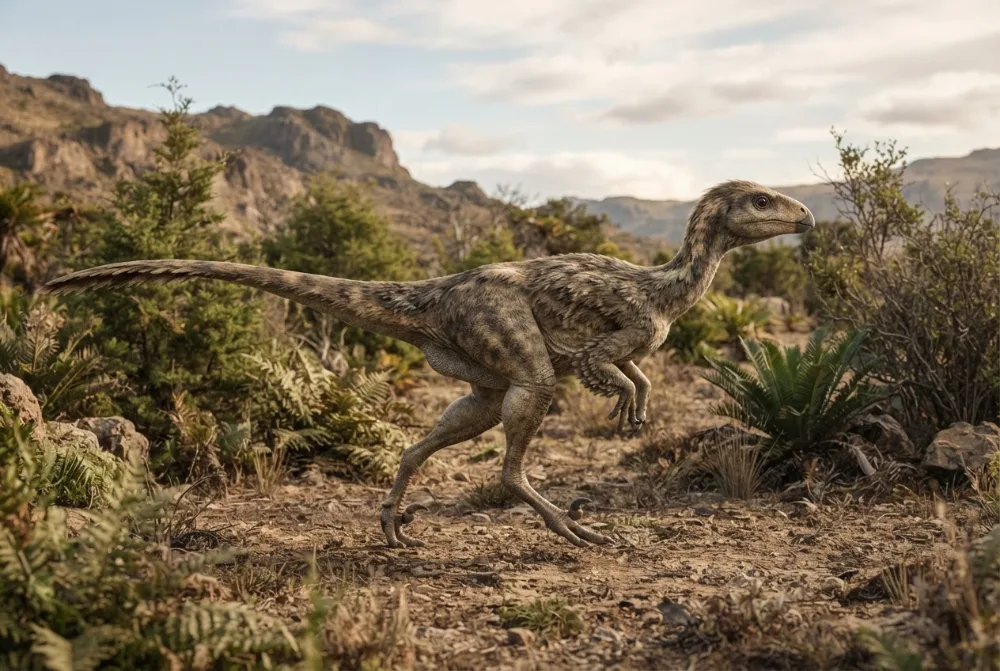
Anabisetia was a small, plant-eating dinosaur that walked on two legs. It lived in what is now Argentina, about 95 to 92 million years ago, during the Late Cretaceous Period.1
Kañ la dundoon?
Naka la réyoon?
Naka la guddoon?
Naka la kawewoon?
Naka la diisoon?
 gudd ni 4 muusu kër, bakkan ba geen🍌gudd ni 11 banaana yu ñu topp-toppale🍉diis ni 4 xaal🏃mënoon na daw 100 meetar ci 9,2 segond (nit ki gën a gaaw dafay soxla 9,6)
Naka la Anabisetia réyoon, bu ñu ko méngalee ak YAW?
Ay kalkil rekk ci sa navigatëer. Dara du ñu denc, dara du ñu yónne fenn.
Naka la gaawoon?


Xibaar yu neex
Anabisetia is known from four specimens, and together they show almost the whole skeleton except for the skull.1
The shoulder blade of Anabisetia had an extension called the acromial process that was the largest ever found in its group, the Euornithopoda.1
In its hand, the fifth metacarpal bone was flattened with straight edges, instead of being rounded like in most other dinosaurs.1
The hip bone, or ilium, had a front blade that made up more than half of the total ilium length and extended in front of the prepubis.1
At the back of the head, the connection with the neck, called the occipital condyle, pointed downwards.1
The fossils were found in rocks of the Cerro Lisandro Formation, which preserve a swamp that existed from about 95 to 92 million years ago.1
Laaj yi ñu gën a laaj ci Anabisetia
?How big was Anabisetia?
About 2 metres (6.6 feet) long and weighed around 20 kilograms (44 pounds).1
?What did Anabisetia eat?
It was a plant-eater, or herbivore, with teeth specialized for grinding vegetation.1
?When did Anabisetia live?
It lived about 95 to 92 million years ago, during the Late Cretaceous Period.1
?Where was Anabisetia found?
Its fossils were found in the Neuquén Province of Argentina, in South America.1
Ngir ñi xam dino lool
- Turu xam-xam
- Anabisetia
- Ku ko tudde
- Coria and Calvo 20024
- Kurél
- Dino yu lekk gàncax te am gémmiñu picc
- Njaboot / klad
- Elasmaria4
- Klasifikasiyoŋ
- Ornithischia > Ornithopoda > Iguanodontia4
- Màggaayu doj yi
- 94 ba 90 milyoŋ at (Turonian)4
- Formasiyoŋi doj
- Cerro Lisandro4
- Réew yi
- Arsantin4
- Fosil yu ñu gis
- 2 ci The Paleobiology Database4
- Gisees
- The fossils were discovered in 1985 by a local farmer named Roberto Saldivia Blanco, who brought them to scientists in 1993. Argentine paleontologists Rodolfo Coria and Jorge Orlando Calvo named Anabisetia in 2002.1
- Ñu ngi koy werante ba tey
- Scientists are not sure exactly where Anabisetia fits in the dinosaur family tree. It may be closely related to Gasparinisaura, but the lack of skull material makes it hard to place with precision.1
Fa xibaar yi jóge
- Anabisetia (en.wikipedia.org)
- Dinosaurios del Neuquén - Dinosaurios del Neuquén – Anabisetia saldiviai → Más Neuquén (masneuquen.com)
- Anabisetia | Part of the Ornithopod Family of Dinosaurs (dinosaurmadness.com)
- Anabisetia in The Paleobiology Database (CC BY 4.0): at, béréb yi, formasiyoŋi doj, klasifikasiyoŋ.
Bépp xibaar ci xët wii am na lim bu wone fa mu jóge. Su nu juumee, baal nu, nun ñu bëgg dino lanu, du ab sërnaalu xam-xam. Wax nu ko ci [email protected] nu defar ko.
 Rex xiif na! Dino Wiki, mbiru ab baay la ngir doomam ju góor ju bëgg dinosoor, ci neen te amul kaamuñaate, amul tracker. Mag ñi mën nañu jox Rex tuuti ñam ngir dimbali ko mu des ci internet.Dundal Rex
 Iguanodon
 Tenontosaurus
 Thescelosaurus
 Zalmoxes
 Camptosaurus
 Rhabdodon
 Tyrannosaurus
 Triceratops
 Velociraptor
 Spinosaurus
 Ankylosaurus
 Parasaurolophus