 Ban dino nga? Kiis
 Xeexu dino
 Rawante dino
 Fo yu ndaw yu dino
 Albomu sitikeer
 Limu TOP yu dino
 Bett ma!
Barilium
Barilium was a big, plant-eating dinosaur that lived in what is now England. It walked on two legs but could also go on all fours to eat low plants. Its name means 'heavy hip' because of its huge hip bones.3
Kañ la dundoon?
Naka la réyoon?
Naka la guddoon?
Naka la kawewoon?
Naka la diisoon?
 gudd ni 2 oto yu ñu taxawal ci benn rëdd🍌gudd ni 56 banaana yu ñu topp-toppale
 diis ni 200 xaj🍉diis ni 800 xaal🎒diis ni 5 klaas yu mat yu xale yu lekkool🐻❄️diis ni 9 uurs yu weex🏃mënoon na daw 100 meetar ci 14 segond (nit ki gën a gaaw dafay soxla 9,6)
Naka la Barilium réyoon, bu ñu ko méngalee ak YAW?
Ay kalkil rekk ci sa navigatëer. Dara du ñu denc, dara du ñu yónne fenn.
Naka la gaawoon?


Xibaar yu neex
Barilium was first thought to be a species of Iguanodon, called Iguanodon dawsoni, before scientists gave it its own name in 2010.1
Its fossils come from rocks that are between about 137 and 121 million years old, from the Early Cretaceous period.3
Barilium had a very large and strong hip bone (ilium), which is why it was named 'heavy hip'.1
This dinosaur is known from only a few fossils, including parts of the spine, hips, and legs.3
Some scientists think Barilium might be the same as other dinosaurs named Kukufeldia, Sellacoxa, and Torilion, but others disagree.3
Barilium lived alongside other dinosaurs like Hypselospinus and Mantellisaurus in ancient England.1
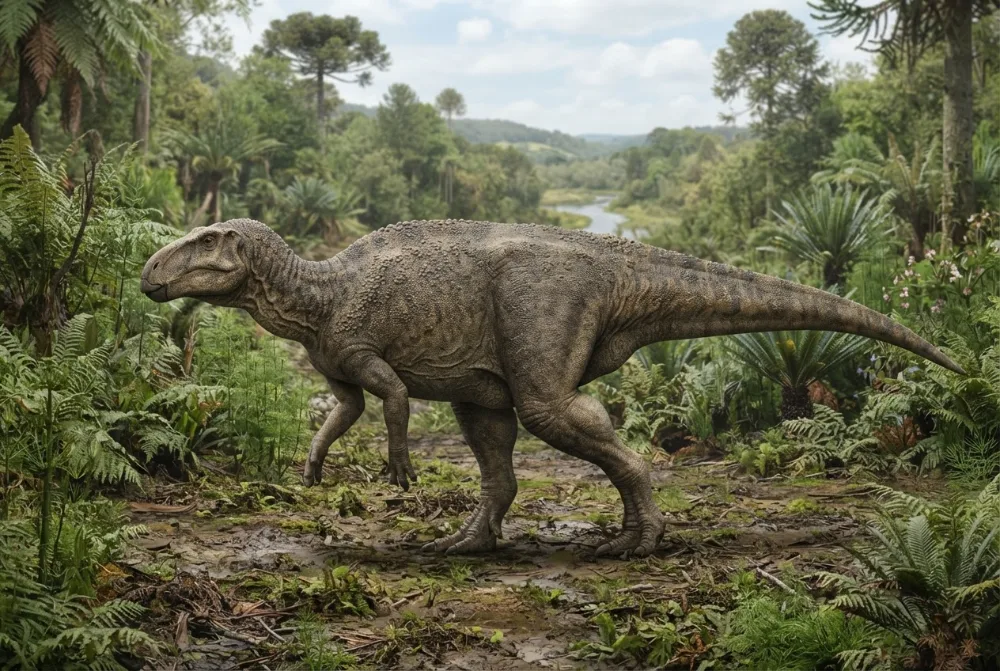
Laaj yi ñu gën a laaj ci Barilium
?How big was Barilium?
About 8 metres (26 feet) long.2
?What did Barilium eat?
It was a plant-eater (herbivore).3
?When did Barilium live?
It lived during the Early Cretaceous period, about 133 million years ago.2
?Where was Barilium found?
Its fossils were found near St Leonards-on-Sea in East Sussex, England.2
Ku tas léeb yu dul dëgg
Léeb: Barilium is just a copy of Iguanodon and not a real dinosaur.
Dëgg: Barilium is a distinct dinosaur, with unique hip bones that set it apart from Iguanodon and other relatives.1
Ngir ñi xam dino lool
- Turu xam-xam
- Barilium
- Ku ko tudde
- Norman 20103
- Kurél
- Dino yu lekk gàncax te am gémmiñu picc
- Njaboot / klad
- Iguanodontidae3
- Klasifikasiyoŋ
- Ornithischia > Ornithopoda > Iguanodontia3
- Màggaayu doj yi
- 137 ba 121 milyoŋ at (Valanginian / Barremian)3
- Formasiyoŋi doj
- Wadhurst Clay, Weald Clay, Tunbridge Wells Sand3
- Réew yi
- Angalteer3
- Fosil yu ñu gis
- 5 ci The Paleobiology Database3
- Ñu ngi koy wooye itam
- Kukufeldia, Sellacoxa, Torilion (tur yu njëkk yi, léegi ñu ngi leen jàppe ni benn rab rekk)3
- Gisees
- The first fossils of Barilium were found in the 1800s and named Iguanodon dawsoni by Richard Lydekker in 1888. In 2010, David B. Norman gave it the new name Barilium after studying the bones more closely.1
- Ñu ngi koy werante ba tey
- Scientists are not sure if Barilium is exactly the same as other dinosaurs named Kukufeldia, Sellacoxa, and Torilion, or if they are different species.3
Fa xibaar yi jóge
- A taxonomy of iguanodontians (Dinosauria: Ornithopoda) from the lower Wealden Group (Cretaceous: Valanginian) of southern England | Zootaxa (biotaxa.org)
- Barilium (en.wikipedia.org)
- Barilium in The Paleobiology Database (CC BY 4.0): at, béréb yi, formasiyoŋi doj, klasifikasiyoŋ.
Bépp xibaar ci xët wii am na lim bu wone fa mu jóge. Su nu juumee, baal nu, nun ñu bëgg dino lanu, du ab sërnaalu xam-xam. Wax nu ko ci [email protected] nu defar ko.
 Rex xiif na! Dino Wiki, mbiru ab baay la ngir doomam ju góor ju bëgg dinosoor, ci neen te amul kaamuñaate, amul tracker. Mag ñi mën nañu jox Rex tuuti ñam ngir dimbali ko mu des ci internet.Dundal Rex
 Iguanodon
 Tenontosaurus
 Thescelosaurus
 Zalmoxes
 Camptosaurus
 Rhabdodon
 Stegosaurus
 Archaeopteryx
 Giganotosaurus
 Microraptor
 Deinonychus
 Baryonyx