 Ban dino nga? Kiis
 Xeexu dino
 Rawante dino
 Fo yu ndaw yu dino
 Albomu sitikeer
 Limu TOP yu dino
 Bett ma!
Calvarius
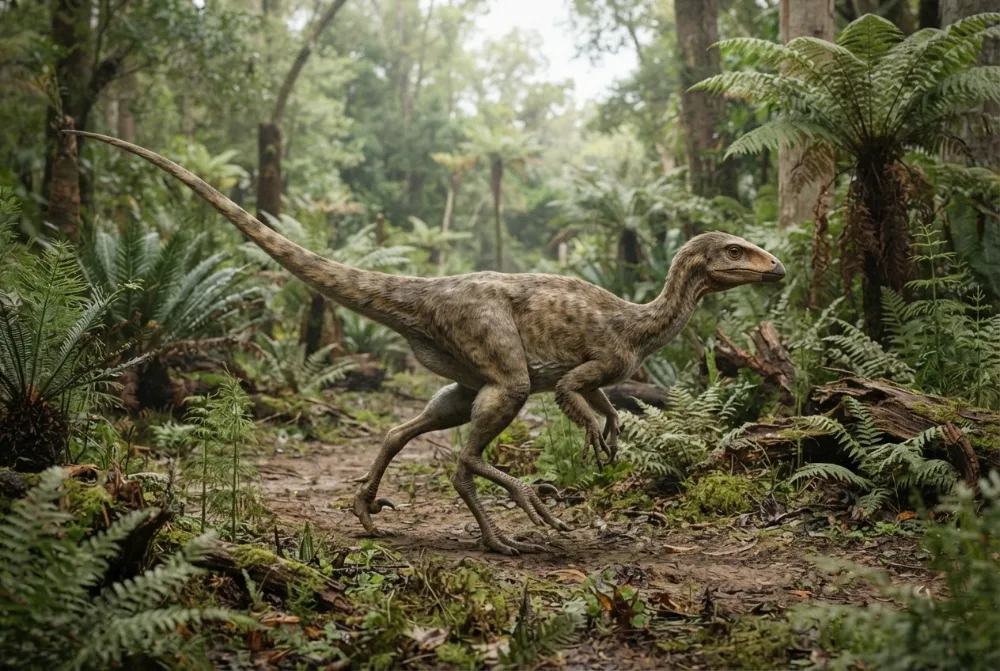
Calvarius was a small, speedy plant-eating dinosaur that lived near the very end of the Age of Dinosaurs. It was one of the last dinosaurs to walk on Earth before the big asteroid hit.2
Kañ la dundoon?
Naka la réyoon?
Naka la guddoon?
Naka la kawewoon?
jortu
 gudd ni 4 muusu kër, bakkan ba geen🍌gudd ni 11 banaana yu ñu topp-toppale🏃mënoon na daw 100 meetar ci 8,8 segond (nit ki gën a gaaw dafay soxla 9,6)
Naka la Calvarius réyoon, bu ñu ko méngalee ak YAW?
Ay kalkil rekk ci sa navigatëer. Dara du ñu denc, dara du ñu yónne fenn.
Naka la gaawoon?


Xibaar yu neex
Calvarius is known from just one foot bone, a left metatarsal IV, which was about 15 centimeters long.2
It was probably a fast runner. Its long foot bone and light build suggest it could sprint quickly, unlike most other styracostern dinosaurs.1
Calvarius lived on a large island called Ibero-Armorica, which is now northern Spain and southern France. On islands, animals sometimes evolve to be smaller because food is limited.2
It was one of the last dinosaurs ever. Its fossils were found just 25 meters below the layer that marks the asteroid impact that killed the non-bird dinosaurs.1
The fossil was discovered in 2019 by paleontologists from the Institut Català de Paleontologia Miquel Crusafont and the Museu de la Conca Dellà.2
Calvarius is the smallest known styracostern dinosaur. Some of its relatives grew over 10 meters long, but Calvarius was less than 2 meters.2
Laaj yi ñu gën a laaj ci Calvarius
?How big was Calvarius?
Calvarius was no more than 2 metres (6.6 feet) long, making it one of the smallest known styracostern dinosaurs.2
?What did Calvarius eat?
Calvarius was a plant-eater. It was an ornithopod, a group of herbivorous dinosaurs.2
?When did Calvarius live?
Calvarius lived about 66 million years ago, right at the end of the Cretaceous period. It was one of the last dinosaurs before the asteroid hit.2
Ngir ñi xam dino lool
- Turu xam-xam
- Calvarius
- Ku ko tudde
- Prieto-Márquez and Sellés 20233
- Kurél
- Dino yu lekk gàncax te am gémmiñu picc
- Njaboot / klad
- Styracosterna3
- Klasifikasiyoŋ
- Ornithischia > Ornithopoda > Iguanodontia3
- Màggaayu doj yi
- 72 ba 66 milyoŋ at (Maastrichtian)3
- Formasiyoŋi doj
- Talarn3
- Réew yi
- Españ3
- Fosil yu ñu gis
- 1 ci The Paleobiology Database3
- Gisees
- The fossil was found in 2019 at the Masia de Ramón site in Spain by a team from the MCD and ICP. Albert Prieto-Márquez and Albert Sellés named it Calvarius rapidus in 2023.23
- Ñu ngi koy werante ba tey
- Scientists are not sure exactly how big Calvarius was because only one foot bone has been found. They estimate it was less than 2 meters long, but it could have been different.2
Fa xibaar yi jóge
- Evolutionary convergence in a small cursorial styracosternan ornithopod dinosaur from western Europe (dinodata.de)
- Calvarius rapidus, the new dinosaur species that almost saw the asteroid falling (icp.cat)
- Calvarius in The Paleobiology Database (CC BY 4.0): at, béréb yi, formasiyoŋi doj, klasifikasiyoŋ.
Bépp xibaar ci xët wii am na lim bu wone fa mu jóge. Su nu juumee, baal nu, nun ñu bëgg dino lanu, du ab sërnaalu xam-xam. Wax nu ko ci [email protected] nu defar ko.
 Rex xiif na! Dino Wiki, mbiru ab baay la ngir doomam ju góor ju bëgg dinosoor, ci neen te amul kaamuñaate, amul tracker. Mag ñi mën nañu jox Rex tuuti ñam ngir dimbali ko mu des ci internet.Dundal Rex
 Iguanodon
 Tenontosaurus
 Thescelosaurus
 Zalmoxes
 Camptosaurus
 Rhabdodon
 Tyrannosaurus
 Triceratops
 Velociraptor
 Spinosaurus
 Ankylosaurus
 Parasaurolophus