 Ban dino nga? Kiis
 Xeexu dino
 Rawante dino
 Fo yu ndaw yu dino
 Albomu sitikeer
 Limu TOP yu dino
 Bett ma!
Cuspicephalus
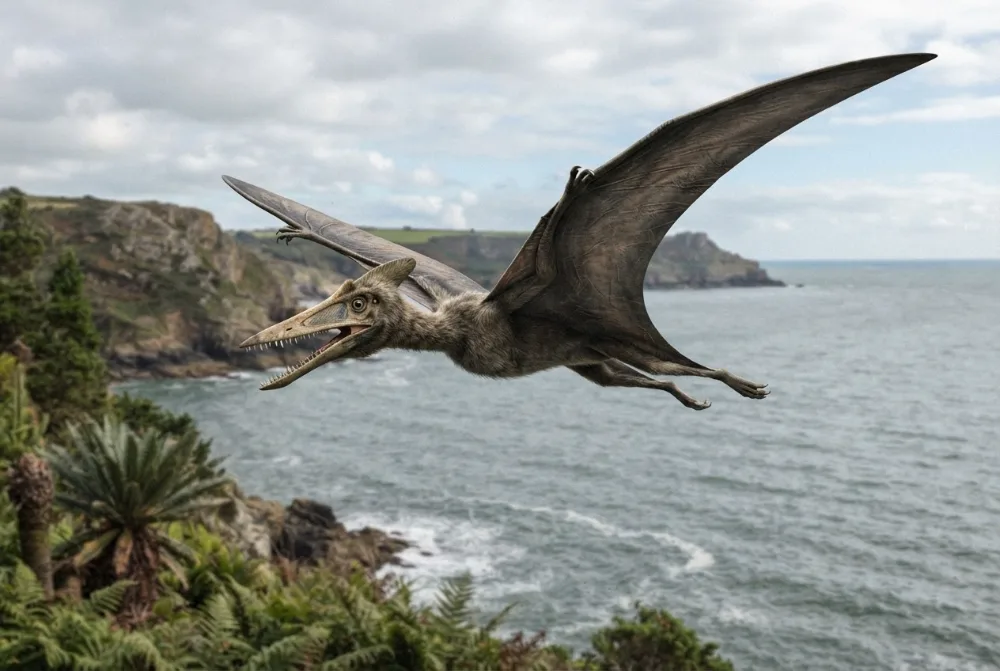
Cuspicephalus was a flying reptile that lived near the sea in what is now England. It had a very long, pointy skull and caught fish with its many teeth.23
Kañ la dundoon?
Naka la réyoon?
Naka la ay laafam yaatuwoon?
 gudd ni 4 muusu kër, bakkan ba geen⚽mënoon na naaw ci kaw teraŋ futbal bépp ci 8,4 segond
Naka la Cuspicephalus réyoon, bu ñu ko méngalee ak YAW?
Ay kalkil rekk ci sa navigatëer. Dara du ñu denc, dara du ñu yónne fenn.
Naka la gaawoon?


Xibaar yu neex
Cuspicephalus had a skull that was almost five and a half times longer than it was tall. That is the most extreme ratio of any pterosaur.2
Its name means 'pointed head' and it was named after the cartoonist Gerald Scarfe, whose drawings often have very pointy noses.1
Cuspicephalus is one of the first non-pterodactyloid monofenestratan pterosaurs found outside China.1
The only known fossil is a flattened skull found on a beach at Kimmeridge Bay, part of the Jurassic Coast World Heritage Site.21
Cuspicephalus had at least 12 or 13 pairs of teeth in front of a large hole in its skull called the nasoantorbital fenestra.1
Laaj yi ñu gën a laaj ci Cuspicephalus
Ngir ñi xam dino lool
- Turu xam-xam
- Cuspicephalus
- Ku ko tudde
- Martill and Etches 20133
- Kurél
- Reptil yuy naaw
- Njaboot / klad
- Monofenestrata3
- Klasifikasiyoŋ
- Pterosauria3
- Màggaayu doj yi
- 155 ba 152 milyoŋ at (Kimmeridgian)3
- Formasiyoŋi doj
- Kimmeridge Clay3
- Réew yi
- Angalteer3
- Fosil yu ñu gis
- 1 ci The Paleobiology Database3
- Gisees
- Fossil collector Steve Etches found the partial skull in December 2009 at Kimmeridge Bay, Dorset, England. Scientists David Martill and Steve Etches named it Cuspicephalus scarfi in 2013.21
- Ñu ngi koy werante ba tey
- Scientists are not sure whether Cuspicephalus was more closely related to Darwinopterus or to pterodactyloids like Germanodactylus.1
Fa xibaar yi jóge
- A new monofenestratan pterosaur from the Kimmeridge (app.pan.pl)
- Cuspicephalus (en.wikipedia.org)
- Cuspicephalus in The Paleobiology Database (CC BY 4.0): at, béréb yi, formasiyoŋi doj, klasifikasiyoŋ.
Bépp xibaar ci xët wii am na lim bu wone fa mu jóge. Su nu juumee, baal nu, nun ñu bëgg dino lanu, du ab sërnaalu xam-xam. Wax nu ko ci [email protected] nu defar ko.
 Rex xiif na! Dino Wiki, mbiru ab baay la ngir doomam ju góor ju bëgg dinosoor, ci neen te amul kaamuñaate, amul tracker. Mag ñi mën nañu jox Rex tuuti ñam ngir dimbali ko mu des ci internet.Dundal Rex
 Pteranodon
 Quetzalcoatlus
 Dorygnathus
 Rhamphorhynchus
 Anhanguera
 Pterodactylus
 Brachiosaurus
 Diplodocus
 Allosaurus
 Brontosaurus
 Compsognathus
 Camarasaurus