 Ban dino nga? Kiis
 Xeexu dino
 Rawante dino
 Fo yu ndaw yu dino
 Albomu sitikeer
 Limu TOP yu dino
 Bett ma!
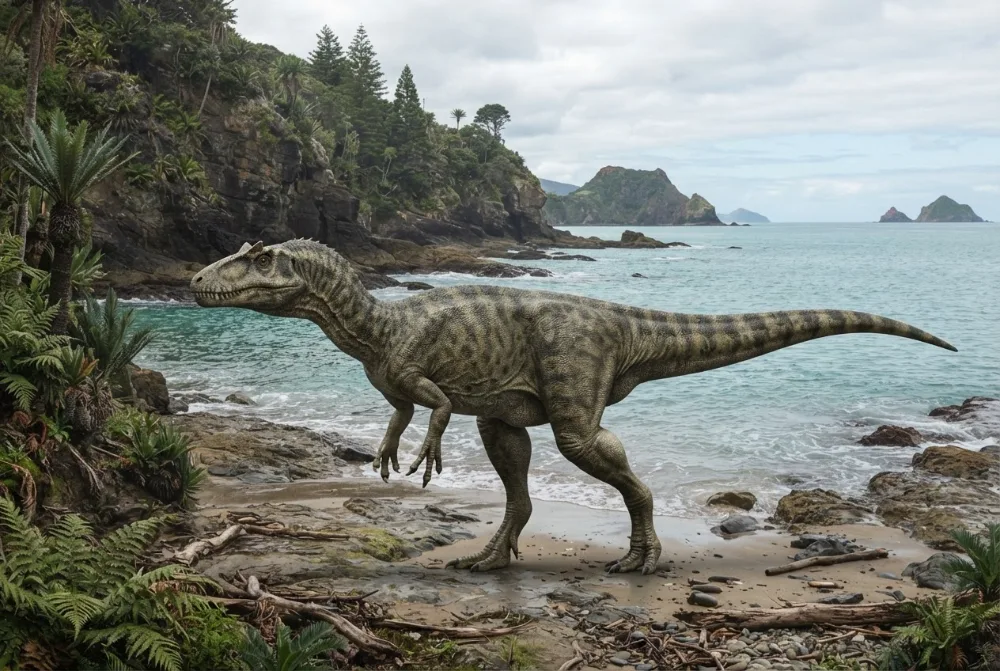
Eustreptospondylus
Eustreptospondylus was a meat-eating dinosaur that lived on islands in the Jurassic sea. It was about as long as a small car and probably hunted small animals or ate dead ones washed up on the beach.1
Kañ la dundoon?
Naka la réyoon?
Naka la guddoon?
Naka la kawewoon?
Naka la diisoon?
 gudd ni 6 xaj, bakkan ba geen🍌gudd ni 33 banaana yu ñu topp-toppale🍉diis ni 100 xaal🧸diis ni 26 xale yu maternel🎒diis ni 16 xale yu lekkool🏃mënoon na daw 100 meetar ci 8 segond (nit ki gën a gaaw dafay soxla 9,6)
Naka la Eustreptospondylus réyoon, bu ñu ko méngalee ak YAW?
Ay kalkil rekk ci sa navigatëer. Dara du ñu denc, dara du ñu yónne fenn.
Naka la gaawoon?


Xibaar yu neex
The first skeleton found was the most complete large meat-eating dinosaur skeleton known at the time, and it is still the most complete large Jurassic European theropod.1
It lived on islands, because Europe was a group of islands back then. Some scientists think it could swim short distances between islands, like a Komodo dragon.1
Its skull had a pointed snout and a large horizontal nostril. It did not have a horn on its face.1
Grooves in its jaw joints let it open its mouth extra wide when it lowered its lower jaws.1
No teeth were found with the skeleton, but the size of the tooth sockets shows that the third tooth in the lower jaw was extra big.1
The known fossil was found in a marine layer, which means it ended up in the sea. That is why some scientists think it could swim, but others think it just washed out to sea after dying.1
Laaj yi ñu gën a laaj ci Eustreptospondylus
?How big was Eustreptospondylus?
The known skeleton was from a subadult about 4.63 metres (15.2 ft) long and weighed about 218 kilograms (481 lb). A full-grown adult may have reached around 6 metres (20 ft) and weighed 0.5 tonnes.1
?What did Eustreptospondylus eat?
It was a carnivore that ate smaller dinosaurs and pterosaurs, and may have scavenged dead fish, marine reptiles, and other dinosaurs.1
?Could Eustreptospondylus swim?
Some scientists think it could swim short distances between islands, like a Komodo dragon, because its fossil was found on what was an island. Others think it just washed out to sea after dying.1
?When did Eustreptospondylus live?
It lived during the Middle to Late Jurassic period, about 166 to 154 million years ago.1
?Where was Eustreptospondylus found?
Its fossils were found in southern England, near Oxford, in a marine clay layer.1
?Is Eustreptospondylus a dinosaur?
Yes, it is a theropod dinosaur, a meat-eating dinosaur that walked on two legs.1
Ku tas léeb yu dul dëgg
Léeb: Eustreptospondylus was a slow, clumsy scavenger that only ate dead animals.
Dëgg: It was a meat-eater that probably hunted small animals and also scavenged. Its body shows it was an active predator, and it may have foraged on shorelines.1
Ngir ñi xam dino lool
- Turu xam-xam
- Eustreptospondylus
- Ku ko tudde
- Walker 19643
- Kurél
- Dino yuy lekk yàpp
- Njaboot / klad
- Megalosauridae3
- Klasifikasiyoŋ
- Theropoda3
- Màggaayu doj yi
- 165 ba 162 milyoŋ at (Callovian)3
- Formasiyoŋi doj
- Oxford Clay3
- Réew yi
- Angalteer3
- Fosil yu ñu gis
- 1 ci The Paleobiology Database3
- Gisees
- Workers found the skeleton in 1870 at Summertown Brick Pit near Oxford, England. It was described in 1871 by John Phillips, but it got its own name, Eustreptospondylus oxoniensis, from Alick Walker in 1964.1
- Ñu ngi koy werante ba tey
- Scientists still debate whether Eustreptospondylus could swim between islands or if its body just washed out to sea after death.1
Fa xibaar yi jóge
- Eustreptospondylus (en.wikipedia.org)
- enchantedlearning.com (enchantedlearning.com)
- Eustreptospondylus in The Paleobiology Database (CC BY 4.0): at, béréb yi, formasiyoŋi doj, klasifikasiyoŋ.
Bépp xibaar ci xët wii am na lim bu wone fa mu jóge. Su nu juumee, baal nu, nun ñu bëgg dino lanu, du ab sërnaalu xam-xam. Wax nu ko ci [email protected] nu defar ko.
 Rex xiif na! Dino Wiki, mbiru ab baay la ngir doomam ju góor ju bëgg dinosoor, ci neen te amul kaamuñaate, amul tracker. Mag ñi mën nañu jox Rex tuuti ñam ngir dimbali ko mu des ci internet.Dundal Rex
 Allosaurus
 Carnotaurus
 Dilophosaurus
 Giganotosaurus
 Compsognathus
 Paronychodon
 Ichthyosaurus
 Khudiakovia
 Ophthalmosaurus
 Pterodactylus
 Peloneustes
 Rhamphocephalus