 Ban dino nga? Kiis
 Xeexu dino
 Rawante dino
 Fo yu ndaw yu dino
 Albomu sitikeer
 Limu TOP yu dino
 Bett ma!
Fona
Fona was a small, plant-eating dinosaur that lived about 99 million years ago in what is now Utah. It was about the size of a large dog and spent much of its time digging and living in underground burrows. Fona's fossils are surprisingly common because it often buried itself before it died.12
Kañ la dundoon?
Naka la réyoon?
Naka la guddoon?
Naka la kawewoon?
jortu
Naka la diisoon?
 gudd ni 4 muusu kër, bakkan ba geen🍌gudd ni 12 banaana yu ñu topp-toppale🍉diis ni 5 xaal🏃mënoon na daw 100 meetar ci 9,2 segond (nit ki gën a gaaw dafay soxla 9,6)
Naka la Fona réyoon, bu ñu ko méngalee ak YAW?
Ay kalkil rekk ci sa navigatëer. Dara du ñu denc, dara du ñu yónne fenn.
Naka la gaawoon?


Xibaar yu neex
Fona had strong arm and hip muscles, fused pelvic bones, and large hind legs that helped it dig burrows.12
Scientists think Fona may have dug like a springhare: scratching soil loose with its front claws and kicking it away with its back legs.2
Fona's closest relative, Oryctodromeus, also burrowed, and its burrows have been found in Idaho and Montana.1
Fona skeletons are often found complete, lying chest-down with legs spread, as if they died in their burrows.1
At least two Fona skeletons have been found intertwined, which matches the idea that they shared burrows.2
Fona lived in a warm, wet floodplain with many rivers, between a huge inland sea to the east and volcanoes to the west.1
The species name herzogae honors Lisa Herzog, the paleontology operations manager at the North Carolina Museum of Natural Sciences.1
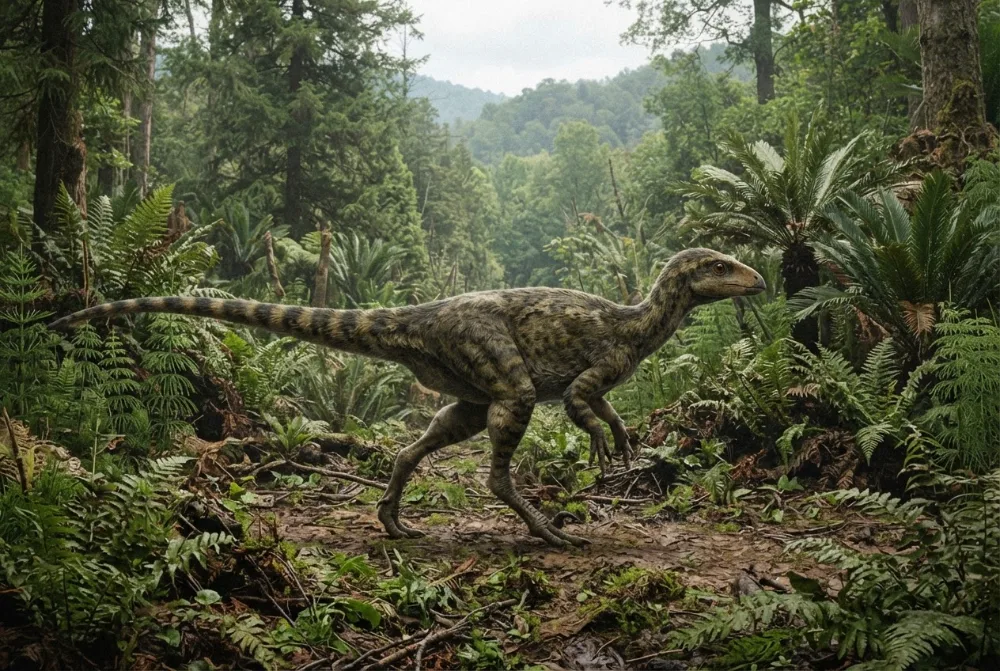
Laaj yi ñu gën a laaj ci Fona
?How big was Fona?
About the size of a large dog.1
?Did Fona live in burrows?
Yes, scientists think Fona spent at least part of its time underground in burrows, based on its anatomy and fossils.15
?What did Fona eat?
Fona was a plant-eating dinosaur.1
?When did Fona live?
Fona lived about 99 million years ago, during the mid-Cretaceous period.1
Ngir ñi xam dino lool
- Turu xam-xam
- Fona
- Ku ko tudde
- Avrahami et al. 20246
- Kurél
- Dino yu lekk gàncax te am gémmiñu picc
- Njaboot / klad
- Thescelosauridae6
- Klasifikasiyoŋ
- Ornithischia6
- Màggaayu doj yi
- 100 ba 94 milyoŋ at (Cenomanian)6
- Formasiyoŋi doj
- Cedar Mountain6
- Réew yi
- Amerig6
- Fosil yu ñu gis
- 3 ci The Paleobiology Database6
- Gisees
- Fona was named in 2024 by paleontologists Haviv Avrahami, Lindsay Zanno, and colleagues from North Carolina State University and the North Carolina Museum of Natural Sciences. The first fossils were found starting in 2013 in the Mussentuchit Member of the Cedar Mountain Formation in Utah.13
- Ñu ngi koy werante ba tey
- Scientists have not yet found the actual burrows of Fona, only the skeletons that suggest it lived underground.1
Fa xibaar yi jóge
- Life Underground Suited New Dinosaur Fine | NC State News (news.ncsu.edu)
- This dinosaur dug its own grave | National Geographic (nationalgeographic.com)
- PBDB Taxon (paleobiodb.org)
- The First ‘Burrowing Dinosaur’ Was Discovered In 2007—And 17 Years Later, We’ve Discovered The Second (forbes.com)
- A new semi-fossorial thescelosaurine dinosaur from the Cenomanian-age Mussentuchit Member of the Cedar Mountain Formation, Utah - PubMed (pubmed.ncbi.nlm.nih.gov)
- Fona in The Paleobiology Database (CC BY 4.0): at, béréb yi, formasiyoŋi doj, klasifikasiyoŋ.
Bépp xibaar ci xët wii am na lim bu wone fa mu jóge. Su nu juumee, baal nu, nun ñu bëgg dino lanu, du ab sërnaalu xam-xam. Wax nu ko ci [email protected] nu defar ko.
 Rex xiif na! Dino Wiki, mbiru ab baay la ngir doomam ju góor ju bëgg dinosoor, ci neen te amul kaamuñaate, amul tracker. Mag ñi mën nañu jox Rex tuuti ñam ngir dimbali ko mu des ci internet.Dundal Rex
 Iguanodon
 Tenontosaurus
 Thescelosaurus
 Zalmoxes
 Camptosaurus
 Rhabdodon
 Tyrannosaurus
 Triceratops
 Velociraptor
 Spinosaurus
 Ankylosaurus
 Parasaurolophus