 Ban dino nga? Kiis
 Xeexu dino
 Rawante dino
 Fo yu ndaw yu dino
 Albomu sitikeer
 Limu TOP yu dino
 Bett ma!
Kañ la dundoon?

Naka la réyoon?
Naka la guddoon?
Naka la kawewoon?
jortu
Naka la diisoon?
 gudd ni 4 xaj, bakkan ba geen🍌gudd ni 23 banaana yu ñu topp-toppale🍉diis ni 72 xaal🧸diis ni 19 xale yu maternel🎒diis ni 11 xale yu lekkool🏃mënoon na daw 100 meetar ci 9 segond (nit ki gën a gaaw dafay soxla 9,6)
Naka la Fylax réyoon, bu ñu ko méngalee ak YAW?
Ay kalkil rekk ci sa navigatëer. Dara du ñu denc, dara du ñu yónne fenn.
Naka la gaawoon?


Xibaar yu neex
Fylax lived on a chain of islands called the Late Cretaceous European Archipelago, which stretched between the Atlantic and Tethys oceans.2
Its name means 'keeper of the gates of hell' because it lived extremely close to the time of the big extinction that ended the age of dinosaurs.12
Fylax is known from just one nearly complete left jawbone, called a dentary, which was found in the early 1990s.12
Its teeth were tall and narrow, about 2.8 to 3.3 times taller than wide, and had no tiny bumps (denticles) along the edges.2
Fylax was a close relative of hadrosaurids, the duck-billed dinosaurs, but it was not a true hadrosaurid itself.42
Scientists think Fylax's ancestors may have come from Asia and traveled across islands to reach Europe and North America.2
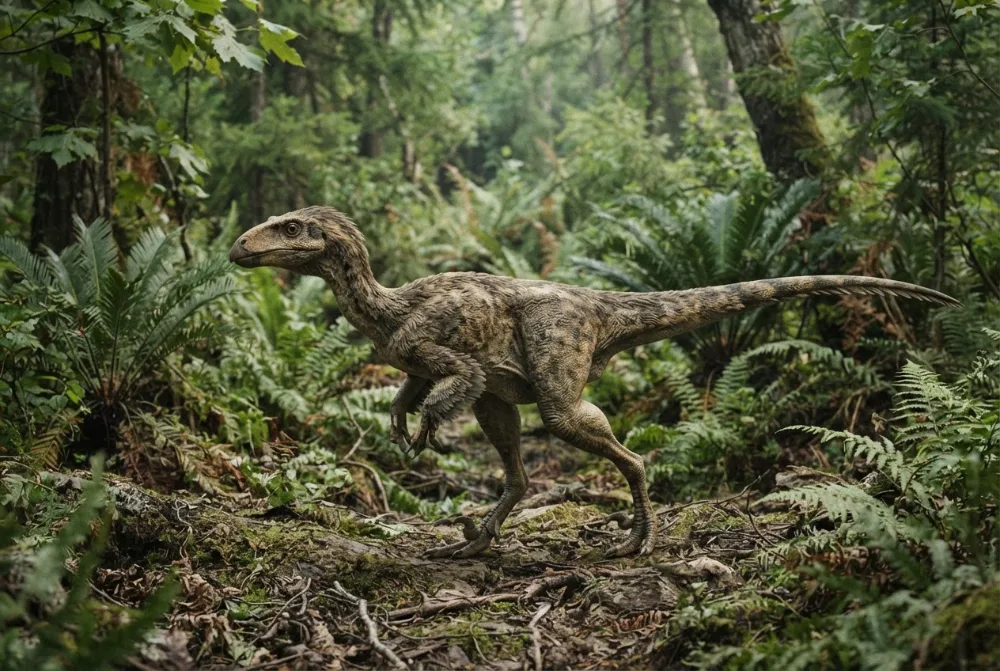
Laaj yi ñu gën a laaj ci Fylax
?How big was Fylax?
Scientists do not know the exact size because only a jawbone has been found. The jawbone is 276 mm long, so it was probably a small dinosaur, maybe 1 to 2 metres long.12
?What did Fylax eat?
Fylax was a plant-eater. Its tall, narrow teeth and flat, steeply angled chewing surface suggest it sliced through tough plants.12
?When did Fylax live?
Fylax lived at the very end of the Cretaceous Period, just before the big extinction that killed the dinosaurs. Its fossils were found in rocks that are about 66 million years old.1
?Is Fylax a dinosaur?
Yes, Fylax is a dinosaur. It is a hadrosauroid ornithopod, a type of duck-billed plant-eating dinosaur.1
Ngir ñi xam dino lool
- Turu xam-xam
- Fylax
- Ku ko tudde
- Prieto-Márquez and Carrera Farias 20214
- Kurél
- Dino yu lekk gàncax te am gémmiñu picc
- Njaboot / klad
- Hadrosauroidea4
- Klasifikasiyoŋ
- Ornithischia > Ornithopoda > Iguanodontia4
- Màggaayu doj yi
- 72 ba 66 milyoŋ at (Maastrichtian)4
- Formasiyoŋi doj
- Figuerola4
- Réew yi
- Españ4
- Fosil yu ñu gis
- 1 ci The Paleobiology Database4
- Gisees
- Fylax was named in 2021 by Albert Prieto-Márquez and Miguel Ángel Carrera Farias based on a jawbone found in the 1990s in northeastern Spain.42
- Ñu ngi koy werante ba tey
- Scientists are not sure exactly where the ancestors of Fylax came from, whether from Asia, Europe, or North America.2
Fa xibaar yi jóge
- Fylax (en.wikipedia.org)
- app008212020 (app.pan.pl)
- Fylax thyrakolasus | Dinosaur Database by DinoAnimals.com (dinoanimals.com)
- Fylax in The Paleobiology Database (CC BY 4.0): at, béréb yi, formasiyoŋi doj, klasifikasiyoŋ.
Bépp xibaar ci xët wii am na lim bu wone fa mu jóge. Su nu juumee, baal nu, nun ñu bëgg dino lanu, du ab sërnaalu xam-xam. Wax nu ko ci [email protected] nu defar ko.
 Rex xiif na! Dino Wiki, mbiru ab baay la ngir doomam ju góor ju bëgg dinosoor, ci neen te amul kaamuñaate, amul tracker. Mag ñi mën nañu jox Rex tuuti ñam ngir dimbali ko mu des ci internet.Dundal Rex
 Iguanodon
 Tenontosaurus
 Thescelosaurus
 Zalmoxes
 Camptosaurus
 Rhabdodon
 Tyrannosaurus
 Triceratops
 Velociraptor
 Spinosaurus
 Ankylosaurus
 Parasaurolophus