 Ban dino nga? Kiis
 Xeexu dino
 Rawante dino
 Fo yu ndaw yu dino
 Albomu sitikeer
 Limu TOP yu dino
 Bett ma!
Gilmoreosaurus
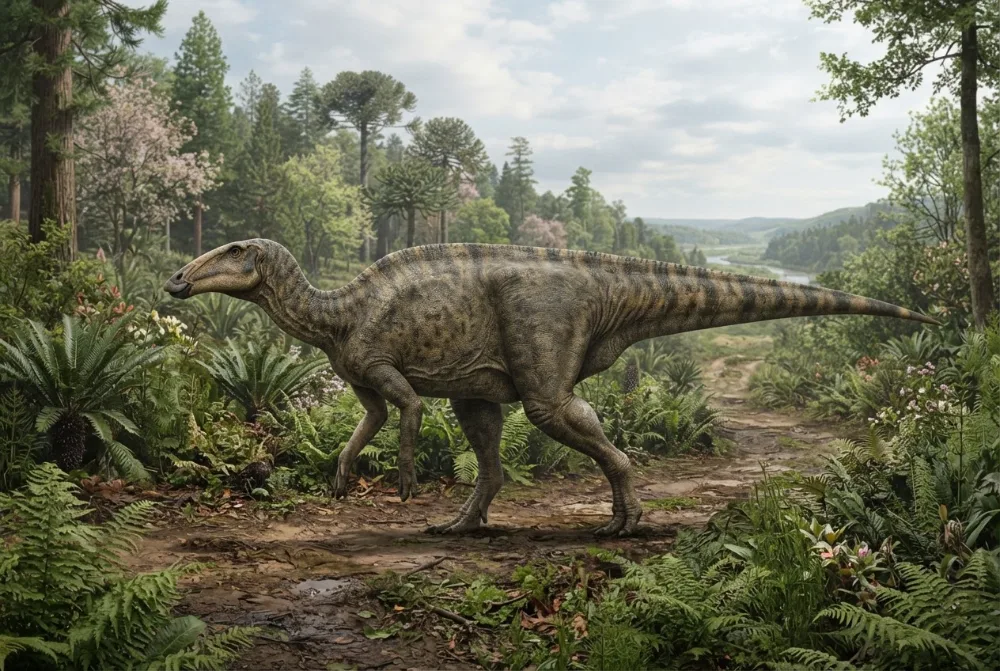
Gilmoreosaurus was a big, plant-eating dinosaur that lived in Asia during the Late Cretaceous. It had a beak and walked on four legs, but could also stand on two. Scientists think it was an early relative of the duck-billed dinosaurs.21
Kañ la dundoon?
Naka la réyoon?
Naka la guddoon?
Naka la kawewoon?
jortu
Naka la diisoon?

 gudd ni 6 xaj, bakkan ba geen🍌gudd ni 34 banaana yu ñu topp-toppalediis ni 180 xaj🍉diis ni 720 xaal🎒diis ni 4 klaas yu mat yu xale yu lekkool🐻❄️diis ni 8 uurs yu weex🏃mënoon na daw 100 meetar ci 13 segond (nit ki gën a gaaw dafay soxla 9,6)
Naka la Gilmoreosaurus réyoon, bu ñu ko méngalee ak YAW?
Ay kalkil rekk ci sa navigatëer. Dara du ñu denc, dara du ñu yónne fenn.
Naka la gaawoon?


Xibaar yu neex
Gilmoreosaurus was named after Charles Whitney Gilmore, a famous American paleontologist who studied dinosaurs from Asia.2
Its fossils were found in the Iren Dabasu Formation in Inner Mongolia, which was once a floodplain with rivers and lots of plants.2
Gilmoreosaurus lived about 96 million years ago, during the Late Cretaceous period.2
This dinosaur had a mix of features from older iguanodonts and later hadrosaurs, making it an important link in dinosaur evolution.2
The first fossils of Gilmoreosaurus were collected in 1922 and 1923 by a team from the American Museum of Natural History.2
Gilmoreosaurus might have been hunted by the fast-running tyrannosauroid Alectrosaurus, which lived in the same area.2
Laaj yi ñu gën a laaj ci Gilmoreosaurus
?How big was Gilmoreosaurus?
Gilmoreosaurus was about 6.2 metres long and weighed between 1.2 and 3.6 tonnes.21
?What did Gilmoreosaurus eat?
Gilmoreosaurus was a herbivore, meaning it ate plants. It had a beak and browsed on low to medium-height vegetation.21
Ngir ñi xam dino lool
- Turu xam-xam
- Gilmoreosaurus
- Ku ko tudde
- Brett-Surman 19793
- Kurél
- Dino yu lekk gàncax te am gémmiñu picc
- Njaboot / klad
- Hadrosauroidea3
- Klasifikasiyoŋ
- Ornithischia > Ornithopoda > Iguanodontia3
- Màggaayu doj yi
- 84 ba 72 milyoŋ at (Campanian)3
- Formasiyoŋi doj
- Iren Dabasu3
- Réew yi
- Siin3
- Fosil yu ñu gis
- 2 ci The Paleobiology Database3
- Gisees
- Gilmoreosaurus was named by Michael Brett-Surman in 1979. The first fossils were found in the 1920s by George Olsen, part of a team led by Walter Granger, in Inner Mongolia, China.21
- Ñu ngi koy werante ba tey
- Scientists are not sure exactly where Gilmoreosaurus fits in the dinosaur family tree. Some think it is a close relative of hadrosaurs, while others place it just outside the group.2
Fa xibaar yi jóge
- Gilmoreosaurus | Natural History Museum (nhm.ac.uk)
- Gilmoreosaurus (en.wikipedia.org)
- Gilmoreosaurus in The Paleobiology Database (CC BY 4.0): at, béréb yi, formasiyoŋi doj, klasifikasiyoŋ.
Bépp xibaar ci xët wii am na lim bu wone fa mu jóge. Su nu juumee, baal nu, nun ñu bëgg dino lanu, du ab sërnaalu xam-xam. Wax nu ko ci [email protected] nu defar ko.
 Rex xiif na! Dino Wiki, mbiru ab baay la ngir doomam ju góor ju bëgg dinosoor, ci neen te amul kaamuñaate, amul tracker. Mag ñi mën nañu jox Rex tuuti ñam ngir dimbali ko mu des ci internet.Dundal Rex
 Iguanodon
 Tenontosaurus
 Thescelosaurus
 Zalmoxes
 Camptosaurus
 Rhabdodon
 Tyrannosaurus
 Triceratops
 Velociraptor
 Spinosaurus
 Ankylosaurus
 Parasaurolophus