 Ban dino nga? Kiis
 Xeexu dino
 Rawante dino
 Fo yu ndaw yu dino
 Albomu sitikeer
 Limu TOP yu dino
 Bett ma!
Gonkoken
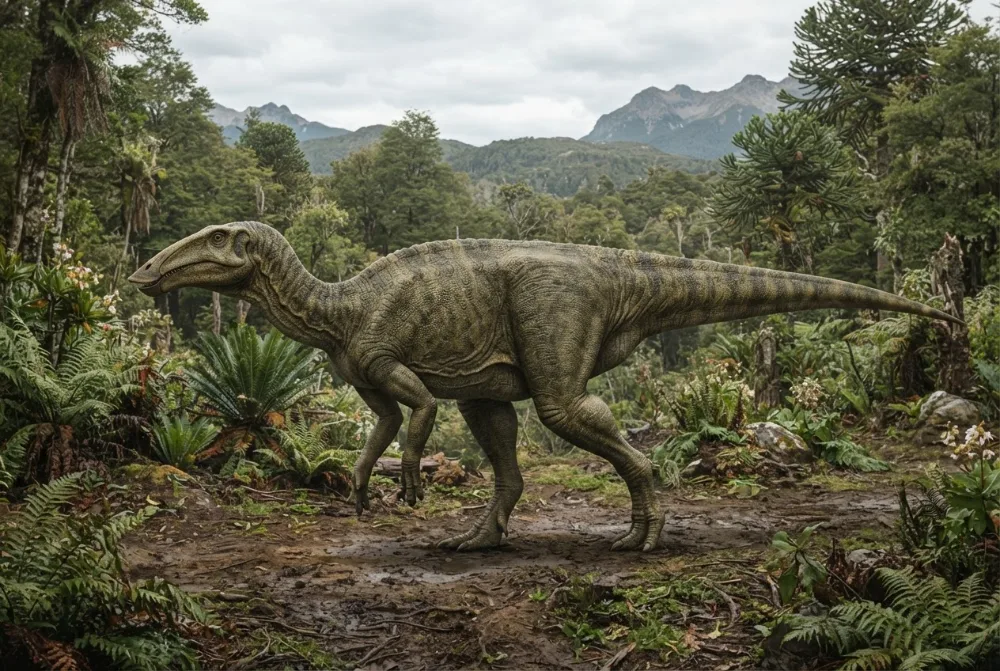
Gonkoken was a small duck-billed dinosaur that lived in what is now southern Chile, near Antarctica. It was about as long as a car and used its hundreds of teeth to chew tough plants. This dinosaur is special because it is not a true hadrosaurid, but a more ancient cousin that survived until the very end of the dinosaur age.24
Kañ la dundoon?
Naka la réyoon?
Naka la guddoon?
Naka la kawewoon?
jortu
Naka la diisoon?
 gudd ni 4 xaj, bakkan ba geen🍌gudd ni 22 banaana yu ñu topp-toppale🍉diis ni 200 xaal🧸diis ni 53 xale yu maternel🎒diis ni 31 xale yu lekkool🐻❄️diis ni 2 uurs yu weex🏃mënoon na daw 100 meetar ci 11 segond (nit ki gën a gaaw dafay soxla 9,6)
Naka la Gonkoken réyoon, bu ñu ko méngalee ak YAW?
Ay kalkil rekk ci sa navigatëer. Dara du ñu denc, dara du ñu yónne fenn.
Naka la gaawoon?


Xibaar yu neex
Gonkoken is a 'transitional' duckbill, meaning it is closely related to true hadrosaurids but not one itself. Its ancestors came from North America and arrived in South America earlier than the more advanced duckbills.2
The name Gonkoken comes from the Aónik’enk language, spoken by the indigenous people of the region. 'Gon' means 'similar to' and 'koken' means 'wild duck or swan'.21
Fossils of Gonkoken were found in a bonebed containing at least three individuals. The site is still being excavated and may hold many more bones.2
Gonkoken lived about 71.7 to 70.5 million years ago, during the early Maastrichtian stage of the Late Cretaceous. This was just a few million years before the asteroid impact that ended the age of dinosaurs.2
Unlike true hadrosaurids, Gonkoken had fewer than 30 tooth positions in its lower jaw, and its tooth rows did not extend beyond the coronoid process.2
Gonkoken is the first duck-billed dinosaur described from a subantarctic region. Its discovery suggests that some alleged hadrosaurid fossils from Antarctica might actually belong to non-hadrosaurid duckbills like Gonkoken.2
Laaj yi ñu gën a laaj ci Gonkoken
?How big was Gonkoken?
Gonkoken was a small duck-billed dinosaur, about 4 metres (13 feet) long. That is roughly the length of a small car.12
?When did Gonkoken live?
Gonkoken lived about 71.7 to 70.5 million years ago, during the early Maastrichtian stage of the Late Cretaceous. That was just a few million years before the asteroid hit.12
Ku tas léeb yu dul dëgg
Léeb: All duck-billed dinosaurs are hadrosaurids (true duckbills).
Dëgg: Gonkoken is a duck-billed dinosaur but not a hadrosaurid. It belongs to a more ancient lineage that survived alongside true duckbills in the far south.2
Ngir ñi xam dino lool
- Turu xam-xam
- Gonkoken
- Ku ko tudde
- Alarcón-Muñoz et al. 20234
- Kurél
- Dino yu lekk gàncax te am gémmiñu picc
- Njaboot / klad
- Hadrosauroidea4
- Klasifikasiyoŋ
- Ornithischia > Ornithopoda > Iguanodontia4
- Màggaayu doj yi
- 72 ba 66 milyoŋ at (Maastrichtian)4
- Formasiyoŋi doj
- Dorotea4
- Réew yi
- Sili4
- Fosil yu ñu gis
- 1 ci The Paleobiology Database4
- Gisees
- Gonkoken was named in 2023 by Alarcón-Muñoz and colleagues. The first bones were found by Mario 'Nano' Ulloa in the Río de las Chinas Valley, and excavations began in 2013, uncovering many disarticulated remains.24
- Ñu ngi koy werante ba tey
- Scientists debate whether all alleged hadrosaurid fossils from Antarctica and subantarctic regions actually belong to non-hadrosaurid duckbills like Gonkoken, rather than true hadrosaurids.2
Fa xibaar yi jóge
- Gonkoken (en.wikipedia.org)
- Relict duck-billed dinosaurs survived into the last age of the dinosaurs in subantarctic Chile (science.org)
- Scientists discover duck-billed dinosaur roamed Chile 72 million years ago | Reuters (reuters.com)
- Gonkoken in The Paleobiology Database (CC BY 4.0): at, béréb yi, formasiyoŋi doj, klasifikasiyoŋ.
Bépp xibaar ci xët wii am na lim bu wone fa mu jóge. Su nu juumee, baal nu, nun ñu bëgg dino lanu, du ab sërnaalu xam-xam. Wax nu ko ci [email protected] nu defar ko.
 Rex xiif na! Dino Wiki, mbiru ab baay la ngir doomam ju góor ju bëgg dinosoor, ci neen te amul kaamuñaate, amul tracker. Mag ñi mën nañu jox Rex tuuti ñam ngir dimbali ko mu des ci internet.Dundal Rex
 Iguanodon
 Tenontosaurus
 Thescelosaurus
 Zalmoxes
 Camptosaurus
 Rhabdodon
 Tyrannosaurus
 Triceratops
 Velociraptor
 Spinosaurus
 Ankylosaurus
 Parasaurolophus