 Ban dino nga? Kiis
 Xeexu dino
 Rawante dino
 Fo yu ndaw yu dino
 Albomu sitikeer
 Limu TOP yu dino
 Bett ma!
Kañ la dundoon?

Naka la réyoon?
Naka la guddoon?
Naka la Gracilornis réyoon, bu ñu ko méngalee ak YAW?
Ay kalkil rekk ci sa navigatëer. Dara du ñu denc, dara du ñu yónne fenn.
Naka la gaawoon?


Xibaar yu neex
Gracilornis had a very small sternum, or breastbone, compared to its body length. The sternum was only about 11% of the trunk length.3
This bird lived around 110 million years ago, during the Early Cretaceous period.1
The name Gracilornis comes from Latin and Greek words meaning 'slender bird', because its skeleton was very thin and light.1
Gracilornis is known from a nearly complete skull and skeleton, which helps scientists understand what it looked like.1
It belonged to a group called Enantiornithes, which were the most common birds during the Cretaceous period.1
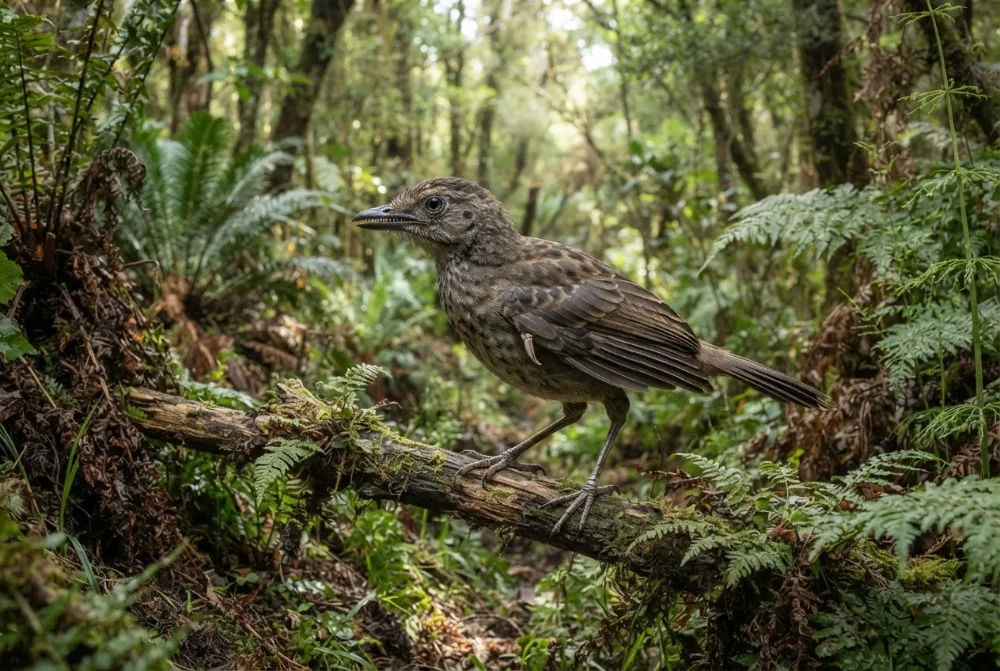
Ngir ñi xam dino lool
- Turu xam-xam
- Gracilornis
- Ku ko tudde
- Li and Hou 20114
- Kurél
- Picc yu jëkk yi
- Njaboot / klad
- Cathayornithidae4
- Klasifikasiyoŋ
- Theropoda > Avialae4
- Màggaayu doj yi
- 121 ba 113 milyoŋ at (Aptian)4
- Formasiyoŋi doj
- Jiufotang4
- Réew yi
- Siin4
- Fosil yu ñu gis
- 1 ci The Paleobiology Database4
- Gisees
- Gracilornis was named by Li Li and Hou Shilin in 2011. They found the fossil in the Jiufotang Formation in Chaoyang, Liaoning, China.1
- Ñu ngi koy werante ba tey
- Scientists are not sure exactly how Gracilornis flew, because its small sternum might mean it had weak flight muscles.3
Fa xibaar yi jóge
- Gracilornis (en.wikipedia.org)
- PBDB Taxon (paleobiodb.org)
- Gracilornis, enantiornithine bird from China (reptilis.net)
- Gracilornis in The Paleobiology Database (CC BY 4.0): at, béréb yi, formasiyoŋi doj, klasifikasiyoŋ.
Bépp xibaar ci xët wii am na lim bu wone fa mu jóge. Su nu juumee, baal nu, nun ñu bëgg dino lanu, du ab sërnaalu xam-xam. Wax nu ko ci [email protected] nu defar ko.
 Rex xiif na! Dino Wiki, mbiru ab baay la ngir doomam ju góor ju bëgg dinosoor, ci neen te amul kaamuñaate, amul tracker. Mag ñi mën nañu jox Rex tuuti ñam ngir dimbali ko mu des ci internet.Dundal Rex
 Archaeopteryx
 Hesperornis
 Ichthyornis
 Baptornis
 Jurapteryx
 Gobipteryx
 Stegosaurus
 Iguanodon
 Giganotosaurus
 Microraptor
 Deinonychus
 Baryonyx