 Ban dino nga? Kiis
 Xeexu dino
 Rawante dino
 Fo yu ndaw yu dino
 Albomu sitikeer
 Limu TOP yu dino
 Bett ma!
Gravisaurus
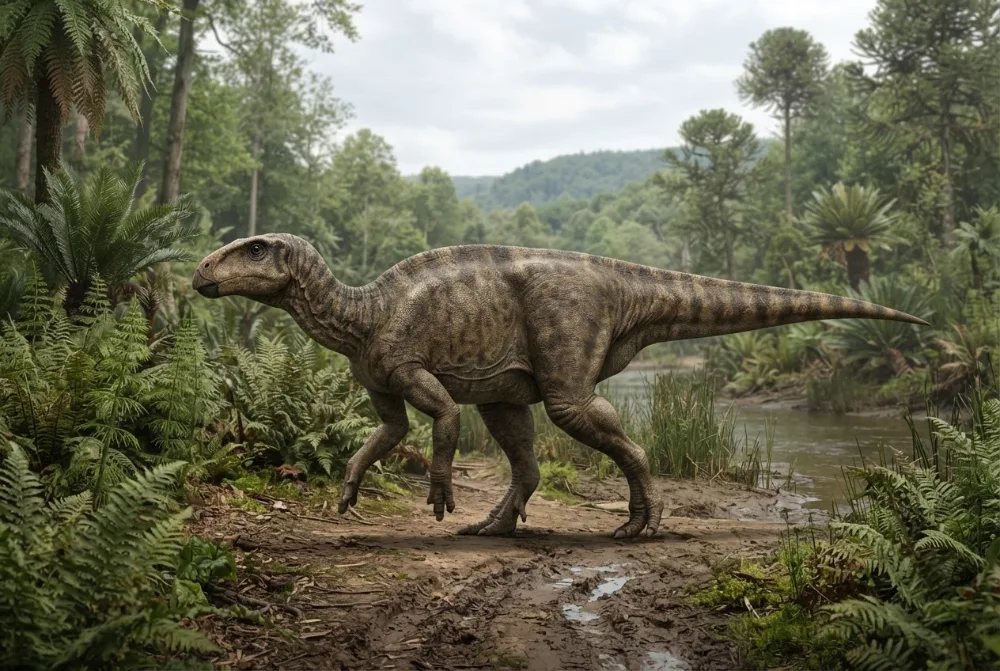
Gravisaurus was a heavy, plant-eating dinosaur that lived in what is now Niger, Africa, about 112 million years ago. It had a small head, a long neck, a round body, and strong front legs with big claws. Scientists think it moved slowly and may have looked a bit like a giant ground sloth.1
Kañ la dundoon?
Naka la réyoon?
Naka la guddoon?
Naka la kawewoon?
Naka la diisoon?
 gudd ni 2 oto yu ñu taxawal ci benn rëdd🍌gudd ni 50 banaana yu ñu topp-toppale
 lu tollu ci diisaayu ñey🍉diis ni 1100 xaal🎒diis ni 7 klaas yu mat yu xale yu lekkool🐻❄️diis ni 12 uurs yu weex🏃mënoon na daw 100 meetar ci 16 segond (nit ki gën a gaaw dafay soxla 9,6)
Naka la Gravisaurus réyoon, bu ñu ko méngalee ak YAW?
Ay kalkil rekk ci sa navigatëer. Dara du ñu denc, dara du ñu yónne fenn.
Naka la gaawoon?


Xibaar yu neex
Gravisaurus was first described in 1988 by paleontologist Souad Chabli in her PhD thesis, but the name was not officially published until 1999.21
Its thumb spike was huge, much bigger than in other iguanodonts.1
Gravisaurus may have been the first ornithischian dinosaur with graviportal anatomy, meaning its legs were built to support a very heavy body.1
Its stomach was only about 70 centimetres (2 feet 4 inches) off the ground when it stood on all fours.1
Gravisaurus lived in a forested river environment alongside other dinosaurs like Ouranosaurus, Nigersaurus, and the giant crocodile Sarcosuchus.1
Some scientists think Gravisaurus behaved like a hippopotamus, spending time in water and moving slowly on land.1
Laaj yi ñu gën a laaj ci Gravisaurus
?How big was Gravisaurus?
Gravisaurus was about 7 to 9 metres (23 to 30 feet) long and 2 metres (6.6 feet) tall on all fours. It weighed between 2.5 and 5.5 tonnes (2.8 to 6.1 short tons), which is as heavy as a large hippo.3
?What did Gravisaurus eat?
Gravisaurus was a plant-eater. It lived in a forested area with soft plants like ferns and horsetails, which it likely ate.3
?Did Gravisaurus have any predators?
Yes, Gravisaurus lived alongside big meat-eaters like the spinosaurid Suchomimus and the carcharodontosaurid Eocarcharia. Its huge thumb spike was probably used for defense.3
?Could Gravisaurus swim?
Some scientists think Gravisaurus may have behaved like a hippo, spending time in water. Its heavy body and strong legs suggest it could move in rivers, but nobody knows for sure if it swam.3
?Why did Gravisaurus have a thumb spike?
Gravisaurus had a massive thumb spike that scientists think was used for defense against predators.3
?Is Gravisaurus a dinosaur?
Yes, Gravisaurus is a dinosaur. It is a type of iguanodont ornithischian dinosaur from the Early Cretaceous period.3
Ngir ñi xam dino lool
- Turu xam-xam
- Gravisaurus
- Ku ko tudde
- Chabli 19884
- Kurél
- Dino yu lekk gàncax te am gémmiñu picc
- Njaboot / klad
- Iguanodontoidea4
- Klasifikasiyoŋ
- Ornithischia > Ornithopoda > Iguanodontia4
- Màggaayu doj yi
- 113 ba 100 milyoŋ at (Albian)4
- Fosil yu ñu gis
- 1 ci The Paleobiology Database4
- Gisees
- The first skeleton of Gravisaurus was found in 1965 by French paleontologist Philippe Taquet in the Tenere desert of Niger. It was named Gravisaurus tenerensis by Souad Chabli in 1988, but later renamed Lurdusaurus arenatus in 1999.12
- Ñu ngi koy werante ba tey
- Scientists disagree on how heavy Gravisaurus was. One estimate says about 5.5 tonnes, while another says only 2.5 tonnes.1
Fa xibaar yi jóge
- Lurdusaurus (en.wikipedia.org)
- Etude anatomique et systematique de gravisaurus tenerensis n. G. N. Sp. Dinosaurien, ornithischien) du gisement de gadoufaoua (aptien du niger) | Theses.fr (theses.fr)
- Lurdusaurus (en.wikipedia.org)
- Gravisaurus in The Paleobiology Database (CC BY 4.0): at, béréb yi, formasiyoŋi doj, klasifikasiyoŋ.
Bépp xibaar ci xët wii am na lim bu wone fa mu jóge. Su nu juumee, baal nu, nun ñu bëgg dino lanu, du ab sërnaalu xam-xam. Wax nu ko ci [email protected] nu defar ko.
 Rex xiif na! Dino Wiki, mbiru ab baay la ngir doomam ju góor ju bëgg dinosoor, ci neen te amul kaamuñaate, amul tracker. Mag ñi mën nañu jox Rex tuuti ñam ngir dimbali ko mu des ci internet.Dundal Rex
 Iguanodon
 Tenontosaurus
 Thescelosaurus
 Zalmoxes
 Camptosaurus
 Rhabdodon
 Stegosaurus
 Archaeopteryx
 Giganotosaurus
 Microraptor
 Deinonychus
 Baryonyx