 Ban dino nga? Kiis
 Xeexu dino
 Rawante dino
 Fo yu ndaw yu dino
 Albomu sitikeer
 Limu TOP yu dino
 Bett ma!
Petrodactyle
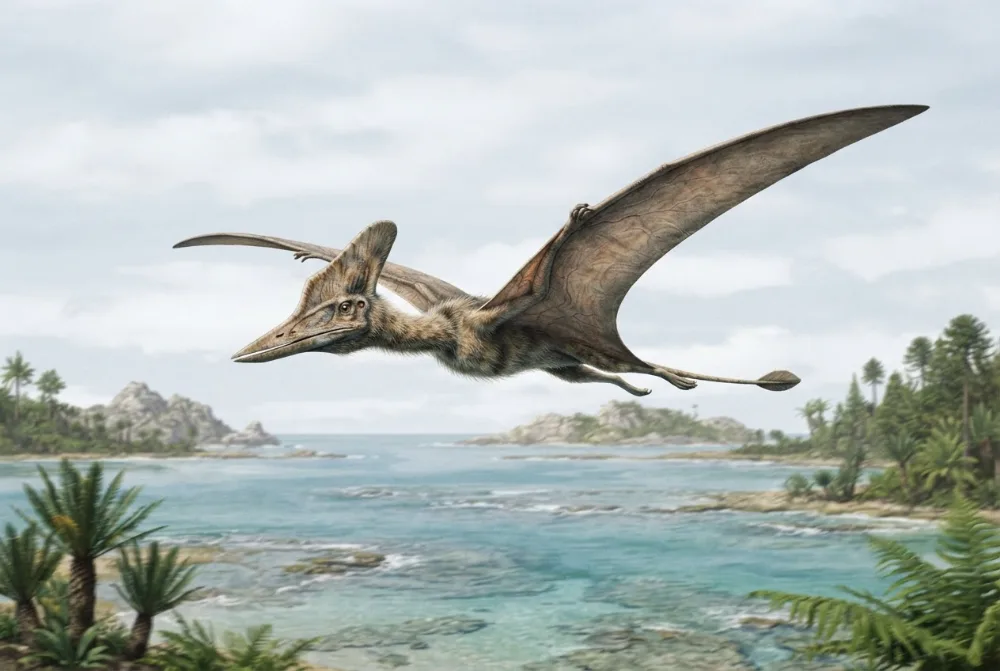
Petrodactyle was a flying reptile that lived in the Late Jurassic period, about 150 million years ago. It had a wingspan of about 2.1 metres (6.9 feet), making it one of the largest pterosaurs from the Solnhofen area of Germany. It also had one of the biggest bony crests on its head of any Jurassic pterosaur.1
Kañ la dundoon?
Naka la réyoon?
Naka la ay laafam yaatuwoon?
 gudd ni 4 muusu kër, bakkan ba geen⚽mënoon na naaw ci kaw teraŋ futbal bépp ci 7,9 segond
Naka la Petrodactyle réyoon, bu ñu ko méngalee ak YAW?
Ay kalkil rekk ci sa navigatëer. Dara du ñu denc, dara du ñu yónne fenn.
Naka la gaawoon?


Xibaar yu neex
Petrodactyle is one of the largest pterosaurs known from the Jurassic period, with a wingspan of about 2.1 metres (6.9 feet).1
It had a large bony crest on the back of its skull, which helped give it a powerful bite.1
Its teeth were short and spike-like, and only found in the front half of its jaws. This suggests it grabbed prey with a strong grip.1
Petrodactyle had long legs and could probably wade in shallow water to hunt.1
The only known fossil was found in 2010 in a public quarry in Germany. It is a mostly complete skeleton of a subadult.1
The name Petrodactyle means 'stone finger', a nod to the first pterosaur ever named, Pterodactylus.1
Laaj yi ñu gën a laaj ci Petrodactyle
?What did Petrodactyle eat?
Petrodactyle was a carnivore, likely feeding on small fish, crustaceans, and other small prey. Its strong bite and spike-like teeth helped it grab slippery food.1
?How big was Petrodactyle?
Petrodactyle had a wingspan of about 2.1 metres (6.9 feet), making it one of the largest pterosaurs from the Solnhofen area and one of the largest Jurassic pterosaurs.21
?Where did Petrodactyle live?
Petrodactyle lived in what is now Germany about 150 million years ago, during the Late Jurassic. Its fossils were found in the Mörnsheim Formation in Bavaria.23
?Why did Petrodactyle have a crest?
The large bony crest on Petrodactyle's skull likely helped anchor jaw muscles, giving it a stronger bite. It may have also been used for display.1
Ngir ñi xam dino lool
- Turu xam-xam
- Petrodactyle
- Ku ko tudde
- Hone et al. 20234
- Kurél
- Reptil yuy naaw
- Njaboot / klad
- Gallodactylidae4
- Klasifikasiyoŋ
- Pterosauria > Pterodactyloidea4
- Màggaayu doj yi
- 149 ba 145 milyoŋ at (Tithonian)4
- Formasiyoŋi doj
- Mörnsheim4
- Réew yi
- Almaañ4
- Fosil yu ñu gis
- 1 ci The Paleobiology Database4
- Gisees
- Petrodactyle was named in 2023 by David Hone, René Lauer, and Frederik Spindler. The only known fossil was found in 2010 in a public quarry in Bavaria, Germany, by Günther Zehetner.1
- Ñu ngi koy werante ba tey
- Scientists are not sure exactly what Petrodactyle ate. It may have been a fish-eater, but its strong bite and worn tooth tips suggest it also ate hard-shelled animals like crustaceans.1
Fa xibaar yi jóge
- A new Solnhofen pterosaur (palaeo-electronica.org)
- Petrodactyle (en.wikipedia.org)
- Jurassic Pterosaur Had Giant Bony Crest on Its Head | Sci.News (sci.news)
- Petrodactyle in The Paleobiology Database (CC BY 4.0): at, béréb yi, formasiyoŋi doj, klasifikasiyoŋ.
Bépp xibaar ci xët wii am na lim bu wone fa mu jóge. Su nu juumee, baal nu, nun ñu bëgg dino lanu, du ab sërnaalu xam-xam. Wax nu ko ci [email protected] nu defar ko.
 Rex xiif na! Dino Wiki, mbiru ab baay la ngir doomam ju góor ju bëgg dinosoor, ci neen te amul kaamuñaate, amul tracker. Mag ñi mën nañu jox Rex tuuti ñam ngir dimbali ko mu des ci internet.Dundal Rex
 Pteranodon
 Quetzalcoatlus
 Dorygnathus
 Rhamphorhynchus
 Anhanguera
 Pterodactylus
 Brachiosaurus
 Diplodocus
 Allosaurus
 Brontosaurus
 Compsognathus
 Camarasaurus