 Ban dino nga? Kiis
 Xeexu dino
 Rawante dino
 Fo yu ndaw yu dino
 Albomu sitikeer
 Limu TOP yu dino
 Bett ma!
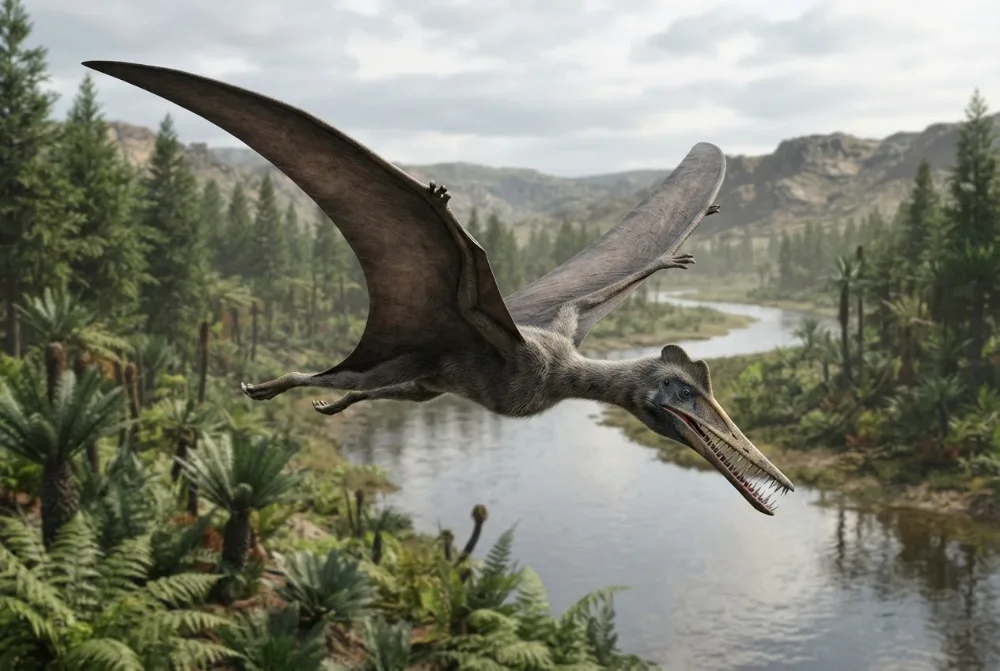
Sericipterus
Sericipterus was a flying reptile that lived about 160 million years ago in what is now China. It had a wingspan of at least 1.73 meters (5.7 feet), making it one of the largest pterosaurs of its time. It probably soared over lakes and rivers, catching fish with its long, sharp teeth.12
Kañ la dundoon?
Naka la réyoon?
Naka la ay laafam yaatuwoon?
 gudd ni 3 muusu kër, bakkan ba geen⚽mënoon na naaw ci kaw teraŋ futbal bépp ci 8,4 segond
Naka la Sericipterus réyoon, bu ñu ko méngalee ak YAW?
Ay kalkil rekk ci sa navigatëer. Dara du ñu denc, dara du ñu yónne fenn.
Naka la gaawoon?


Xibaar yu neex
Sericipterus had three bony crests on its head: one on the snout, one on top of the skull, and a short crest at the front of the skull.1
It was one of the largest non-pterodactyloid pterosaurs, meaning it belonged to an early group of pterosaurs that did not have the short tails and long heads of later forms.2
The name Sericipterus comes from the Silk Road, the ancient trade route that passed through the region where it was found.1
Its teeth were curved, sharply pointed, and had two keels (sharp edges) for cutting, like steak knives.1
The holotype specimen (IVPP V14725) includes a disarticulated skull, partial lower jaw, many teeth, parts of the spine, wing bones, and other fragments.2
Sericipterus lived in a terrestrial (land) environment, unlike many pterosaurs that lived near the sea.2
Laaj yi ñu gën a laaj ci Sericipterus
?How big was Sericipterus?
Sericipterus had a wingspan of at least 1.73 meters, making it one of the largest non pterodactyloid pterosaurs.12
?What did Sericipterus eat?
It likely ate small tetrapods, as it lived inland and had sharp, curved teeth with cutting edges, similar to other rhamphorhynchids.12
?When did Sericipterus live?
Sericipterus lived during the Late Jurassic, about 160 million years ago, in what is now China.12
?Was Sericipterus a dinosaur?
No, Sericipterus was a pterosaur, a flying reptile, not a dinosaur.1
Ngir ñi xam dino lool
- Turu xam-xam
- Sericipterus
- Ku ko tudde
- Andres et al. 20103
- Kurél
- Reptil yuy naaw
- Njaboot / klad
- Rhamphorhynchidae3
- Klasifikasiyoŋ
- Pterosauria > Rhamphorhynchidae3
- Màggaayu doj yi
- 162 ba 155 milyoŋ at (Oxfordian)3
- Formasiyoŋi doj
- Shishugou3
- Réew yi
- Siin3
- Fosil yu ñu gis
- 1 ci The Paleobiology Database3
- Gisees
- Sericipterus was named and described in 2010 by Brian Andres, James Clark, and Xu Xing. The fossils were found during joint expeditions from 2001 to 2006 in the Wucaiwan area of the Junggar Basin in China.12
- Ñu ngi koy werante ba tey
- Scientists are not sure how many teeth Sericipterus had in its lower jaw, because the lower jaw bones were not fully preserved.1
Fa xibaar yi jóge
- Sericipterus (en.wikipedia.org)
- Full article: A new rhamphorhynchid pterosaur from the Upper Jurassic of Xinjiang, China, and the phylogenetic relationships of basal pterosaurs (tandfonline.com)
- Sericipterus in The Paleobiology Database (CC BY 4.0): at, béréb yi, formasiyoŋi doj, klasifikasiyoŋ.
Bépp xibaar ci xët wii am na lim bu wone fa mu jóge. Su nu juumee, baal nu, nun ñu bëgg dino lanu, du ab sërnaalu xam-xam. Wax nu ko ci [email protected] nu defar ko.
 Rex xiif na! Dino Wiki, mbiru ab baay la ngir doomam ju góor ju bëgg dinosoor, ci neen te amul kaamuñaate, amul tracker. Mag ñi mën nañu jox Rex tuuti ñam ngir dimbali ko mu des ci internet.Dundal Rex
 Pteranodon
 Quetzalcoatlus
 Dorygnathus
 Rhamphorhynchus
 Anhanguera
 Pterodactylus
 Brachiosaurus
 Diplodocus
 Allosaurus
 Brontosaurus
 Compsognathus
 Camarasaurus