 Ban dino nga? Kiis
 Xeexu dino
 Rawante dino
 Fo yu ndaw yu dino
 Albomu sitikeer
 Limu TOP yu dino
 Bett ma!
Shenqiornis
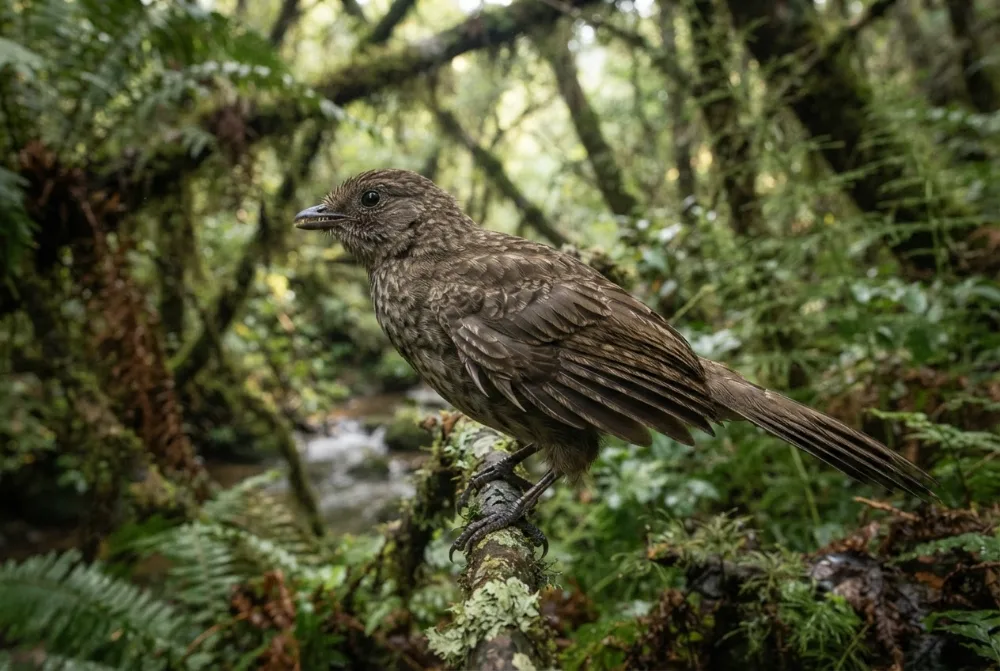
Shenqiornis was a small, toothed bird that lived in what is now China. It had a strong beak and sharp teeth, and it probably hunted insects and other small animals. Its skull was built like a reptile's, with two openings behind the eye.13
Kañ la dundoon?
Naka la gaawoon?


Xibaar yu neex
Shenqiornis is known from a nearly complete skeleton with carbonized feather traces, found in China.2
It belonged to a group of ancient birds called enantiornithines, which had teeth and clawed wings.1
Shenqiornis had a large postorbital bone with a long, tapering jugal process, meaning its skull might have been fully diapsid (with two openings behind each eye) like some early birds.1
Its tooth shape is unique among enantiornithines and suggests it had a special diet, possibly eating different prey than its relatives.1
The fossils were found in rocks that are between about 161 and 121 million years old, from the Late Jurassic to the Early Cretaceous.2
Ngir ñi xam dino lool
- Turu xam-xam
- Shenqiornis
- Ku ko tudde
- Wang et al. 20103
- Kurél
- Picc yu jëkk yi
- Njaboot / klad
- Bohaiornithidae3
- Klasifikasiyoŋ
- Theropoda > Avialae3
- Màggaayu doj yi
- 162 ba 121 milyoŋ at (Oxfordian / Barremian)3
- Formasiyoŋi doj
- Qiaotou3
- Réew yi
- Siin3
- Fosil yu ñu gis
- 1 ci The Paleobiology Database3
- Gisees
- Shenqiornis was named by Xuri Wang and colleagues in 2010. The type specimen, a nearly complete skeleton with feather traces, was found at Shenjitu in the Qiaotou Formation of northern Hebei, China.31
- Ñu ngi koy werante ba tey
- Scientists are not sure exactly what Shenqiornis ate. Its unusual teeth hint at a special diet, but no one knows for sure what that was.1
Fa xibaar yi jóge
- New Species of Enantiornithes (Aves: Ornithothoraces) from the Qiaotou Formation in Northern Hebei, China (onlinelibrary.wiley.com)
- paleobiodb.org (paleobiodb.org)
- Shenqiornis in The Paleobiology Database (CC BY 4.0): at, béréb yi, formasiyoŋi doj, klasifikasiyoŋ.
Bépp xibaar ci xët wii am na lim bu wone fa mu jóge. Su nu juumee, baal nu, nun ñu bëgg dino lanu, du ab sërnaalu xam-xam. Wax nu ko ci [email protected] nu defar ko.
 Rex xiif na! Dino Wiki, mbiru ab baay la ngir doomam ju góor ju bëgg dinosoor, ci neen te amul kaamuñaate, amul tracker. Mag ñi mën nañu jox Rex tuuti ñam ngir dimbali ko mu des ci internet.Dundal Rex
 Archaeopteryx
 Hesperornis
 Ichthyornis
 Baptornis
 Jurapteryx
 Gobipteryx
 Stegosaurus
 Iguanodon
 Giganotosaurus
 Microraptor
 Deinonychus
 Baryonyx