 Ban dino nga? Kiis
 Xeexu dino
 Rawante dino
 Fo yu ndaw yu dino
 Albomu sitikeer
 Limu TOP yu dino
 Bett ma!
Sinopterus
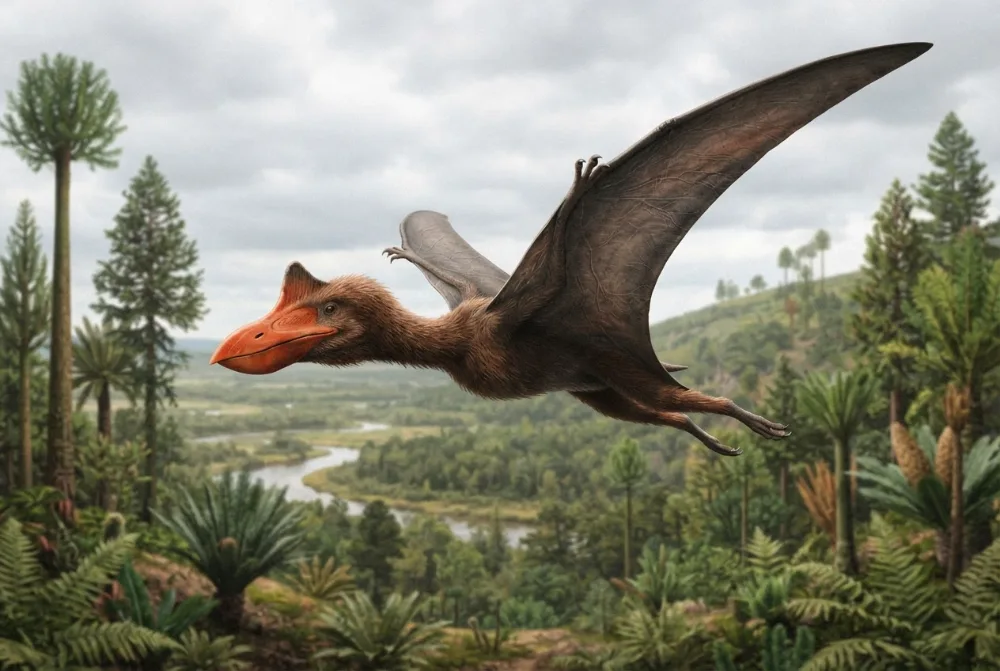
Sinopterus was a flying reptile with a big, toothless beak like a parrot. It lived in China during the Early Cretaceous, about 120 million years ago, and probably ate plants and seeds.13
Kañ la dundoon?
Naka la réyoon?
Naka la ay laafam yaatuwoon?
Naka la diisoon?
 gudd ni 4 muusu kër, bakkan ba geenlu tollu ci diisaayu muusu kër🍌diis ni 24 banaana⚽mënoon na naaw ci kaw teraŋ futbal bépp ci 8 segond
Naka la Sinopterus réyoon, bu ñu ko méngalee ak YAW?
Ay kalkil rekk ci sa navigatëer. Dara du ñu denc, dara du ñu yónne fenn.
Naka la gaawoon?


Xibaar yu neex
Sinopterus had a long, bony crest on top of its skull that pointed backward like a spike.1
Its beak had no teeth, similar to modern birds and some other pterosaurs.1
Scientists found tiny plant fossils (phytoliths) in the stomach of a Sinopterus, proving it ate plants.1
Sinopterus also swallowed small stones (gastroliths) to help grind up tough plant food in its gizzard.1
It was one of the first tapejarid pterosaurs found outside Brazil, showing these flying reptiles lived in many places.1
The largest Sinopterus had a wingspan of about 1.9 metres (6.2 feet) and weighed around 2.9 kilograms (6.3 pounds).1
Many scientists now think that only one species of Sinopterus is valid: Sinopterus dongi.2
Laaj yi ñu gën a laaj ci Sinopterus
?Was Sinopterus a dinosaur?
No, Sinopterus was a pterosaur, a flying reptile, not a dinosaur.1
?How big was Sinopterus?
The largest Sinopterus had a wingspan of about 1.9 metres and weighed around 2.9 kilograms. The type specimen had a skull 17 centimetres long.1
?What did Sinopterus eat?
Sinopterus was a herbivore. Scientists found plant fossils and gastroliths in its stomach, showing it ate seeds, grains, and other plants.1
?Did Sinopterus have teeth?
No, Sinopterus had a toothless, bird-like beak similar to a parrot.1
?When did Sinopterus live?
Sinopterus lived during the Early Cretaceous period, about 120 million years ago.1
?Why did Sinopterus have a crest?
The long bony crest on its skull may have been used for display, such as attracting mates or recognizing other members of its species. Scientists are not completely sure.1
Ku tas léeb yu dul dëgg
Léeb: Some people think Sinopterus ate fish or insects like many other pterosaurs.
Dëgg: Stomach contents show Sinopterus was a plant-eater, with no fish bones or insect shells found.1
Ngir ñi xam dino lool
- Turu xam-xam
- Sinopterus
- Ku ko tudde
- Wang and Zhou 20023
- Kurél
- Reptil yuy naaw
- Njaboot / klad
- Tapejaridae3
- Klasifikasiyoŋ
- Pterosauria > Pterodactyloidea3
- Màggaayu doj yi
- 121 ba 113 milyoŋ at (Aptian)3
- Formasiyoŋi doj
- Jiufotang3
- Réew yi
- Siin3
- Fosil yu ñu gis
- 3 ci The Paleobiology Database3
- Gisees
- Sinopterus was named in 2002 by Chinese paleontologists Wang Xiaolin and Zhou Zhonghe, based on a nearly complete skeleton found in Liaoning, China.13
- Ñu ngi koy werante ba tey
- Scientists still debate how many different species of Sinopterus existed, because the crests and sizes vary a lot among fossils.2
Fa xibaar yi jóge
- Sinopterus (en.wikipedia.org)
- PeerJ A taxonomic revision of the Sinopterus complex (Pterosauria, Tapejaridae) from the Early Cretaceous Jehol Biota, with the new genus Huaxiadraco (peerj.com)
- Sinopterus in The Paleobiology Database (CC BY 4.0): at, béréb yi, formasiyoŋi doj, klasifikasiyoŋ.
Bépp xibaar ci xët wii am na lim bu wone fa mu jóge. Su nu juumee, baal nu, nun ñu bëgg dino lanu, du ab sërnaalu xam-xam. Wax nu ko ci [email protected] nu defar ko.
 Rex xiif na! Dino Wiki, mbiru ab baay la ngir doomam ju góor ju bëgg dinosoor, ci neen te amul kaamuñaate, amul tracker. Mag ñi mën nañu jox Rex tuuti ñam ngir dimbali ko mu des ci internet.Dundal Rex
 Pteranodon
 Quetzalcoatlus
 Dorygnathus
 Rhamphorhynchus
 Anhanguera
 Pterodactylus
 Stegosaurus
 Iguanodon
 Archaeopteryx
 Giganotosaurus
 Microraptor
 Deinonychus