 Ban dino nga? Kiis
 Xeexu dino
 Rawante dino
 Fo yu ndaw yu dino
 Albomu sitikeer
 Limu TOP yu dino
 Bett ma!
Dundoon
am na 121 ba 113 milyoŋ at3
Kretase bu jëkkKañ la dundoon?
Triyaas
Jurasik
Kretase

Am na 252 milyoŋ at20114566, asteroyid bi
Naka la gaawoon?
Nit kuy dox lu tollu ci 5 km/h (3 mph)
Xale bu nekk ci welo lu tollu ci 12 km/h (7 mph)

Sulcavis lu tollu ci 27 km/h (17 mph)
Fas buy daw bu gaaw lu tollu ci 65 km/h (40 mph)

Segg bu gaaw lu tollu ci 100 km/h (62 mph)

yëf yu neex
Xibaar yu neex
1
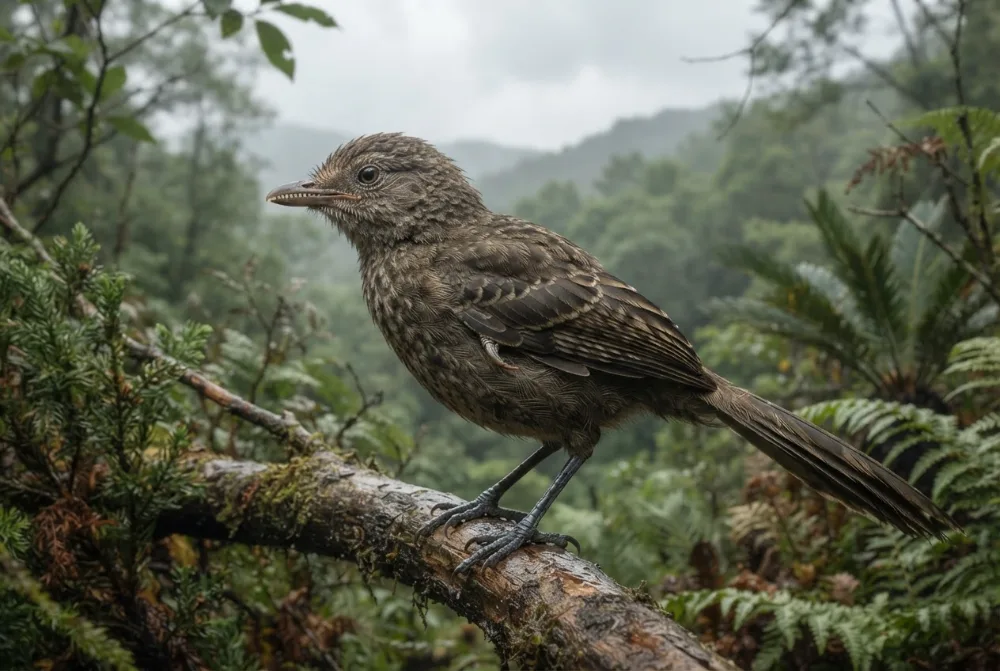
Sulcavis is the first bird ever found with decorated tooth enamel. Its teeth had grooves on the inside that made them stronger.12
2
It lived about 121 to 125 million years ago during the Early Cretaceous period.1
3
Sulcavis belonged to a group of ancient birds called enantiornitheans, which still had teeth and claws unlike modern birds.1
4
The fossil was found in the Yixian Formation, a famous rock layer in China that has preserved many feathered dinosaurs and early birds.1
5
Its name comes from Latin words meaning 'groove bird', because of the grooves on its teeth.1
Ngir ñi xam dino lool
- Turu xam-xam
- Sulcavis
- Ku ko tudde
- O'Connor et al. 20133
- Kurél
- Picc yu jëkk yi
- Njaboot / klad
- Bohaiornithidae3
- Klasifikasiyoŋ
- Theropoda > Avialae3
- Màggaayu doj yi
- 121 ba 113 milyoŋ at (Aptian)3
- Formasiyoŋi doj
- Jiufotang3
- Réew yi
- Siin3
- Fosil yu ñu gis
- 1 ci The Paleobiology Database3
- Gisees
- Sulcavis was named in 2013 by a team of scientists including Jingmai O'Connor. The fossil was found near Lamadong in Liaoning, China, and prepared by Maureen Walsh at the Natural History Museum of Los Angeles County.1
- Ñu ngi koy werante ba tey
- Scientists are not sure exactly what Sulcavis ate, but the strong grooved teeth suggest it could handle harder food than other early birds.12
Fa xibaar yi jóge
- Sulcavis (en.wikipedia.org)
- A new enantiornithine from the Yixian Formation with the first recognized avian enamel specialization: Journal of Vertebrate Paleontology: Vol 33, No 1 (tandfonline.com)
- Sulcavis in The Paleobiology Database (CC BY 4.0): at, béréb yi, formasiyoŋi doj, klasifikasiyoŋ.
Bépp xibaar ci xët wii am na lim bu wone fa mu jóge. Su nu juumee, baal nu, nun ñu bëgg dino lanu, du ab sërnaalu xam-xam. Wax nu ko ci [email protected] nu defar ko.
 Rex xiif na! Dino Wiki, mbiru ab baay la ngir doomam ju góor ju bëgg dinosoor, ci neen te amul kaamuñaate, amul tracker. Mag ñi mën nañu jox Rex tuuti ñam ngir dimbali ko mu des ci internet.Dundal Rex
 Archaeopteryx
 Hesperornis
 Ichthyornis
 Baptornis
 Jurapteryx
 Gobipteryx
 Stegosaurus
 Iguanodon
 Giganotosaurus
 Microraptor
 Deinonychus
 Baryonyx