 Ban dino nga? Kiis
 Xeexu dino
 Rawante dino
 Fo yu ndaw yu dino
 Albomu sitikeer
 Limu TOP yu dino
 Bett ma!
Wightia
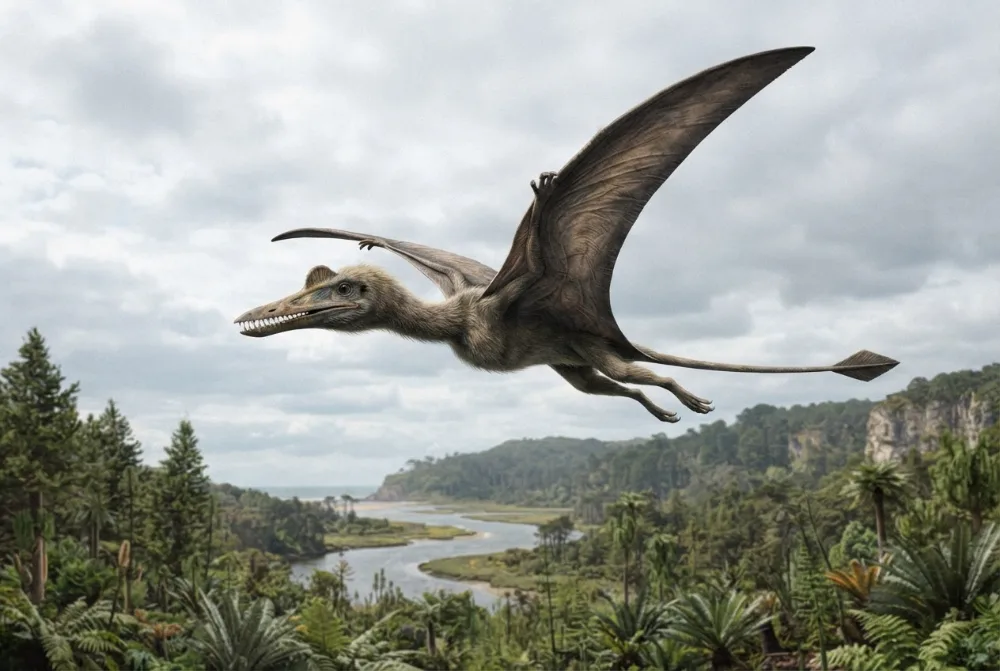
Wightia was a flying reptile that lived about 127 million years ago. It had a long, pointed beak that curved downward, which helped it eat fruits. This pterosaur was one of the first tapejarids ever found in the United Kingdom.13
Kañ la dundoon?
Naka la réyoon?
Naka la ay laafam yaatuwoon?
 gudd ni 2,5 muusu kër, bakkan ba geen⚽mënoon na naaw ci kaw teraŋ futbal bépp ci 9,7 segond
Naka la Wightia réyoon, bu ñu ko méngalee ak YAW?
Ay kalkil rekk ci sa navigatëer. Dara du ñu denc, dara du ñu yónne fenn.
Naka la gaawoon?


Xibaar yu neex
Wightia is known from only a partial upper jaw bone, called a premaxilla.1
Its beak had a unique downward curve, which is a key feature of tapejarid pterosaurs.1
Wightia lived during the Barremian age of the Early Cretaceous, about 127 million years ago.1
This pterosaur was a frugivore, meaning it ate fruits, which is rare for flying reptiles.3
Wightia is the first tapejarid pterosaur ever found in the United Kingdom.1
The fossil was found on a wave-cut platform at Yaverland on the Isle of Wight.1
Ngir ñi xam dino lool
- Turu xam-xam
- Wightia
- Ku ko tudde
- Martill et al. 20203
- Kurél
- Reptil yuy naaw
- Njaboot / klad
- Tapejaridae3
- Klasifikasiyoŋ
- Pterosauria > Pterodactyloidea3
- Màggaayu doj yi
- 126 ba 121 milyoŋ at (Barremian)3
- Formasiyoŋi doj
- Wessex3
- Réew yi
- Angalteer3
- Fosil yu ñu gis
- 1 ci The Paleobiology Database3
- Gisees
- Wightia was named in 2020 by David M. Martill and colleagues. The fossil was collected by John Winch from the Wessex Formation on the Isle of Wight, UK.13
- Ñu ngi koy werante ba tey
- Scientists are not sure about the exact size of Wightia, because only a partial jaw bone has been found.1
Fa xibaar yi jóge
- First tapejarid pterosaur from the Wessex Formation (Wealden Group: Lower Cretaceous, Barremian) of the United Kingdom (sciencedirect.com)
- Wightia declivirostris | Pterosaur Database by DinoAnimals.com (dinoanimals.com)
- Wightia in The Paleobiology Database (CC BY 4.0): at, béréb yi, formasiyoŋi doj, klasifikasiyoŋ.
Bépp xibaar ci xët wii am na lim bu wone fa mu jóge. Su nu juumee, baal nu, nun ñu bëgg dino lanu, du ab sërnaalu xam-xam. Wax nu ko ci [email protected] nu defar ko.
 Rex xiif na! Dino Wiki, mbiru ab baay la ngir doomam ju góor ju bëgg dinosoor, ci neen te amul kaamuñaate, amul tracker. Mag ñi mën nañu jox Rex tuuti ñam ngir dimbali ko mu des ci internet.Dundal Rex
 Pteranodon
 Quetzalcoatlus
 Dorygnathus
 Rhamphorhynchus
 Anhanguera
 Pterodactylus
 Stegosaurus
 Iguanodon
 Archaeopteryx
 Giganotosaurus
 Microraptor
 Deinonychus