 Ban dino nga? Kiis
 Xeexu dino
 Rawante dino
 Fo yu ndaw yu dino
 Albomu sitikeer
 Limu TOP yu dino
 Bett ma!
Dundoon
am na 126 ba 120 milyoŋ at3
Kretase bu jëkkKañ la dundoon?
Triyaas
Jurasik
Kretase

Am na 252 milyoŋ at20114566, asteroyid bi
Naka la gaawoon?
Nit kuy dox lu tollu ci 5 km/h (3 mph)
Xale bu nekk ci welo lu tollu ci 12 km/h (7 mph)

Xinghaiornis lu tollu ci 27 km/h (17 mph)
Fas buy daw bu gaaw lu tollu ci 65 km/h (40 mph)

Segg bu gaaw lu tollu ci 100 km/h (62 mph)

yëf yu neex
Xibaar yu neex
1
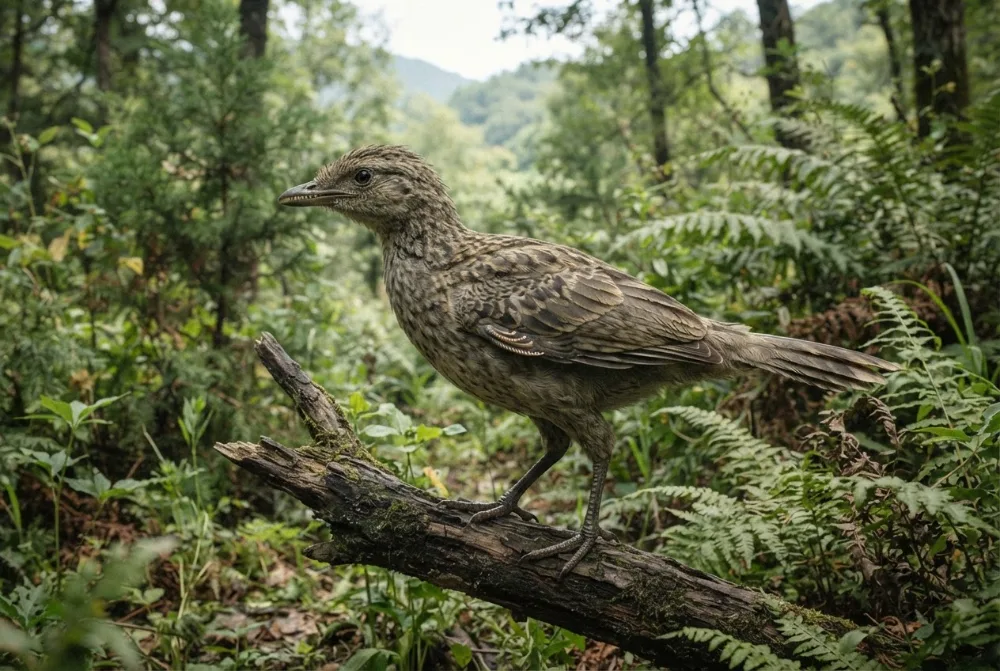
Xinghaiornis had a long, toothless beak, which is unusual for early birds.2
2
Its feet had a raised first toe, which may have helped it walk on soft mud.2
3
Scientists think it was a mud-prober, meaning it stuck its beak into mud to find food.2
5
Xinghaiornis is known from a single fossil found at Sihetun, Shangyuan Town in China.3
Ngir ñi xam dino lool
- Turu xam-xam
- Xinghaiornis
- Ku ko tudde
- Wang et al. 20133
- Kurél
- Picc yu jëkk yi
- Njaboot / klad
- Ornithothoraces3
- Klasifikasiyoŋ
- Theropoda > Avialae3
- Màggaayu doj yi
- 126 ba 120 milyoŋ at (Barremian / Aptian)3
- Formasiyoŋi doj
- Yixian3
- Réew yi
- Siin3
- Fosil yu ñu gis
- 1 ci The Paleobiology Database3
- Gisees
- Xinghaiornis was named by Xuri Wang and colleagues in 2013. The fossil was prepared by Maureen Walsh at the Dalian Museum of Prehistory in China.1
- Ñu ngi koy werante ba tey
- Scientists are still debating exactly how Xinghaiornis is related to other early birds, because it shows a mix of features.2
Fa xibaar yi jóge
- Xinghaiornis (en.wikipedia.org)
- Xinghaiornis lini (Aves: Ornithothoraces) from the Early Cretaceous of Liaoning: An Example of Evolutionary Mosaic in Early Birds (geojournals.cn)
- Xinghaiornis in The Paleobiology Database (CC BY 4.0): at, béréb yi, formasiyoŋi doj, klasifikasiyoŋ.
Bépp xibaar ci xët wii am na lim bu wone fa mu jóge. Su nu juumee, baal nu, nun ñu bëgg dino lanu, du ab sërnaalu xam-xam. Wax nu ko ci [email protected] nu defar ko.
 Rex xiif na! Dino Wiki, mbiru ab baay la ngir doomam ju góor ju bëgg dinosoor, ci neen te amul kaamuñaate, amul tracker. Mag ñi mën nañu jox Rex tuuti ñam ngir dimbali ko mu des ci internet.Dundal Rex
 Archaeopteryx
 Hesperornis
 Ichthyornis
 Baptornis
 Jurapteryx
 Gobipteryx
 Stegosaurus
 Iguanodon
 Giganotosaurus
 Microraptor
 Deinonychus
 Baryonyx