 Uyiyiphi idayinaso? Ikwizi
 Idabi leedayinaso
 Ugqatso lweedayinaso
 Imidlalo emincinci yeedayinaso
 I-albhamu yezitikha
 Iilisti ze-TOP zeedayinaso
 Ndothuse!
Amphicoelias
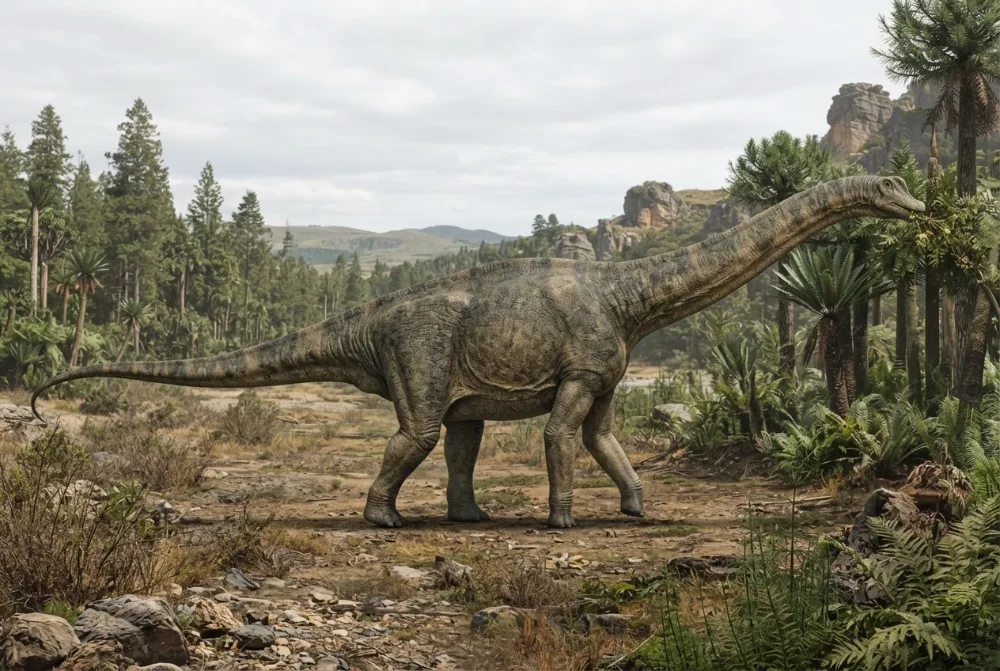
Amphicoelias was a giant, long-necked plant-eater that lived about 150 million years ago. It had very long and thin hind legs, and its front legs were longer than those of its close relative Diplodocus. This dinosaur was about as long as three school buses parked end to end!1
Yaphila nini?
Yayinkulu kangakanani?
Yayinde kangakanani?
Yayiphakame kangakanani?
uqikelelo
Yayinzima kangakanani?

 inde njengeemoto ezingama-4 zipakwe zilandelelana🍌inde njengeebhanana ezingama-100 zilandelelanainzima njengeemoto ezingama-10🍉inzima njengamavatala angama-3000🎒inzima njengamagumbi okufundela apheleleyo abantwana angama-19🐻❄️inzima njengeebhere ezimhlophe ezingama-33🏃ibinokubaleka iimitha ezili-100 ngemizuzwana engama-28 (oyena mntu ukhawulezayo udinga i-9,6)
Amphicoelias wayemkhulu kangakanani xa ethelekiswa NAWE?
Yimathematika nje kwibhrawuza yakho. Akukho nto igcinwayo okanye ithunyelwe naphi na.
Yayikhawuleza kangakanani?


Iinyani ezimnandi
Amphicoelias was named by the famous paleontologist Edward Drinker Cope in 1877.1
Its name means 'biconcave' because the bones of its spine were hollow on both sides.1
Amphicoelias lived in a savanna-like environment with ferns and some tall trees along rivers.1
The first fossils of Amphicoelias were found by a man named Aaron Ripley in Colorado in 1877.1
Amphicoelias was lighter and more slender than many other sauropods of its time.1
Eyona mibuzo ibuzwa kakhulu: Amphicoelias
?How big was Amphicoelias?
Amphicoelias was about 18 metres (59 feet) long and weighed about 15 metric tons (17 short tons). That is longer than its close relative Diplodocus.1
?What did Amphicoelias eat?
Amphicoelias was a plant-eater that ate ferns and other plants. It lived in a savanna-like environment with some tall trees along rivers.1
?When did Amphicoelias live?
Amphicoelias lived about 150 million years ago during the Late Jurassic Period.1
?Was Amphicoelias a dinosaur?
Yes, Amphicoelias was a dinosaur. It was a sauropod, a type of long-necked, plant-eating dinosaur.1
?Where was Amphicoelias found?
Amphicoelias fossils were found in Colorado, United States, in rocks called the Morrison Formation.1
?Is Amphicoelias the biggest dinosaur?
No, Amphicoelias was not the biggest dinosaur. It was about 18 metres long, which is shorter than its relative Diplodocus. One giant species once called Amphicoelias fragillimus was later renamed Maraapunisaurus.1
Kwiingcali zeedayinaso
- Igama lenzululwazi
- Amphicoelias
- Inikwe igama ngu:
- Cope 18773
- Iqela
- Iintamo-nde
- Usapho / iclade
- Diplodocoidea3
- Ukuhlelwa
- Sauropodomorpha > Sauropoda > Diplodocoidea3
- Ubudala bamatye
- 158 ukuya ku-143 izigidi zeminyaka ()3
- Izakhiwo zamatye
- Morrison, Kadzi3
- Amazwe
- iUSA, iZimbabwe3
- Iirekhodi zeefosili
- 3 kwi-Paleobiology Database3
- Ukufunyanwa
- Edward Drinker Cope named Amphicoelias in 1877 based on fossils found by Aaron Ripley in Colorado, USA.1
- Kusaxoxwa ngayo
- Scientists are not sure if some bones, like a tooth and shoulder blade, really belong to Amphicoelias or to another dinosaur.1
Apho iinyani zivela khona
- Amphicoelias (en.wikipedia.org)
- PBDB Taxon (paleobiodb.org)
- Amphicoelias in The Paleobiology Database (CC BY 4.0): ubudala, iindawo, izakhiwo zamatye, ukuhlelwa.
Yonke inyani ekweli phepha inenombolo ebonisa umthombo wayo. Ukuba siphosisile, uxolo, sithanda iidayinaso, asiyojenali yenzululwazi. Sixelele apha: [email protected], siya kuyilungisa.
 URex ulambile! I-Dino Wiki yiprojekthi katata ukwenzela unyana wakhe othanda iidayinaso, isimahla, ayinazintengiso, ayinazilandeli. Abantu abadala banokuphakela uRex isidlwana ukuze incede ihlale kwi-intanethi.Phakela uRex
 Brachiosaurus
 Diplodocus
 Brontosaurus
 Argentinosaurus
 Camarasaurus
 Morosaurus
 Allosaurus
 Compsognathus
 Camptosaurus
 Nanosaurus
 Rhamphorhynchus
 Ceratosaurus